How to Choose a Tablecloth for Round, Oval and Rectangular Tables
Measure the table as it will be used
Measure the tabletop, not the chairs. A round table needs its diameter; a rectangle needs length and width; an oval is measured at its longest and widest points. With extension leaves, record both everyday dimensions and the fully extended size.
Choose the drop first
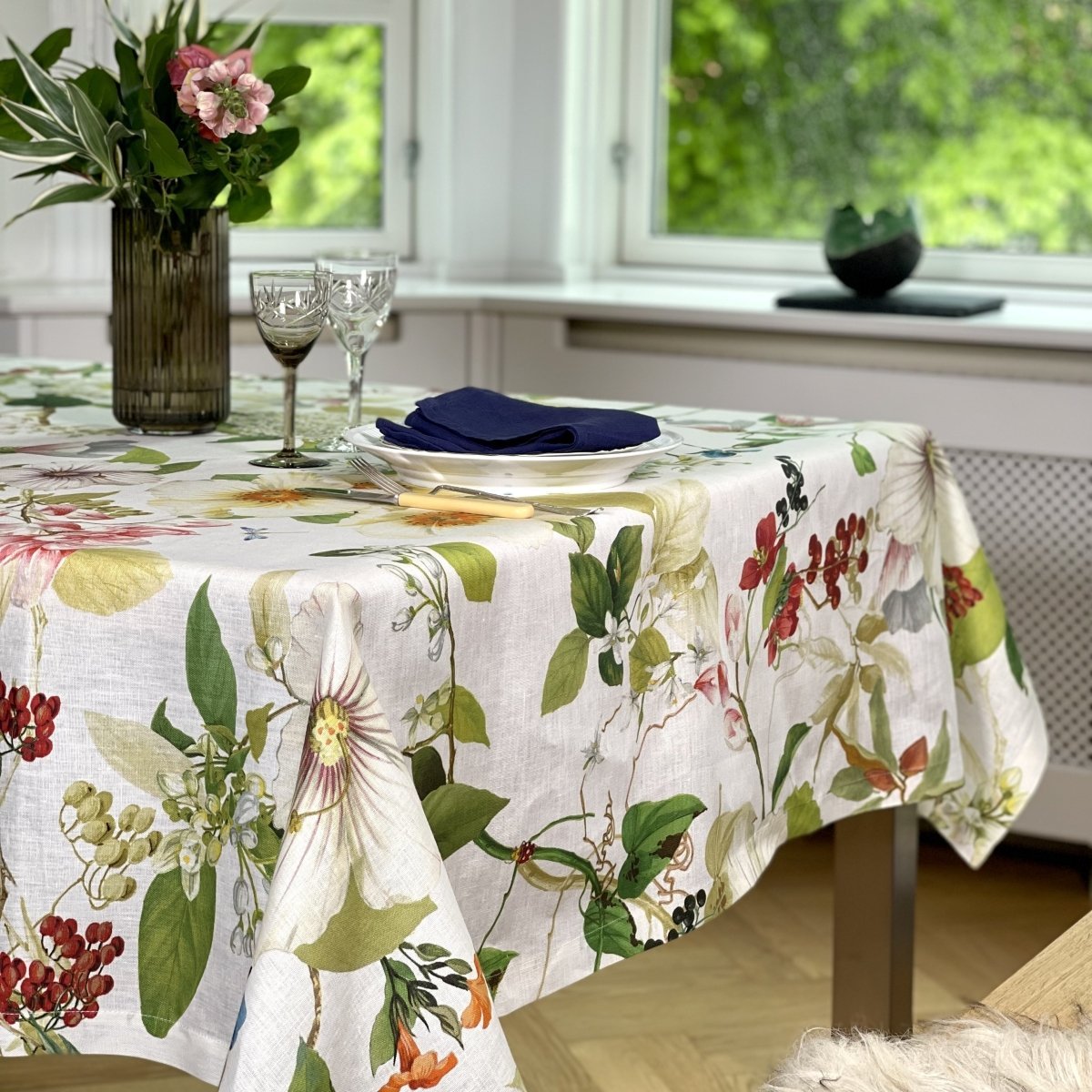
The drop runs from tabletop edge to cloth edge. About 20–25 cm feels light and practical, while 25–35 cm appears more formal. Check seat height and table braces so the cloth neither rests heavily in laps nor gathers awkwardly.
The formula for round tables
Required cloth diameter equals table diameter plus twice the desired drop. A 120 cm table with a 25 cm drop needs about 170 cm. A square cloth also works on a round table, but its corners hang lower and create a more pronounced look.
Oval and rectangular tables
For both shapes, add twice the drop to length and width. A 100 × 200 cm table with a 30 cm drop needs roughly 160 × 260 cm. A rectangular cloth can suit an oval table; the fall naturally changes around its curved ends.
Allow for material and washing
Linen has a lively drape and can look attractive slightly creased, while cotton often creates a smoother plane. Follow washing instructions because textiles may change size. Between sizes, decide whether you prefer a short practical drop or a longer, more enveloping table setting.
Read next
- How big should a tablecloth be? A simple measuring guide
- Tessitura Toscana Telerie — Italian textile art from Florence since 1947