Damascus steel – what does it really mean? Wootz vs. pattern-welded
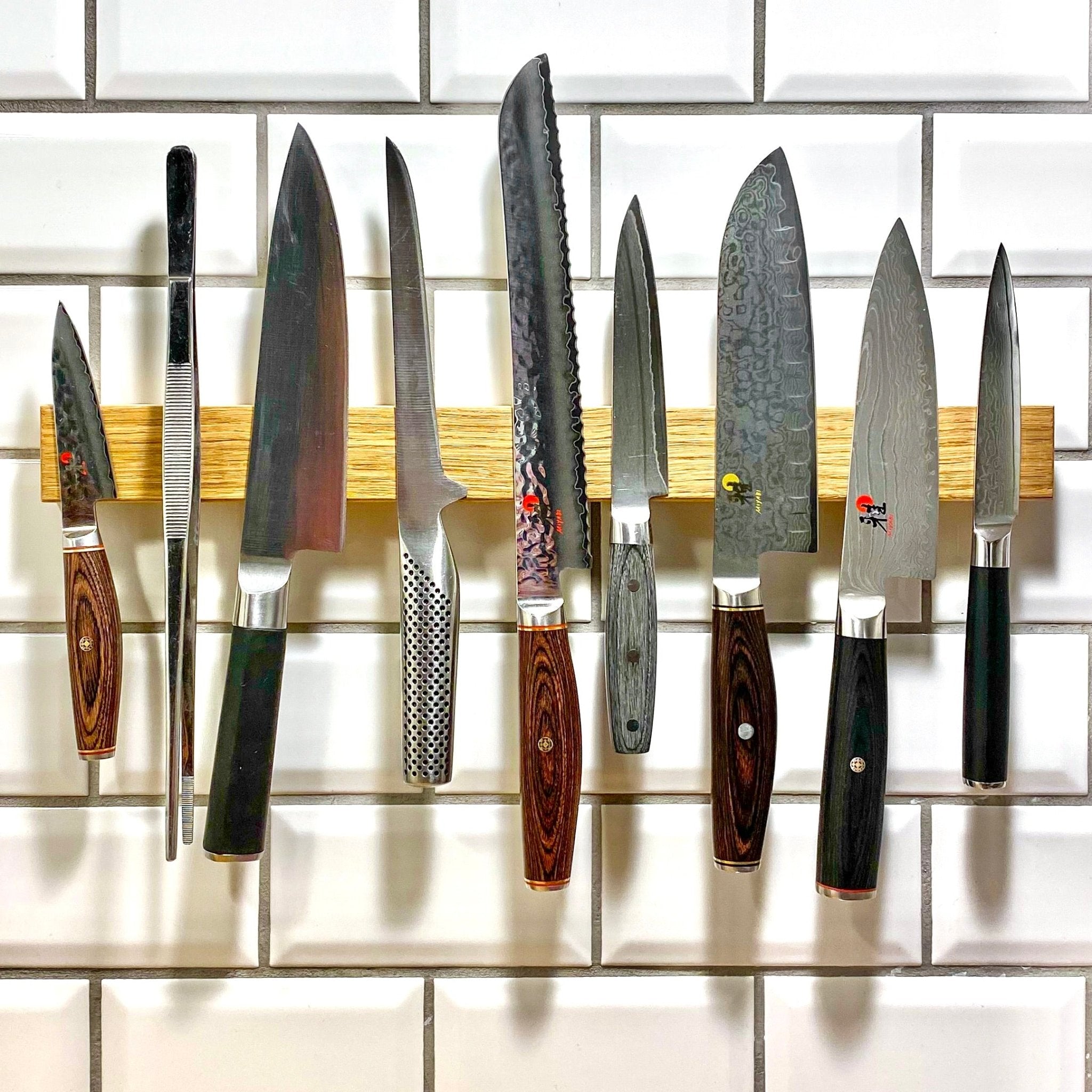
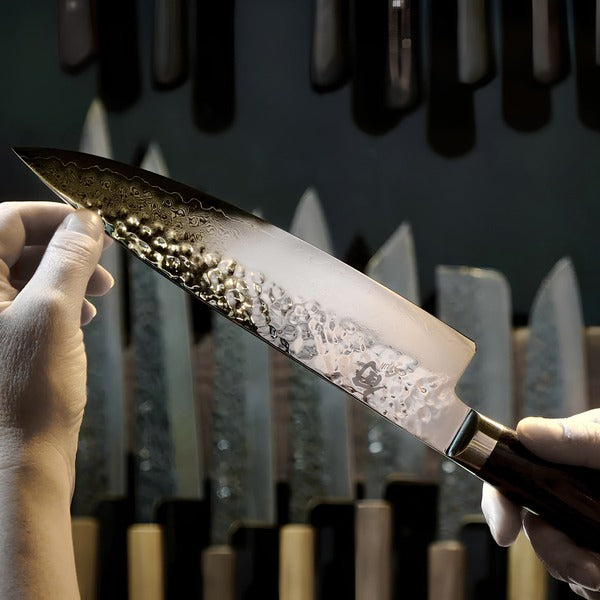
Damascus steel is one of the most widely used – and most imprecise – terms in the knife world. On modern kitchen knives, the term most often describes a visible layered or pattern-forged steel around a cutting core. Historically, the term is also associated with wootz steel, which is produced in a completely different way.
Therefore, it is useful to distinguish between appearance, construction and cutting properties. A beautiful pattern can tell something about the manufacturing process, but it alone does not tell how sharp the knife will be, how long it will hold its edge, or how robust it is.
Pattern-welded and historical wootz are not the same
On modern knives, the characteristic pattern is typically created by welding layers of different steels together, folding or manipulating the workpiece, and then etching the surface. Differences in alloy react differently to the etching, highlighting the pattern. Knife Steel Nerds describes this as pattern-welded Damascus.
Historically, wootz is essentially one material, with the pattern developed through the steel's microstructure and thermal treatment. The fact that both are referred to as Damascus is a linguistic tradition – not a sign that they are technically identical.
What do the layers on a kitchen knife mean?
On many Japanese kitchen knives, decorative layers surround an actual core steel. It is the core's steel composition, heat treatment, geometry and sharpening that largely determine the cutting experience. The number of visible layers is therefore not a linear scale of quality.
A high layer count can require considerable craftsmanship and create a complex visual expression. But 67 layers is not automatically better than 33 layers, and a mono-steel knife can easily be technically excellent.
The pattern does not change the basic laws of physics
When two steels are welded together, carbon can diffuse between the layers under the high temperatures. This means that the final structure is not just completely isolated strips, each with its own original properties. Modern metallurgy is more complex than the popular explanation of “soft and hard steel cutting alternately”.
The overall performance of the knife should therefore be assessed based on the steel at the cutting edge, the heat treatment, the thickness of the blade and the sharpening – not the pattern alone.
Damascus as design and craftsmanship
This does not mean that the pattern is unimportant. On the contrary, a well-executed layer pattern can be a clear part of the knife's artisanal identity. The point is simply to keep the aesthetic and the functional separate when comparing knives.
The short answer
Damascus steel is first and foremost a term that requires context. On a modern kitchen knife, you should see the pattern as one characteristic among several – and ask about core steel, heat treatment and geometry if you want to understand the knife's real function.
See our selection of Japanese kitchen knives . Also read about carbon steel vs. stainless steel .
Convenient to remember
When reading a product specification, therefore, consider “Damascus” as the beginning of a question, not the end of an answer. Look for the name of the core steel, the stated HRC, the blade thickness, and whether the manufacturer explains the construction. If only the number of layers and the pattern name are highlighted, you know a lot about the appearance, but relatively little about the edge. For everyday use, it is also worth considering the maintenance: a patterned blade can be stainless, partially stainless, or made of reactive steels. This is determined by the alloys. Therefore, wash the knife by hand, dry it immediately, and follow the manufacturer’s instructions rather than assuming that all Damascus knives require the same treatment.
Sources and further reading
- Knife Steel Nerds: History of Powder Metals in Damascus Steel
- Knife Steel Nerds: Wootz – The True Damascus Steel
- Knife Steel Nerds: 1084/15N20 Pattern-Welded Damascus