Why does linen become softer over time?
A new linen textile may feel dry, firm and clearly structured. After repeated use and washing, it often becomes more supple and falls softer. This is one of the properties that distinguishes linen from textiles, which are primarily intended to maintain a factory-new surface.
The change is not due to a single mechanism, but the interaction between the structure of the fibers, the weaving and the mechanical effects during washing and use.
Flax comes from long bast fibers
Linen is made from fibers from the stem of the flax plant. Libeco describes how the fibers are released through rooting, breaking, carding and other processes before being spun and woven. This results in a material with a characteristic strength and structure.
The first hand also depends on the yarn, weaving and finishing. Two textiles made of 100% linen can therefore feel very different even before they are used.
Washing and movement make the fabric more flexible
The Alliance for European Flax-Linen & Hemp describes that linen becomes more flexible and softer through washing. Repetitive movement affects the stiffness of the fabric, and any residues from production and finishing are gradually changed or washed out.
This does not mean that the fiber “dissolves.” A good linen textile retains its characteristic structure, but the hand feel becomes less crisp and more incorporated.
Patina is part of the material's expression
Libeco itself uses patina as a central concept in describing the finishing and aging of linen. Some products are stonewashed already during production to give a more relaxed touch from the start, while others develop it gradually with the user.
Small variations and a less perfectly pressed appearance are therefore not necessarily signs of wear and tear. They can be an expected part of the visual development of the linen material.
Proper care still matters
Just because linen can withstand use does not mean that any treatment is appropriate. Follow the care label, avoid unnecessarily aggressive chemicals and overdrying, and choose to dry according to the product's instructions. Ironing is in many contexts an aesthetic choice, not a requirement for the material to function.
If you want a more relaxed look, linen can often be used directly after proper washing and drying.
The short answer
Linen doesn't become uninteresting despite the fact that it changes; for many, the development is precisely part of the quality. The material goes from a more factory-firm hand to a softer, more personal textile the more it is used correctly.
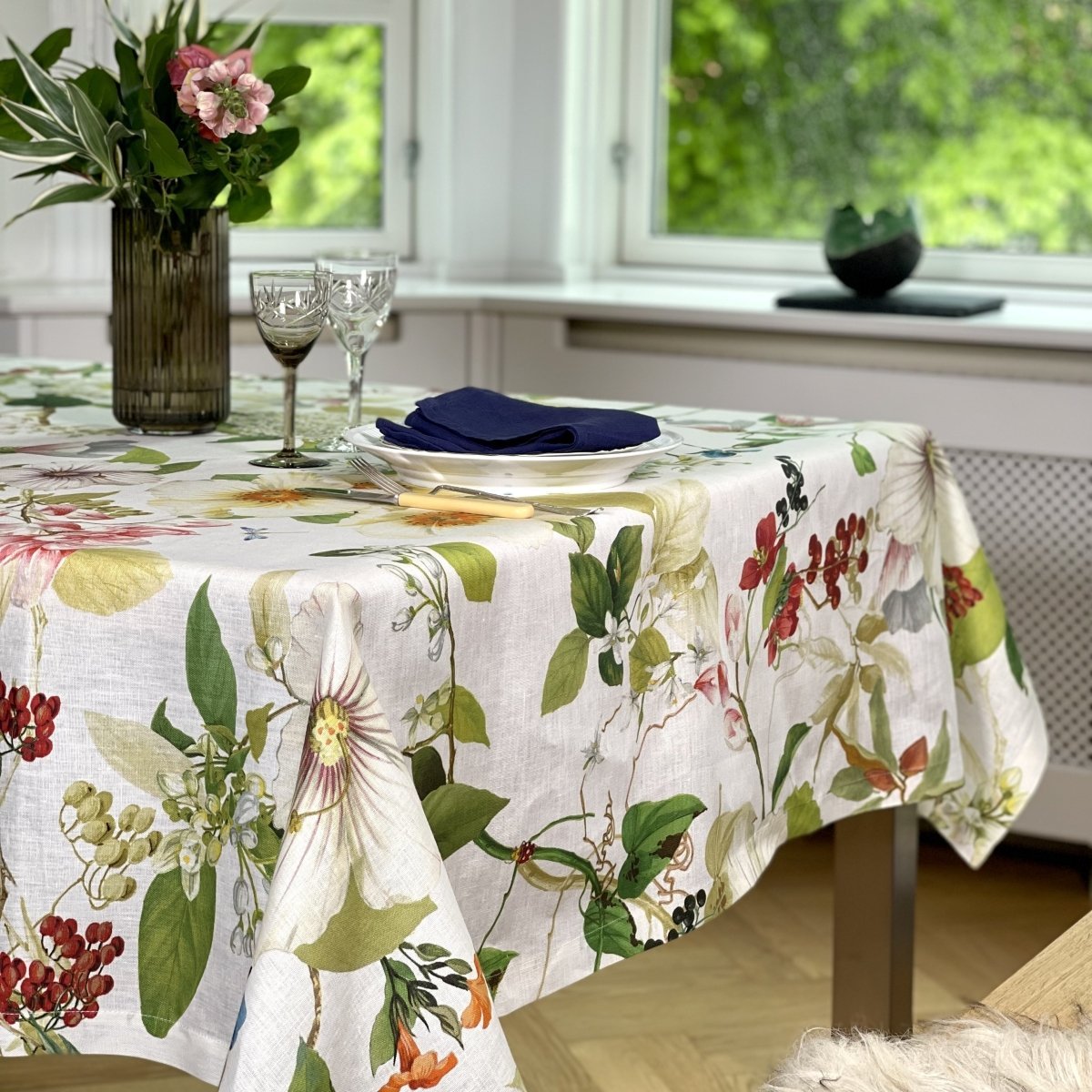
See linen textiles for the kitchen and table . Read more about linen as a material .
Convenient to remember
Softer is not the same as weaker from one wash to the next. Linen is known for its high fiber strength, but any textile gradually wears down through friction, chemical exposure and repeated washing. The pleasant patina should therefore not be used as an argument for excessive treatment. A good compromise is to wash when the textile actually needs it, use an appropriate program and avoid overdoing it. Linen can also wrinkle noticeably because the fabric structure does not have the same elastic rebound as some other fibers. The wrinkled appearance is cosmetic. If you prefer a smoother table linen, you can iron according to the care label; if you prefer a more relaxed look, this is often not necessary.
Sources and further reading
- Alliance for European Flax-Linen & Hemp: Washing and Care
- Libeco: Linen's Craftsmanship, From Fiber to Fabric
- Linen Lounge: What is Linen?