Crystal or Regular Glass: What Is the Difference in Use?
Both are glass
Crystal is a type of glass whose composition can provide brilliance, pronounced light refraction and good cutting properties. Everyday drinkware is often soda-lime glass. The labels do not tell the whole story: quality, wall thickness and manufacturing method vary considerably within both categories.
What you see and feel
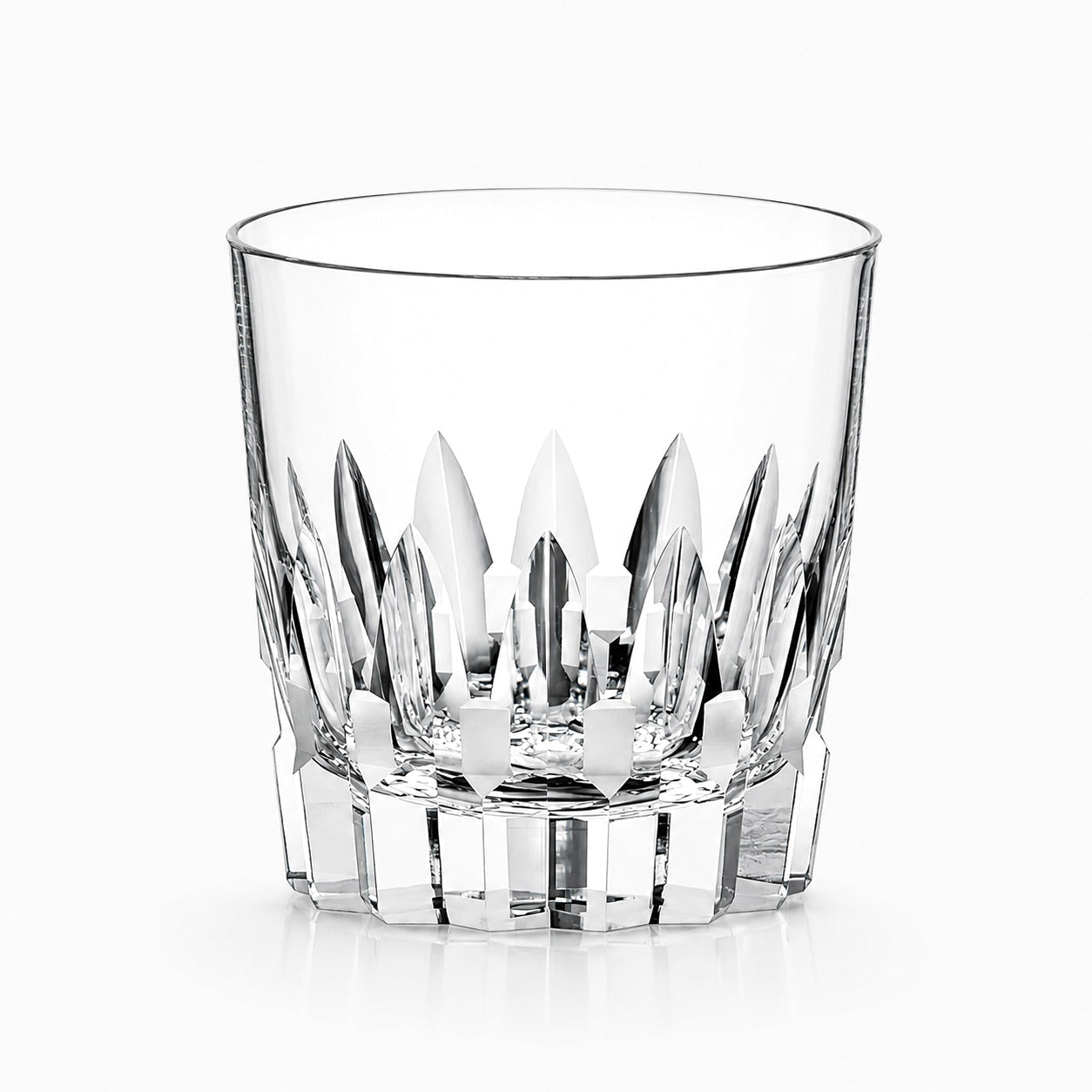
Clear cut crystal can scatter light through its facets and reveal the depth of a pattern. It may feel heavy and substantial, yet crystal can also be formed with fine walls and a precise rim. Regular glass is often lighter and visually neutral, although weight and thickness depend on design.
Sound and serving
Crystal is often associated with a longer, clearer ring when the glass is tapped gently. This is a sensory detail, not a measure of beverage quality. At the table, crystal can add optical play and tactility, while simple glassware can be practical for busy everyday use.
Cutting requires material and craft
Deep hand-cut patterns require a material that can be worked accurately and a cutter who controls angle and depth. Edo Kiriko is therefore more than decoration: pattern, polishing and the transition between coloured casing and clear glass create its visual character. Small variations may belong to the handmade process.
Choose with care in mind
Always follow the maker’s washing instructions. Fine hand-cut glasses need space from other objects, protection from thermal shock and support during washing and drying. For frequent dishwasher cycles, robust everyday glass may be practical; for deliberate serving, crystal can be part of the experience itself.
Read next
- Whisky Glasses: Shape, Size and Aroma
- How to make Japanese cut crystal glass
- Kagami Crystal — 90 years of Japanese glass art