Japanese craftsmanship: the difference between handmade and industrial production
“Handmade” and “industrially produced” are often presented as opposites. In Japanese traditional craftsmanship, the reality is more nuanced. A product can be made with machines in parts of the process and still have crucial steps where the craftsman’s judgment and handiwork determine the result.
This is also how Japan's official system for Traditional Craft Products is conceived: the focus is on use, historical continuity, traditional techniques and materials, and a regional production base – not on a romantic requirement that no tool must be mechanized.
What does the official Japanese designation require?
Japan's Ministry of Economy, Trade and Industry sets several criteria for designation as a traditional craft product. Among other things, the product must be used in daily life, have a significant part of its production done by hand, be based on traditional techniques and materials, and be produced by a regional group of companies.
This means that the role of the hand must be central, but not that the entire process necessarily takes place without modern aids.
Machines can create consistency
Industrial processes are strong in repeatability, speed and dimensional control. These are valuable attributes and not in themselves a sign of low quality. In many workshops, machines can take care of rough or uniform steps, while the specialist performs the steps where senses, experience and continuous correction are most important.
The interesting difference is therefore where the decision lies: Is the outcome primarily determined by an automated process, or is it continuously shaped by a professional?
Edo Kiriko clearly shows the interaction
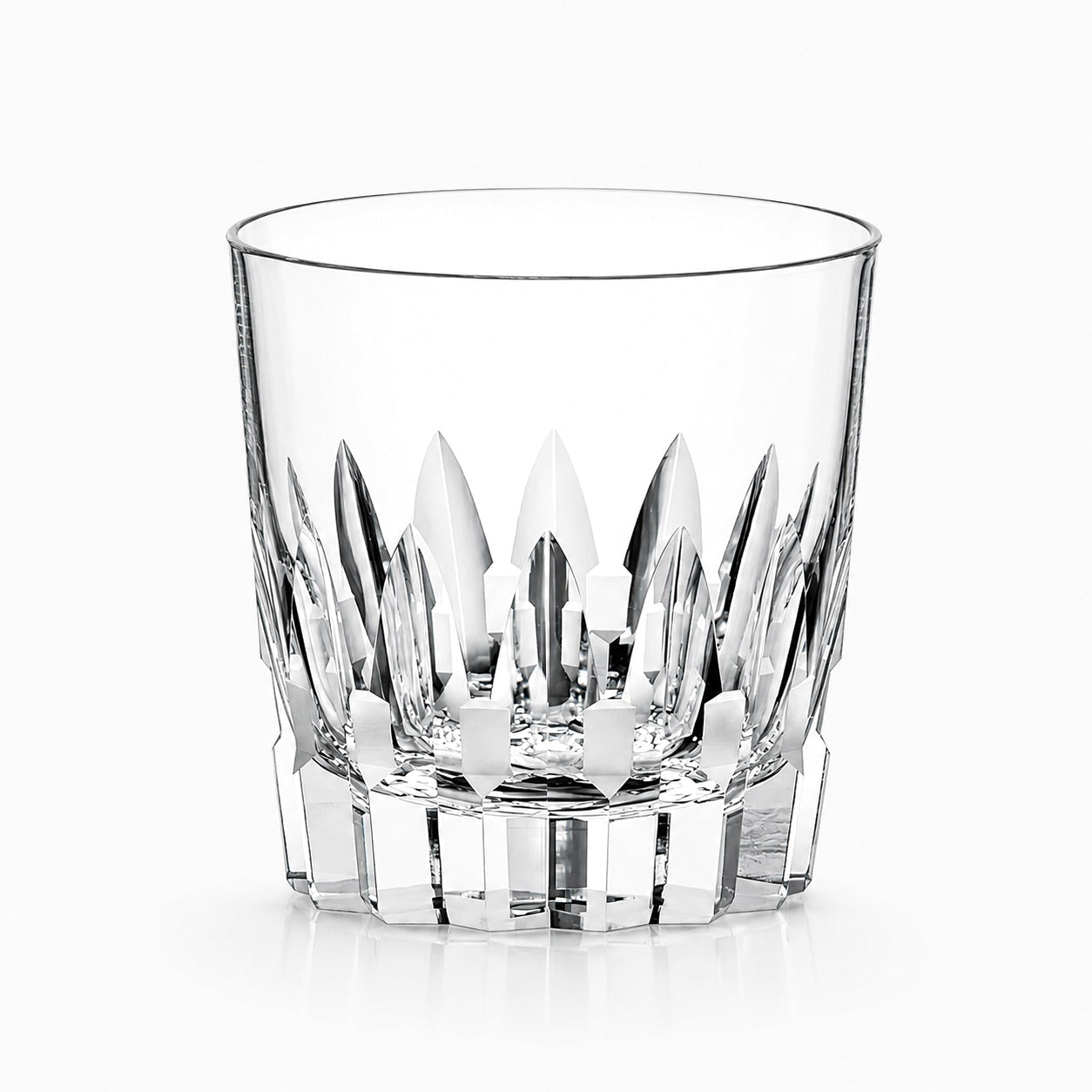
In Edo Kiriko, rotating grinding tools are used, but the pattern is controlled and judged by the craftsman. The Tokyo Metropolitan Government's inventory of traditional crafts highlights the continued craftsmanship of the city's craft traditions.
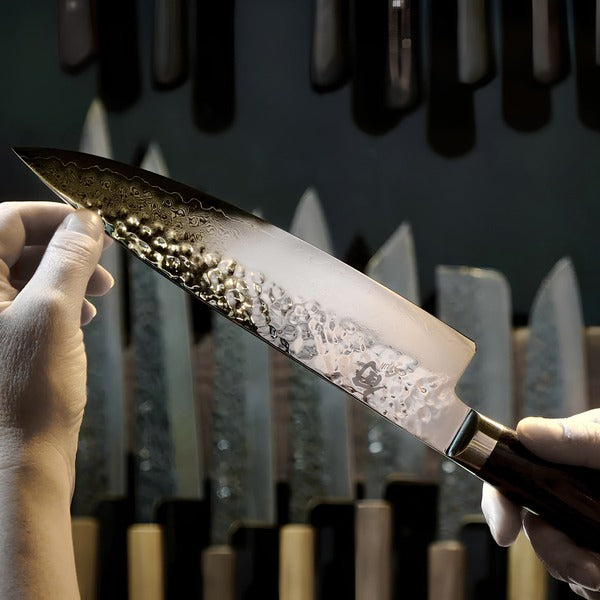
The same principle can be found in blacksmithing, woodworking, lacquer, ceramics and casting: the tools may be modern, while the critical craftsmanship still lies in the human control of the process.
Handmade is not automatically better either
A handmade product can be poorly made, and an industrial product can be extremely precise. Quality should therefore be assessed on function, choice of materials, finish, durability and the specific workmanship.
The special value of crafts often lies in specialized knowledge, small production runs, the possibility of ongoing assessment, and a direct connection to a specific local technique or tradition.
The short answer
The most precise distinction is therefore not “hand or machine”, but the role of the craftsman. When crucial steps require experience, intuition and ongoing decisions, modern tools can be part of the process without making the craft any less real.
See our introduction to Japanese Crafts . Read about Oitomi and Japanese cast iron crafts .
Convenient to remember
For the buyer, this means looking for specific information rather than broad terms like “artisan” or “handmade.” What steps are done by hand? Where is the product made? What materials and techniques are key? Is there a documented workshop history or regional tradition? These questions make it easier to distinguish between real production knowledge and pure marketing. At the same time, variation must be assessed sensibly: handmade items may have slight differences, but functional dimensions and finishes must still be controlled. Craftsmanship is not the absence of quality control – quite the opposite. In the best workshops, human inspection and correction are an important part of why the process can deliver both character and consistency.
Sources and further reading
- METI Japan: Designation of Traditional Craft Products
- Tokyo Metropolitan Government: Traditional Crafts of Tokyo
- Tokyo Metropolitan Government: Edo Kiriko
- Edo Kiriko Cooperative Association