Salt mill vs pepper mill – is there a difference in the grinding mechanism?
Salt and pepper mills may look almost the same from the outside, but inside the mills can be designed for completely different raw materials. Salt is a mineral, while peppercorns are dried plant fruits with a tough texture and aromatic oils.
Therefore, you should not automatically fill salt into a pepper mill or vice versa. It depends on the material and geometry of the mechanism – and on the type of salt or pepper to be ground.
Salt can be hard on metal
Salt, and especially wet salt, can promote corrosion on materials not designed for the environment. Peugeot therefore recommends dry, coarse salts for their regular salt mechanisms and has a separate mechanism for wet sea salt.
Cole & Mason uses ceramic mechanisms for salt in several series precisely because of the corrosion resistance, while they use carbon steel or other solutions for pepper depending on the series.
Peppercorns must be grabbed and crushed
A pepper mill must be able to capture whole, hard peppercorns and break them in a controlled manner before the final grinding. The geometry of the teeth and burrs affects both the output and how even the selected coarseness is.
Peugeot recommends dry, hard peppercorns of appropriate size for the standard mechanism. Very soft or moist spices may behave differently and should only be used if specifically permitted by the manufacturer.
Ceramics can be versatile – but design still counts
Ceramic does not corrode like ordinary carbon steel and can therefore be suitable for salt. Some ceramic mills are also hard enough for pepper. However, this does not mean that all ceramic mills are universal; the shape, tooth profile and spacing are still optimized for a specific raw material.
Therefore, always check the grinder's specifications instead of using "ceramic" as the only criterion.
Wet salt is a separate challenge
Grey sea salt and other moist salts can clump and attack mechanisms designed for dry salt, so Peugeot has a specific wet-salt system with corrosion-resistant materials and an anti-blocking design.
It's a good example of why the properties of the raw material should determine the tool – not just whether the container says "salt".
The short answer
Use the ingredient the mill is designed for. A dedicated pepper mechanism typically provides better grip on the peppercorns, while a salt mechanism must be resistant to the corrosive environment of salt and the relevant humidity.
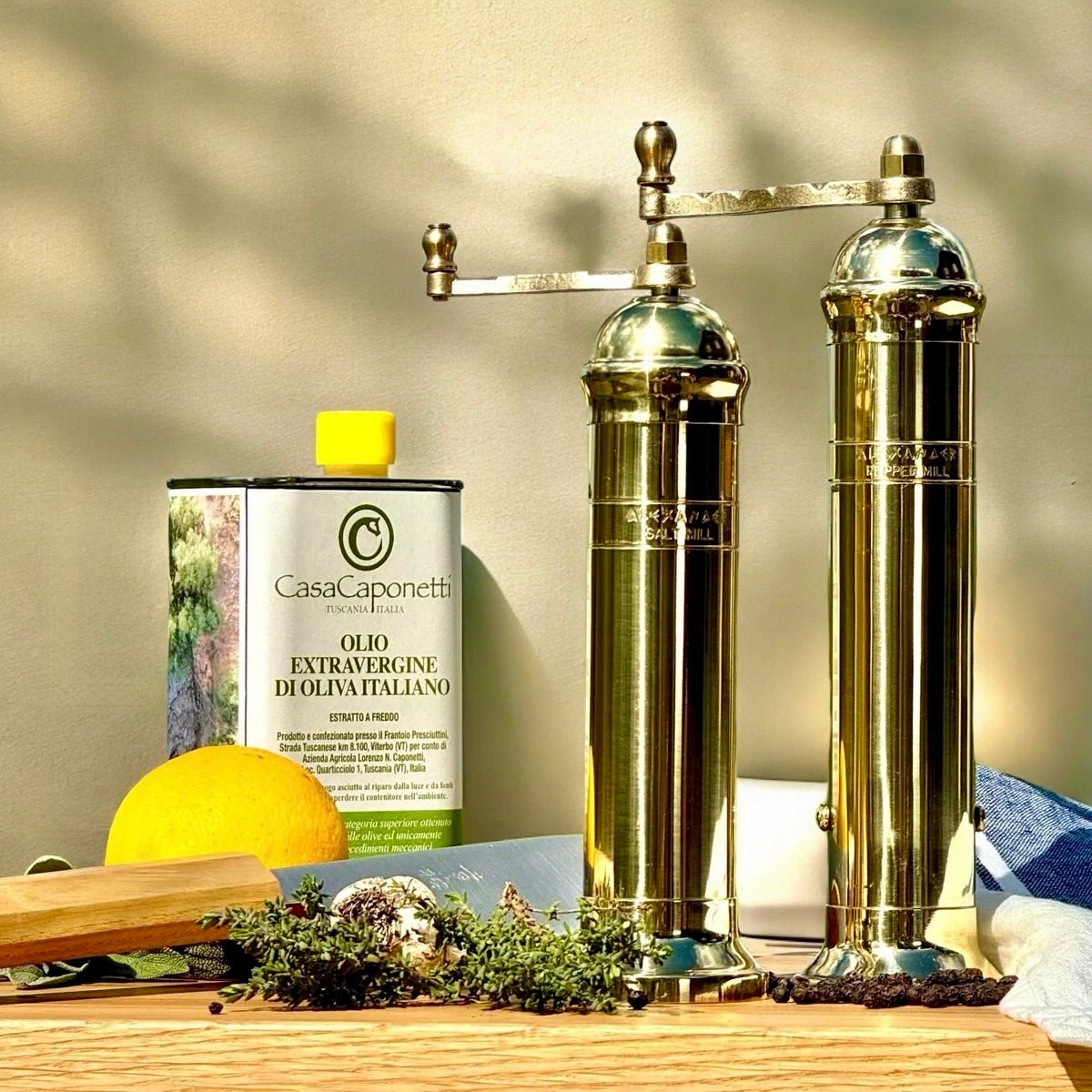
See handmade salt and pepper mills . See our selection of peppercorns .
Convenient to remember
There are also grinders where the manufacturer deliberately uses the same ceramic mechanism for both salt and pepper. In these cases, the mechanism may be technically compatible with both ingredients, but this does not change the fact that the manufacturer's instructions are the relevant reference. Avoid filling a grinder with large crystals, damp salt or unusual spices simply because they may end up in the container. The wrong ingredient can block the mechanism or strain your teeth. If you are grinding several types of pepper, also pay attention to size and moisture. Pink pepper, for example, is softer than black pepper and is only recommended by Peugeot in a limited mixture with harder peppercorns in their standard pepper mill.
That's the safest rule of thumb.