How to Choose the Size of a Pot and Frying Pan
Measure the task before the pan
Diameter tells only part of the story. A tall 20 cm pot may hold more than a shallow 24 cm one, while a frying pan’s usable flat area is smaller than its rim measurement. Compare capacity, internal base, height, weight and the bottom diameter that actually meets the hob.
Saucepans and pots: think in capacity
A 16 cm saucepan is practical for sauces, porridge and small quantities. Around 20 cm often suits rice, vegetables or a smaller household. For pasta, soup and stews for several people, 24 cm or more is usually more flexible. Never fill to the rim: boiling, stirring and foam need headroom.
Frying pans need space between food
A 20 cm pan suits an egg, small omelette or single portion. A 24 cm pan often serves one or two, while 28 cm is versatile for several pieces of meat or vegetables for a small family. Results depend on the flat base: crowding cools the pan and makes food steam.
Match base and cooking zone
Compare the cooking zone with the actual base, not the wider upper rim. On induction, the magnetic footprint must also be large enough for detection. A zone that is much too small may heat unevenly, while a large zone under a small pot can waste energy on other hob types. Always centre the cookware.
Choose for daily life and storage
For one or two people, a 16–20 cm pot and 24 cm frying pan are often a useful start; larger households or batch cooking make 24–28 cm more relevant. Treat these as rules of thumb. Measure drawers, oven and dishwasher, feel the weight with its lid, and choose two clearly different sizes rather than several near-duplicates.
Read next
- Induction Cookware – Materials, Base and Compatibility
- Which pot should you choose for pasta, sauce and simmering dishes?
- Which frying pan is best for steak?
Relevant products and collections
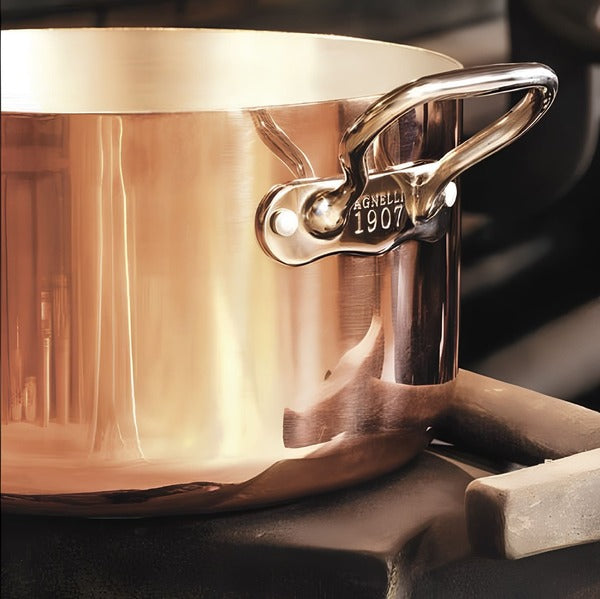
- Pentole Agnelli Cookware
- Frying pan in 5-PLY steel. Diameter 20 cm / 24 cm / 28 cm. For gas, electric, ceramic and induction
- Conical saucepan in stainless steel. Diameter 16 cm / 20 cm. For gas, electric, ceramic and induction
- Low pot in 5-PLY steel with two stainless steel handles. Diameter 28 cm. For gas, electric, ceramic and induction
- Large enamelled cast iron casserole with lid, 28 cm