Magnetic knife holder with or Without Screws – Which Mounting Method Suits Your Wall?
A magnetic knife holder needs to sit level and remain stable in daily use. The right mounting method depends on the wall, the rail and whether you may want to remove it later. Rune-Jakobsen Design rails are normally supplied with concealed keyhole fittings for screws, while adhesive, tape or a magnetic back can suit particular settings.
Screws are the dependable standard
The concealed fittings keep the front visually clean. Two screws are fixed to the wall and the rail is placed over them. Always choose screws and wall plugs for the actual substrate: masonry, timber, plasterboard and other sheet materials do not necessarily require the same fixing.
Screw mounting is usually preferable for several or heavy knives and for walls that are not perfectly flat. It also makes the rail easier to take down without separating adhesive from the timber or wall.
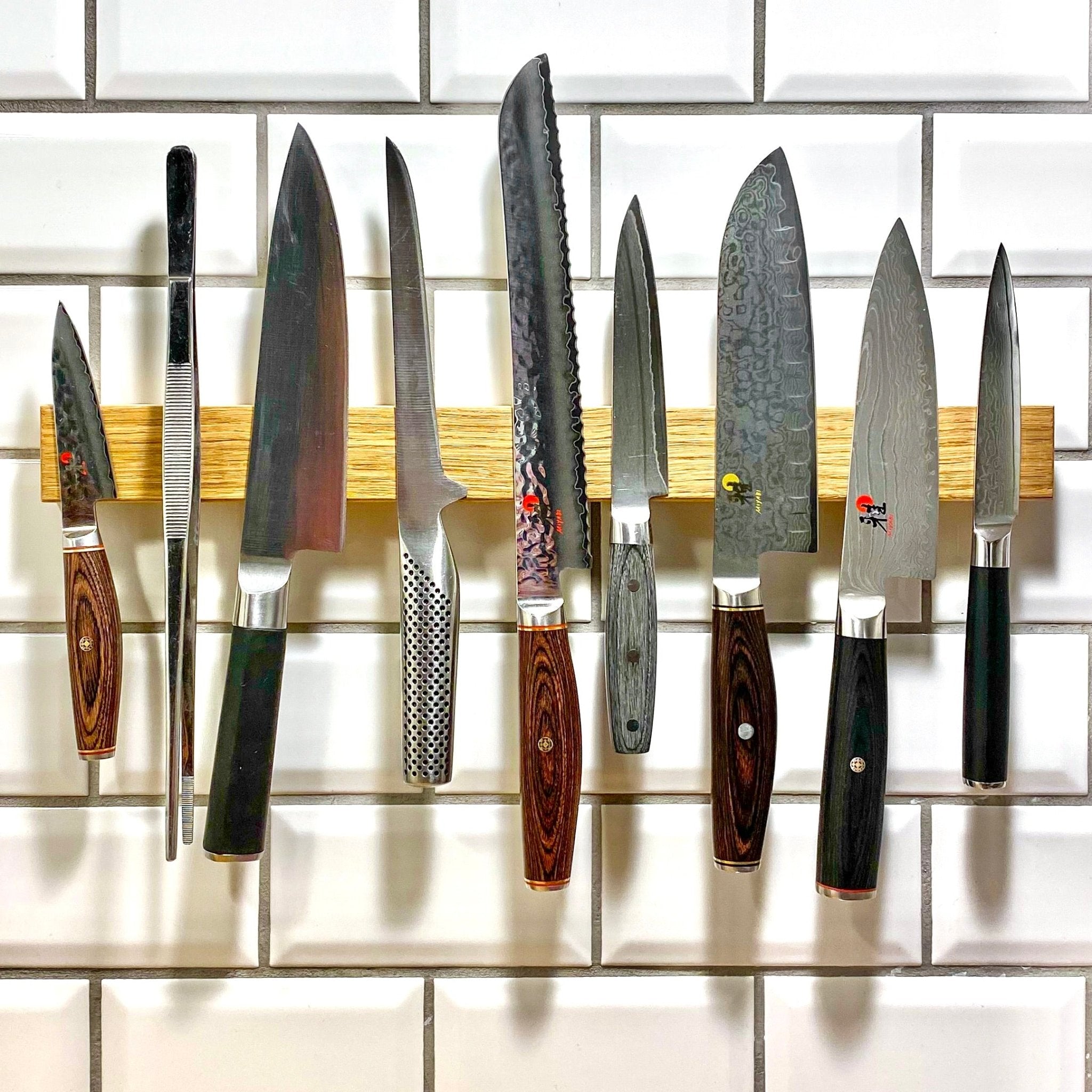
Tiles and fitting positions
For a tiled wall, the fittings can by agreement be positioned to align with two grout lines. The exact distance between the joints must be supplied when ordering. Before drilling, check for concealed pipes and cables; if there is any uncertainty, use a qualified installer.
Mounting without screws
To avoid drilled holes, a rail can be ordered with a smooth, unoiled back for mounting adhesive or strong double-sided tape. The surface must be level, clean, dry and compatible with the chosen product. Follow its instructions for load and curing time.
Adhesive is not equally suitable for every wall. Paint, plaster or wallpaper may release, and removal can mark the finish. The warranty also lapses when the rail is mounted without the supplied fittings.
A magnetic back for metal surfaces
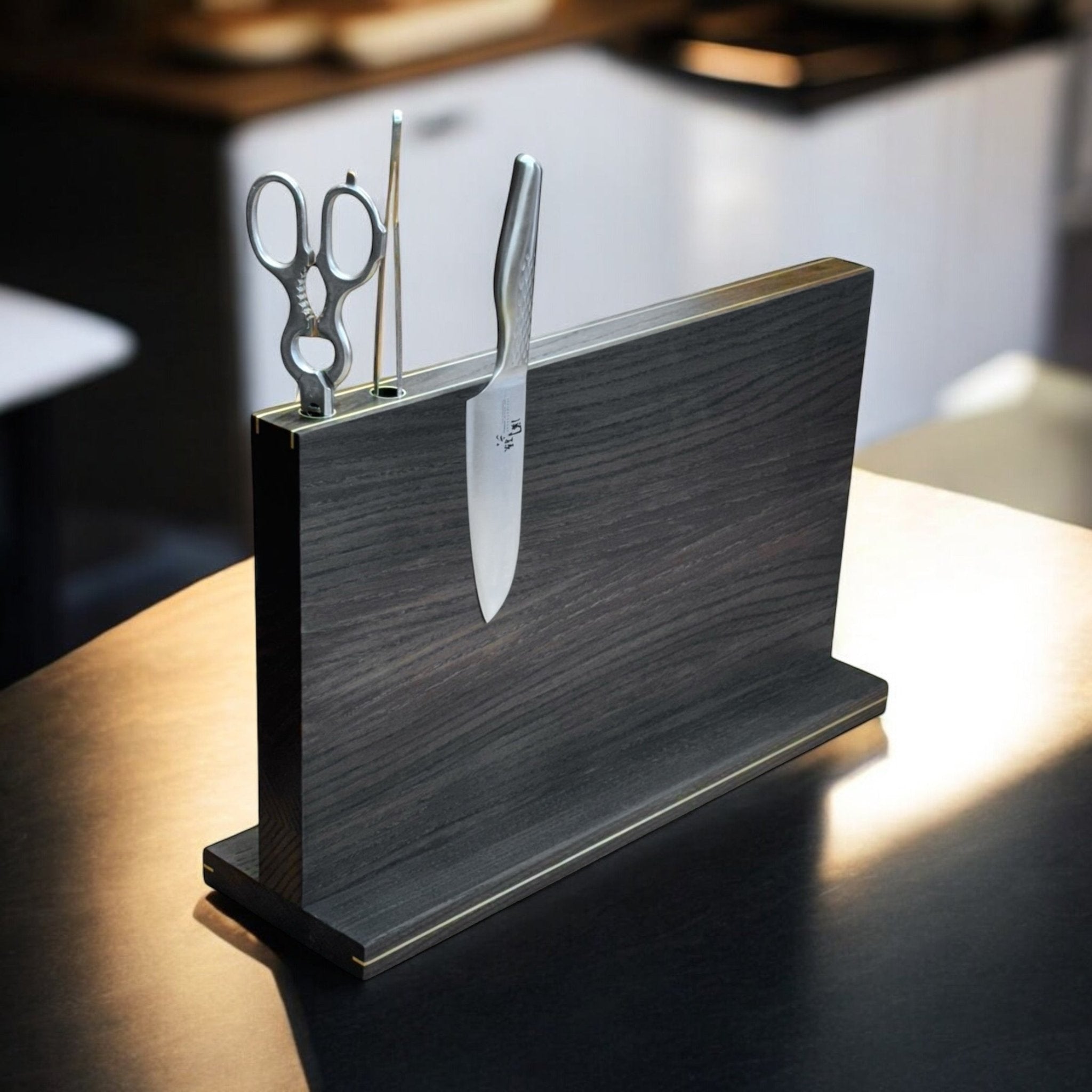
Knifeboard Magnetic attaches directly to a magnetic refrigerator, extractor hood or another flat magnetic surface. It needs neither screws nor adhesive and can be moved without tools. First confirm that the particular surface is magnetic and that the rail holds securely.
Which option should you choose?
- Screws: the first choice for most walls and a stable, removable installation.
- Adhesive or tape: for a completely flat surface when holes must be avoided and the rail has been prepared for it.
- Magnetic back: a movable option for suitable metal surfaces.
Allow enough room to lift each knife clear of cabinets, the worktop and other utensils. Do not load the rail until the screws have been checked or the adhesive has fully cured.
Read next
- How to install a magnetic knife holder from Rune-Jakobsen design
- How strong should a magnetic knife block be? More is not always better
- How long should a magnetic knife holder be? A guide to knives and wall space