Can a magnetic knife holder damage your knives?
The short answer is no: a magnetic field does not grind steel off a knife's edge and does not in itself dull the knife. But a magnetic knife holder can – just like a knife block, a drawer or a cutting board – be misused.
The key is not the magnetism. It's the contact between blade and holder, the magnetic strength, and the way you put the knife on and take it off.
Where can the damage occur?
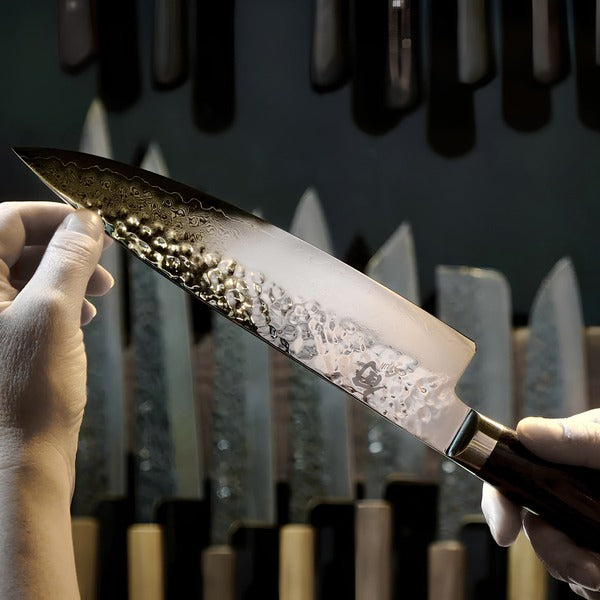
A sharp edge is thin. On hard, especially Japanese knives, the outer part of the edge can be less tolerant of impact and twisting than on a softer, thicker blade. Allowing the edge to strike directly against a hard metal surface or twisting the knife off the rail with the edge as the point of contact can create unnecessary mechanical stress.
The same principle applies elsewhere in the kitchen: the sharp egg should not be used as a lever or hit against hard objects.
Wood or leather between magnet and blade
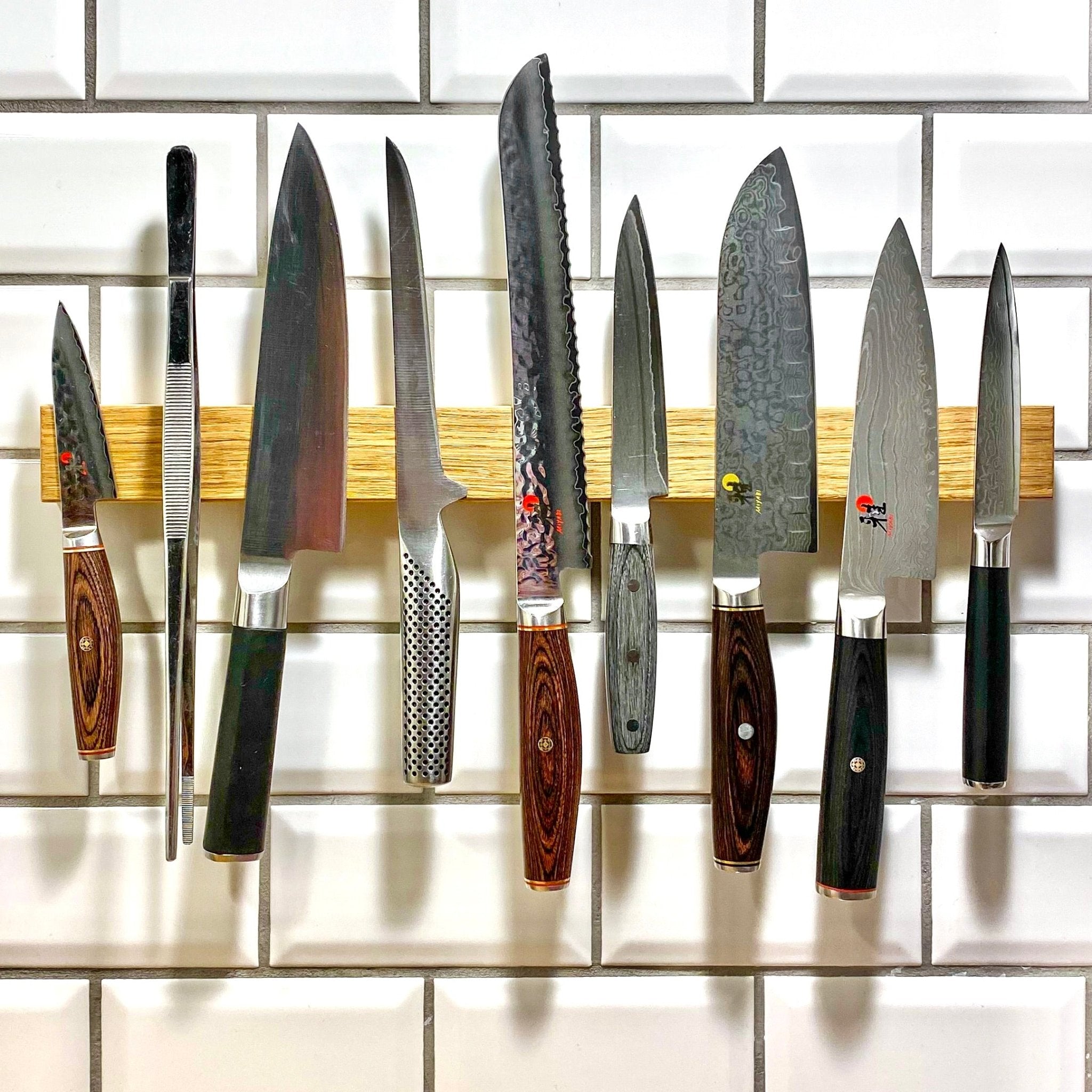
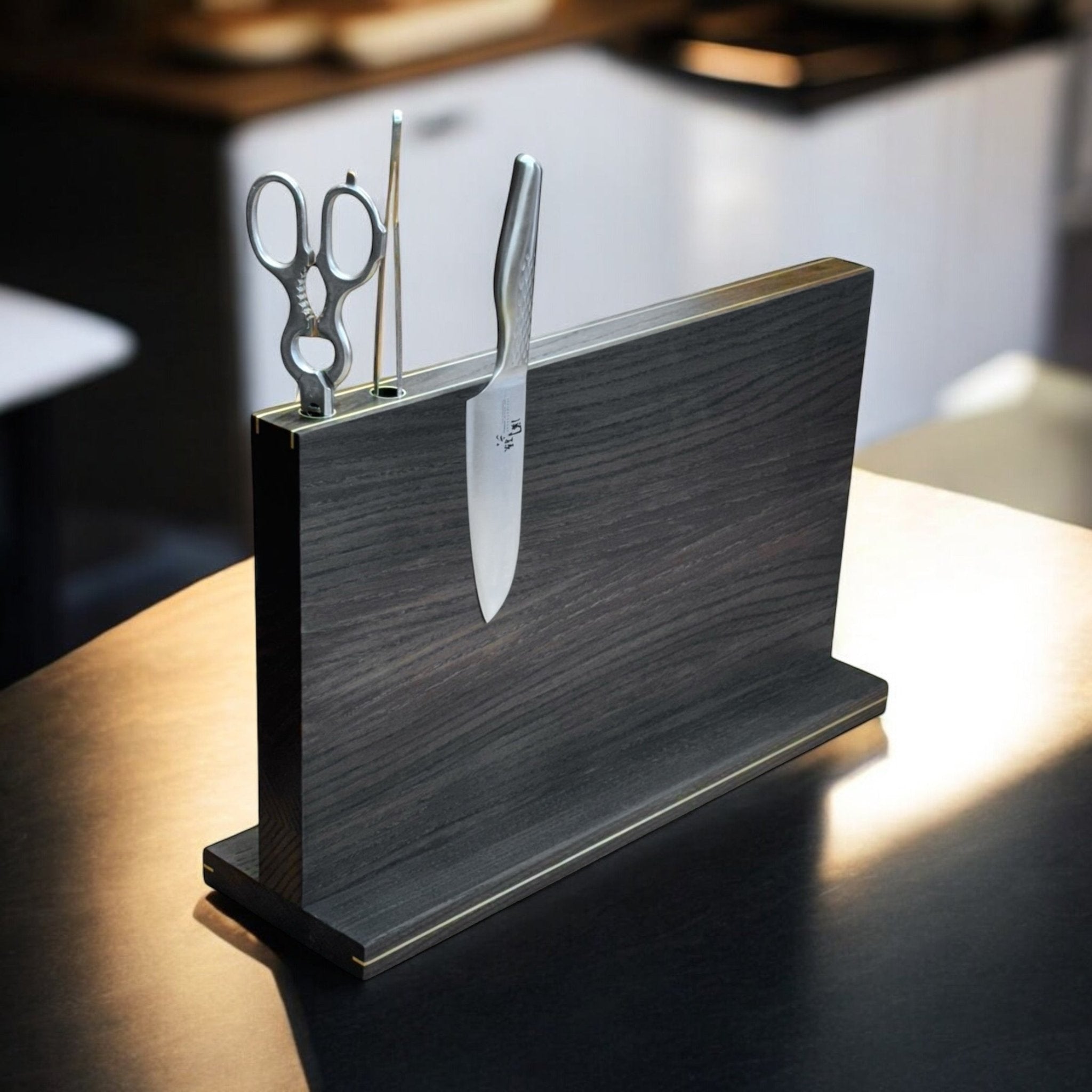
On our knife holders, the magnets are hidden inside the construction. The knife therefore meets wood – or on selected models leather or linoleum – and not an exposed magnet in metal. This reduces the risk of hard metal-to-metal contact and at the same time protects the sides of the blade from cosmetic marks.
This does not mean that you can just slam the knife onto the holder. A strong magnet should be able to hold it securely, and the final movement should always be controlled.
How to put on the knife
First bring the back or top of the blade into contact with the holder and then allow the rest of the blade to make contact. This will control the pull of the magnet and prevent the edge from hitting the surface first.
How to take it off
Do not pull the entire knife straight out in one go. Instead, tilt or roll the back away from the holder first. As the contact area becomes smaller, the magnetic holding force decreases and the knife can be removed in a controlled manner without twisting the blade itself.
Can the magnet affect the steel?
A steel blade can become weakly magnetized after contact with a strong magnet. This can, for example, cause very small iron particles to be attracted when sharpening. However, this is something other than damaging the hardness or cutting ability of the steel. The permanent magnet in a regular knife holder does not change the blade geometry of the knife.
The magnetic strength must match the knife
Too weak a magnetic force is not an advantage. A knife holder must be able to hold the blade securely without it slowly sliding. Conversely, a very strong rail must be used with the right technique so that the knife is not pulled in uncontrollably towards the surface.
We therefore use different magnet configurations in our range. The standard models are sized for most kitchen knives, while stronger versions provide extra holding power for steel types or blade constructions with weaker magnetic response.
And what about Japanese knives?
Japanese knives can be stored magnetically without any problems when the holder has a gentle contact surface and is used correctly. For very hard, thin blades, the controlled movement is even more important.
Our recommendation is simple: back first on – back first off.
See our magnetic knife holders or read our instructions for use and care .