Linen or Cotton Napkins: Material, Size and Table Setting
Either material can be the right choice
Linen and cotton are both plant fibres, but weave, weight and finishing matter almost as much as fibre. Linen often has lively texture and relaxed drape. Cotton may feel softer from the beginning and often creates a smoother, more uniform table setting.
Linen: texture and natural drape
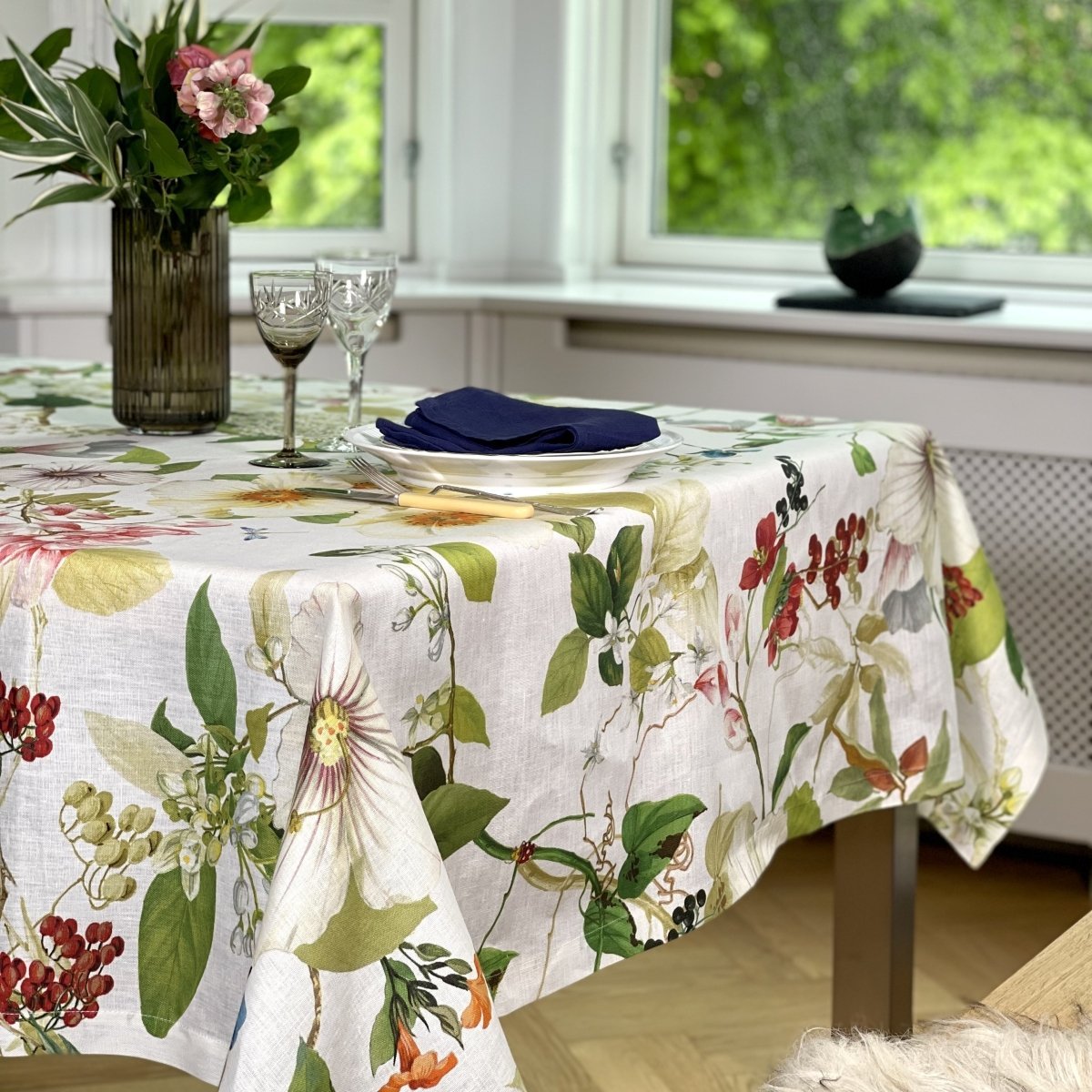
Linen napkins suit a setting where texture is meant to be seen. The fabric typically softens with use and washing, and gentle creases can belong to its character. Linen works well in a loose knot, simple fold or placed beneath the cutlery.
Cotton: softness and crisp folds
Cotton napkins are often supple and easy to fold symmetrically. A close weave creates a calm surface that suits patterned cloths and classic white settings. When sharply defined folds matter, ironing according to the maker’s instructions can make the difference.
Size changes function and appearance
Around 40 × 40 cm is practical for lunch and informal meals. A 45–50 cm napkin provides more fabric for dinner, the lap and decorative folds. Check finished dimensions and remember that heavier fabric takes more room in napkin rings and elaborate shapes.
Washing and combining at the table
Follow care instructions, treat stains early and avoid excessive fabric softener, which can affect feel and absorbency. Napkins need not match the tablecloth exactly: repeat one colour, create a quiet contrast, or use weave and edging as the shared detail.
Read next
- How to Choose a Tablecloth for Round, Oval and Rectangular Tables
- Tessitura Toscana Telerie — Italian textile art from Florence since 1947