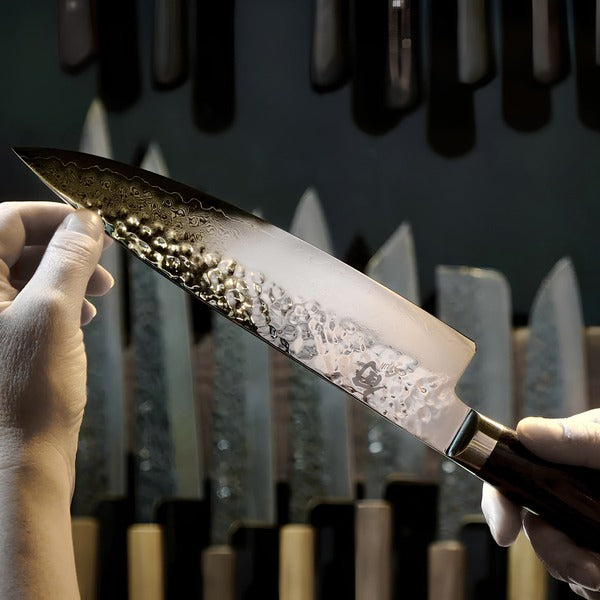
Damascus steel and magnetic knife holders – what do you need to know?
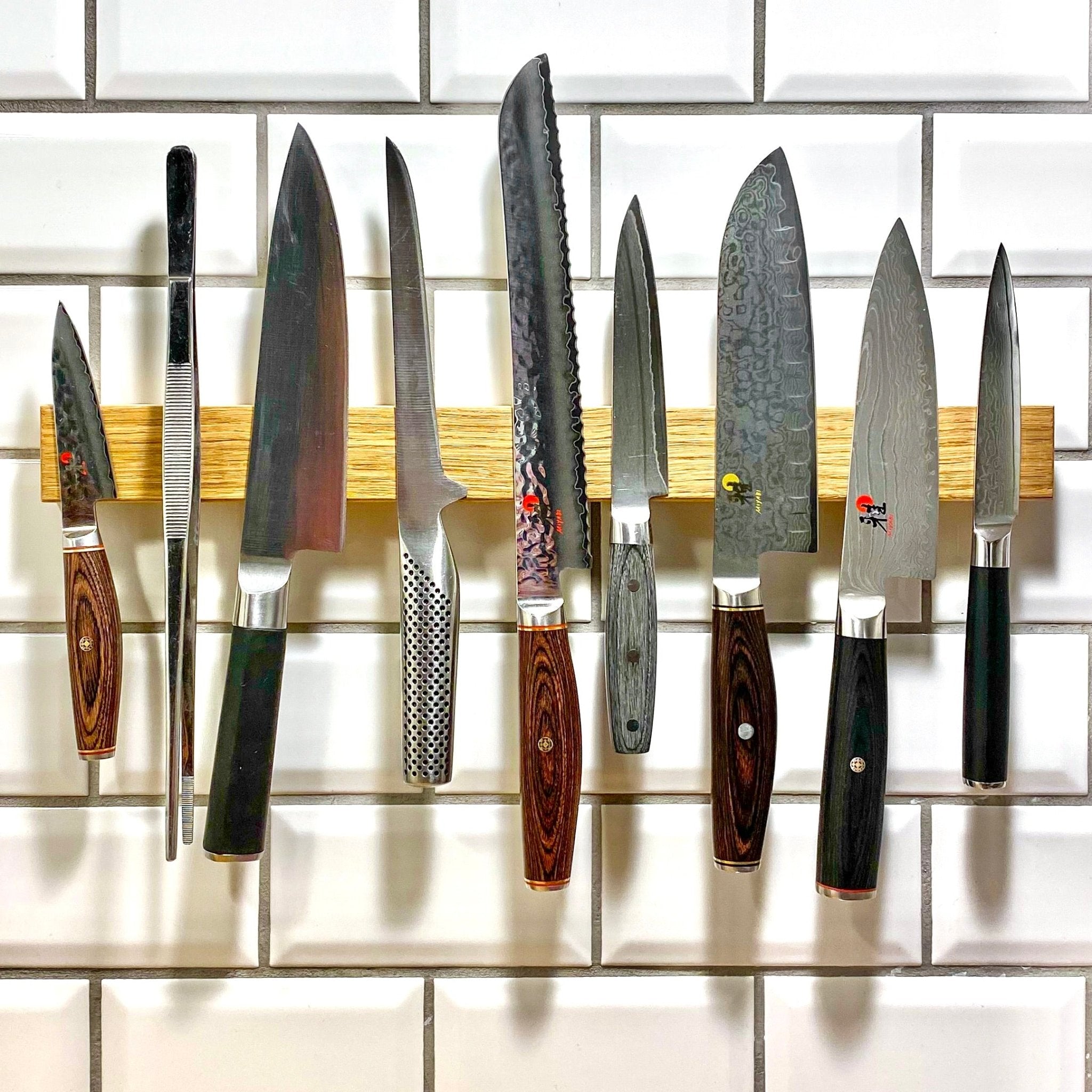
A Damascus knife can usually be hung on a magnetic knife holder in the same way as other steel kitchen knives. The characteristic pattern does not in itself change the basic magnetic rules. What is crucial is which types of steel the blade is actually made of.
“Damascus” primarily describes a construction or pattern. Modern pattern-welded blades can consist of multiple alloys around a core, and the individual steels can have different magnetic responses.
The pattern does not determine the magnetism
Pattern-welded Damascus is made by welding different steels together and then machining and etching the material so that the pattern becomes visible. Knife Steel Nerds describes how alloy differences create the contrast after etching.
Magnetism, on the other hand, is determined by the metallurgical structure and composition of the steel. A beautiful, complex pattern does not automatically make the blade more or less magnetic.
Many knife steels are strongly magnetic
The British Stainless Steel Association describes martensitic stainless steels as magnetic. Many hardened knife steels belong to this broad structural family. Austenitic stainless steels, on the other hand, can be much less magnetic.
On a laminated blade, the core steel and outer layer can therefore together produce a magnetic response that cannot be predicted from the word “Damascus” alone.
The front of the holder affects the force
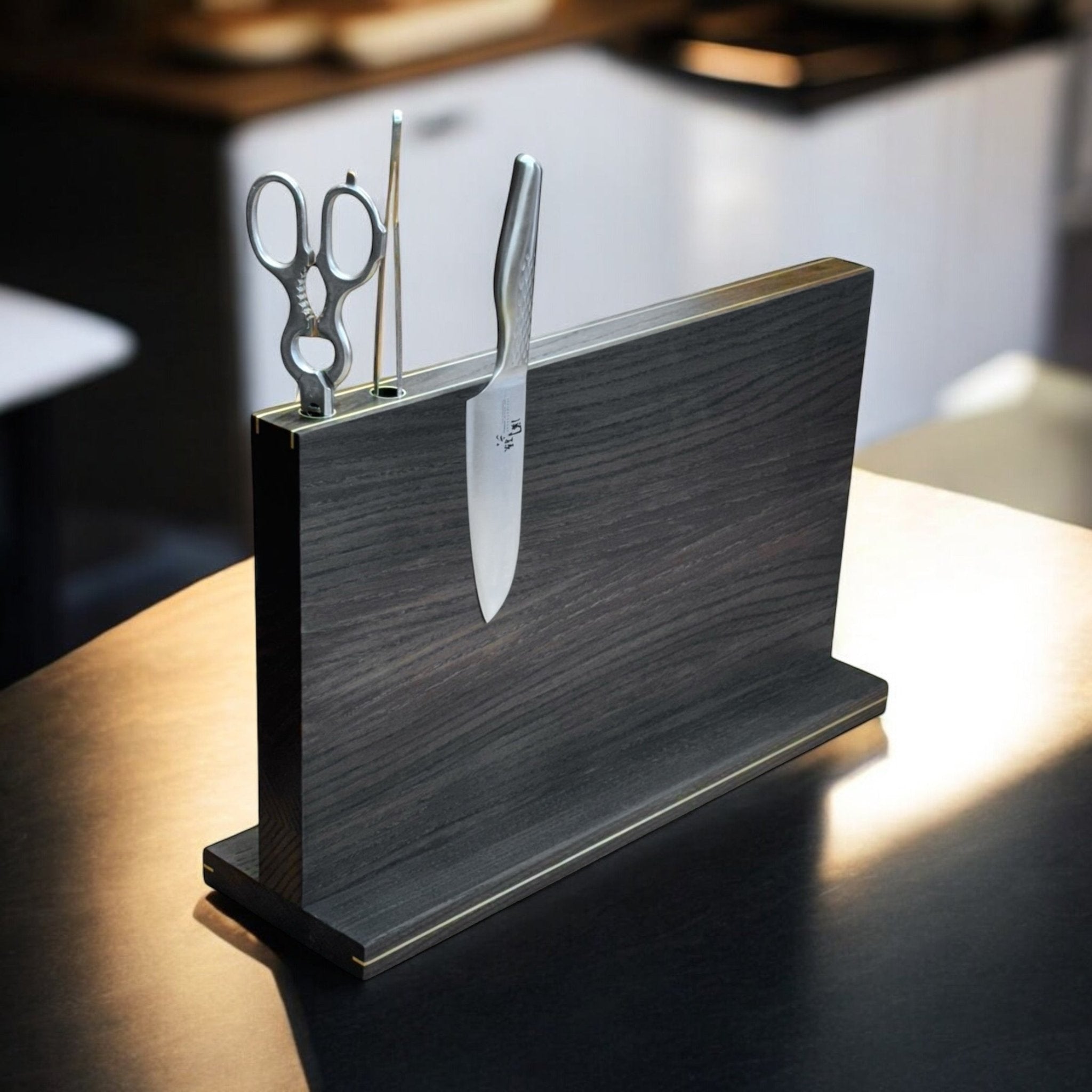
On a knife holder with wood, leather or linoleum between the magnet and the blade, the distance is a design parameter. K&J Magnetics shows that the pull force drops significantly with even relatively small gaps. Therefore, the magnet layout must match the thickness of the front.
If a particular Damascus knife seems unusually weakly magnetic, a stronger holder or larger magnetized surface may be relevant. This should be tested with the knife itself.
Protect the surface mechanically
A magnet will not scratch the steel from a distance; any marks will occur through physical contact and movement between the blade and holder. A clean wood, leather or linoleum front and a controlled removal will reduce the risk of cosmetic marks on a polished or etched blade.
It is best to remove the knife by tilting the back out first instead of pulling the blade sideways across the front.
The short answer
If you have a Damascus knife, the question is not “can Damascus hang magnetically?”, but “how magnetic is this particular blade, and does the holder design suit it?” For most modern Damascus kitchen knives, the answer is straightforward.
See magnetic knife holders in wood, leather and linoleum . See Japanese kitchen knives .
Convenient to remember
If you are particularly concerned about preserving a dark etched pattern or a mirror-polished surface, cleaning the front of the holder is important. Small grains of sand, metal shards or dried food particles can act as an abrasive if the blade is dragged over them. Therefore, wipe the front with a soft, slightly damp cloth as needed and let it dry. Avoid “testing” the magnetic strength by repeatedly slamming the blade against the holder. Hold the handle, gently slide the blade’s surface towards the front, and tilt the back out when removing. This movement reduces both contact friction and the force you have to overcome. This is especially relevant on wide Japanese blades, where the contact surface can be large.
This way, the magnetic storage is both practical and gentle on the decorative surface.
Always test a new combination calmly before the knife is permanently in place.
Sources and further reading
- Knife Steel Nerds: Pattern-Welded Damascus Steel
- British Stainless Steel Association: Magnetic Properties
- K&J Magnetics: Magnets vs. Steel and Air Gaps