How strong should a magnetic knife holder be? More is not always better
A magnetic knife holder has one basic job: the knife must sit securely on the wall and come off in a controlled way when it is needed. That is why “as strong as possible” is not the same as “as good as possible”.
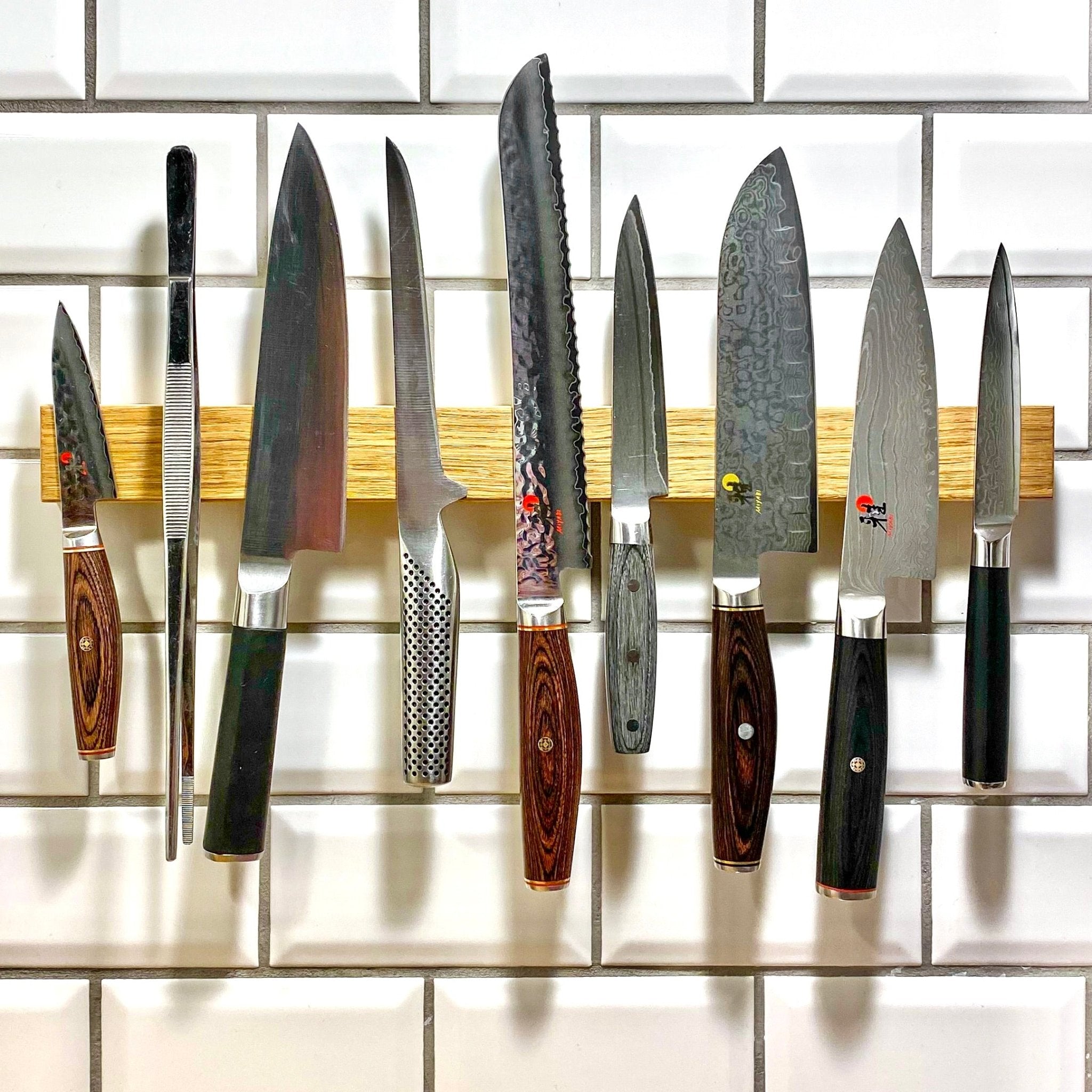
The holding power you feel in your hand does not depend on the magnets’ strength grade alone. The distance between magnet and blade, the number of magnets and their placement, the width of the contact surface and the steel of the knife all play a part. That is true of any knife strip or knife magnet – and those are the factors we have built our own magnetic knife holders around.
Distance costs the most
A magnetic field falls off quickly with distance. K&J Magnetics show in their measurements that even a few millimetres of gap between magnet and steel reduce the attraction noticeably. On a magnetic knife holder with a wood or other material front, the thickness of the layer between magnet and knife is therefore the single factor that matters most for the real holding power.
It also means two magnetic knife holders cannot be compared on the N rating of their magnets alone. A smaller magnet close to the blade can hold better than a larger magnet set deeper behind the front.
In our solid-wood models, the distance between knife and magnet is minimal. That is down to the specialised manufacturing technique we use in our workshop, which lets us work with a layer of wood against the blade that is markedly thinner than is normally possible – without compromising on a smooth, unbroken surface. How we do it in practice we keep to ourselves, but it is the reason our standard-strength models hold ordinary kitchen knives securely without making the knives unpleasant to take down.
Leather, linoleum and cork – more distance, the same hold
On our models with a leather, linoleum or cork front, there is an extra layer between the knife and the wood. That increases the distance to the magnets – and with the same magnets, the holding power would drop.
So we adjust the magnetic force to the front material. The models with a covered front get stronger magnets, sized so the knives experience the same hold as on the solid-wood model with minimal distance. The result is that you can choose the front for its look and for how gently the knives should be treated, without compromising on how securely they sit. The leather front also dampens the sound and protects the flat of the blade when the knife is put in place.
Several rows of magnets give more contact points
Holding power is not only about how hard the pull is, but also where it acts. A narrow magnetic knife holder with a single row of magnets holds the knife in one band on the blade. That is plenty for most kitchen knives, but a wide or heavy blade with a substantial handle gets a lever arm working against that single contact point.
Our wide models therefore have the magnets spread over several rows. That gives contact points at several places on the blade, so the knife rests calmly against the front rather than tipping about a single point. It is not the same as a higher maximum pull force – but in practice it is often what makes the difference for a wide chef’s knife or a heavy slicing knife. The width also lets knives with different blade heights hang at the same height without tips or handles touching.
The steel of the knife matters
Not all stainless steels are equally magnetic. The British Stainless Steel Association describes ferritic and martensitic stainless steels as clearly magnetic, while austenitic grades can have a very low magnetic response. Most knife blades are made of hardenable martensitic steel and hold well, but alloys and constructions vary.
Layered blades are the typical example. If the knife has a thin hardened core surrounded by softer layers with low magnetic content, it is the outer layer that touches the magnet – and it pulls more weakly. Combined with a heavy handle, such a knife can tip at the point on a magnetic knife holder where an ordinary chef’s knife of the same weight sits perfectly still. For that kind of knife we recommend our extra strong models, preferably in the wide version. If in doubt, hang the knife on the fridge door or on an ordinary magnet: if it sits loosely or tips, the steel is weakly magnetic.
When more force is a disadvantage
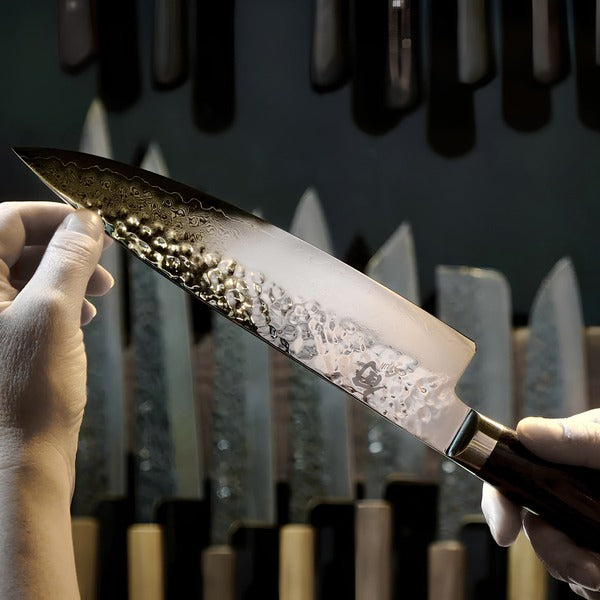
There are also knives that should not hang on the strongest model. Traditional Japanese knives with thin, hard blades – often carbon steel – strike the front harder the stronger the magnets are. That stresses the edge unnecessarily and increases the risk of damage if the knife is put on at an angle. Here standard strength gives a more controlled movement, and a leather or linoleum front dampens the impact further.
For very valuable or fragile knives that should not hang on a magnet at all, we have Katana – a knife stand without magnets, where the knives rest on brass supports and are held in place by gravity.
The practical balance
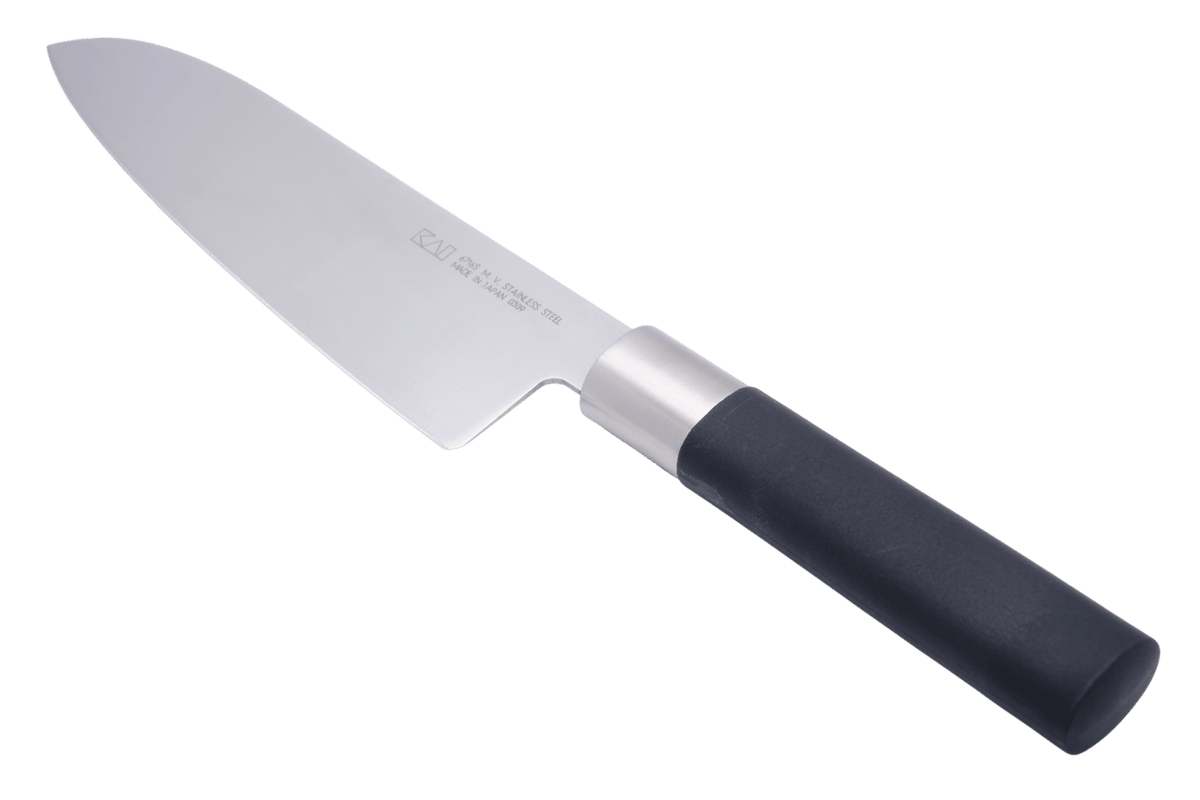
A good magnetic knife holder needs enough safety margin for the knives it is meant for, but should still make it natural to tip or lift the knife off without effort. Our standard models are sized for ordinary European and Japanese kitchen knives. The extra strong models are for heavy knives, weakly magnetic blades and situations where the holder has to sit low or be mounted where it may get knocked.
All our magnetic knife holders are made by hand in our own workshop in Denmark, in solid oak or walnut with neodymium magnets. Because we make them ourselves, we can also adapt them: length, width, front material and magnet strength can be combined so the holder suits your knives exactly.
The short answer
Judge magnet strength as part of the whole construction. What matters is not a single number, but whether the magnetic knife holder suits your knives, holds them securely and gives a controlled movement when they come off. The distance between magnet and blade, the number of contact points and the steel of the knife matter more in practice than the magnets’ strength grade.
See our magnetic knife holders. Read about how our magnetic knife holders are built.
Worth remembering
Mounting is the other half of safety. Even the best-built magnetic knife holder is only as stable as its fixing to the wall. Use the mounting method suited to the wall type and the weight of the holder, and check adhesive solutions in particular against the manufacturer’s requirements for the surface.
In daily use, put the knife on with the flat of the blade and take it off in a controlled way – do not drop it against the front or pull it sideways. That reduces both the shock load on the edge and wear on the front. If you have a new or unusually heavy knife, test it low and carefully before giving it a permanent place. Check the holder regularly too, especially after moving house or changing the mounting.
Sources and further reading
- K&J Magnetics: Steel Thickness and Magnetic Fields
- K&J Magnetics: Magnets vs. Steel
- British Stainless Steel Association: Magnetic Properties
Read also
- Magnetic knife holder: narrow or wide – which should you choose?
- Wood, leather or linoleum magnetic knife holder – benefits and differences
- Can a magnetic knife holder damage your knives?