Handmade Ceramics: Stoneware, Earthenware and Porcelain
Ceramics are a family of materials
Stoneware, earthenware and porcelain are not quality levels on a single ladder. They combine different clays, minerals, forming methods and firing. A skilled maker chooses a body for the intended expression and function.
Earthenware – warm, tactile and often more porous
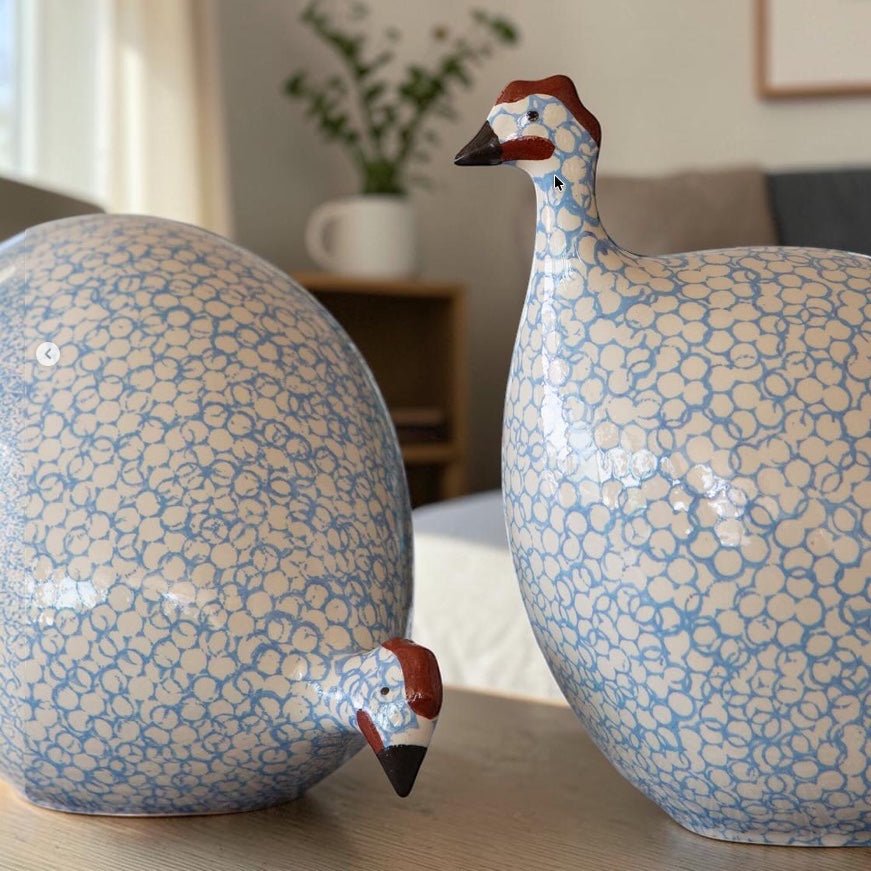
Earthenware is normally fired so the body remains more porous than stoneware or porcelain. It often brings warm earth colours and a direct sense of clay. Glaze can make a surface suitable for food and liquids, while unglazed areas may absorb moisture. Always follow the maker’s guidance.
Stoneware – a dense body with everyday strength
Stoneware is fired until the clay sinters into a relatively dense body. It is widely used for cups, bowls and plates. It can look refined or rustic; weight and thickness reflect the maker’s decisions, not the word stoneware alone.
Porcelain – pale, fine and sometimes translucent
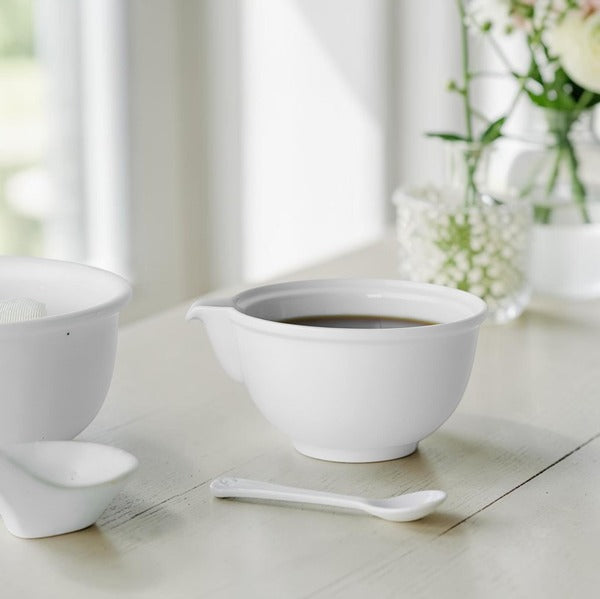
Porcelain uses a light, refined body fired to become dense. Thin porcelain may transmit light, but it need not be fragile or delicate. Its pale ground shows glazes and decoration clearly and can create a visually light object.
Glaze is part of the construction
Glaze does more than add colour and shine. It affects surface, cleaning and contact with food. Crazing, runs and tonal variation may be intentional effects, but suitability for use must be judged from the particular piece and its maker’s information.
Handmade means variation
Small differences in form, glaze, touch and firing record the process and are not automatically faults. At the same time, “handmade” should not excuse sharp edges, an unstable foot or defects that conflict with function.
Choose for use and expression
Dense stoneware or porcelain may be practical for plates and cups, while earthenware offers a distinctive tactile or decorative character. Always check food safety, dishwasher, oven and thermal-shock guidance. The material name is not an instruction manual.
Read next
- Les Céramiques de Lussan — ceramics with roots in a southern French village
- Crafts with origins
- Japanese craftsmanship: the difference between handmade and industrial production