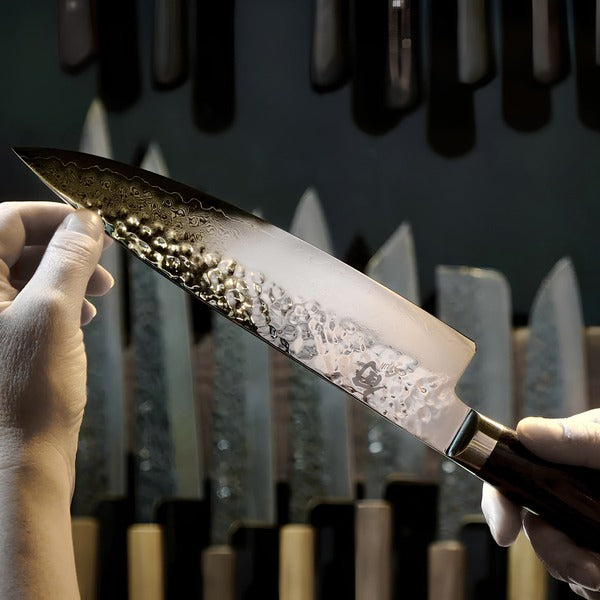
Guide to your first Japanese kitchen knife
Your first Japanese kitchen knife doesn't have to be the most exotic. It should be the knife you reach for again and again.
If you start with knife names, steel designations, and hardness numbers, the market can quickly seem more complicated than it is. We would reverse the order: start with the job the knife will do. Then choose the size and steel.
Start with an all-round shape
ZWILLING Japan's guide to the first knife points to Santoku and Gyuto as natural all-round choices. That is also our starting point.
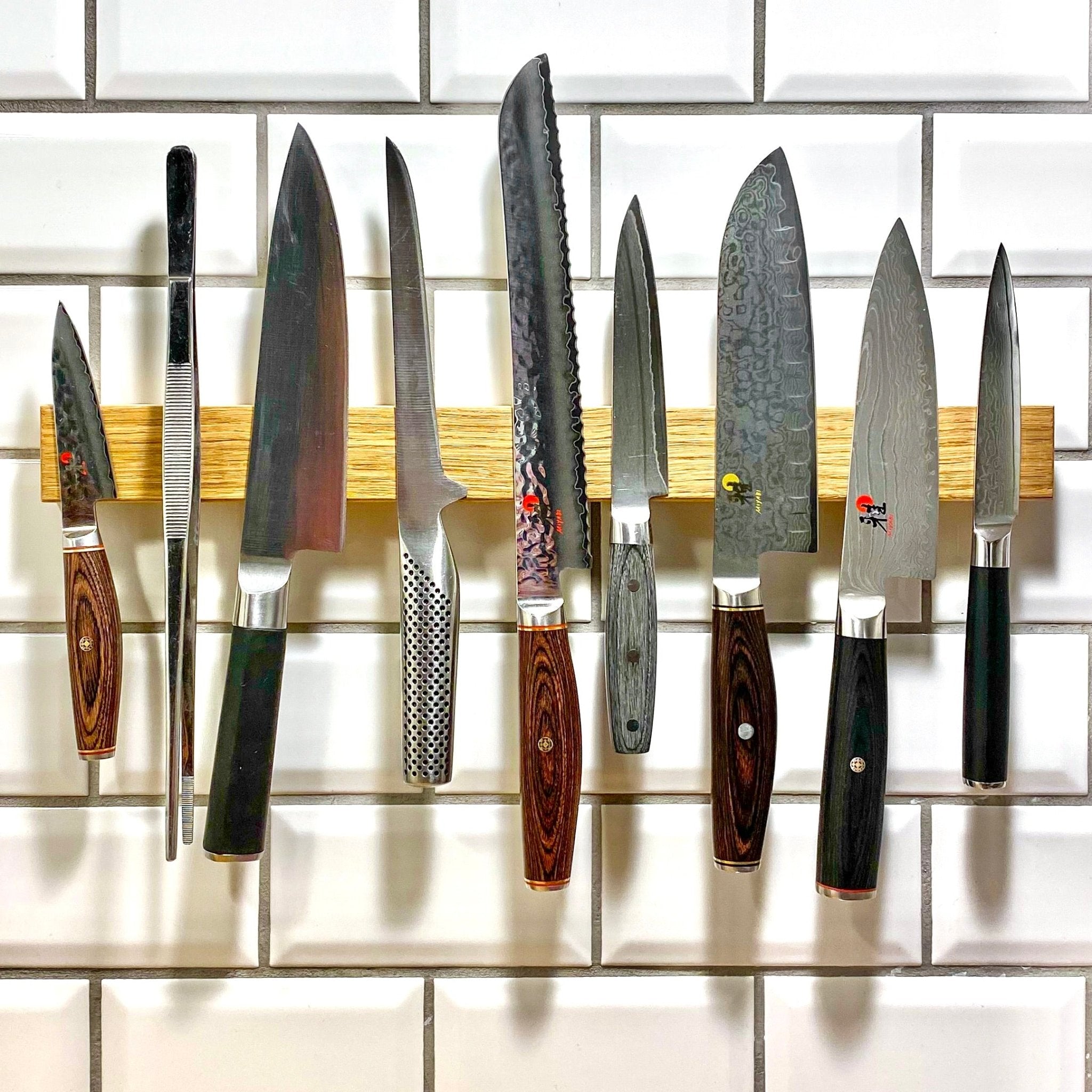
Santoku is typically around 15–18 cm and feels compact. The tall blade provides good knuckle clearance, and the relatively flat edge is well suited for controlled cuts through vegetables, fish and smaller pieces of meat.
The gyuto is the Japanese equivalent of the chef's knife and is often found from around 18 to 24 cm. The pointed front and longer blade provide greater reach and more flexibility for large ingredients, trimming and carving.
If you only want to own one Japanese kitchen knife, we would usually choose between the two rather than starting with a specialty knife like Nakiri, Deba, or Yanagiba.
What length?
Bigger is not automatically better. A 240 mm Gyuto is effective for large ingredients and long cuts, but also requires a cutting board and workspace that is appropriate for the length.
For a regular home kitchen, a Santoku around 165–180 mm or a Gyuto around 180–210 mm is often a very practical place to start. If you have large hands, a lot of counter space, or are used to long chef's knives, you can go up.
Stainless or carbon steel?
Here you should be honest about your habits. Carbon steel can be great to work with, but it needs to be dried quickly and will develop a patina. Korin recommends wiping directly during use with acidic ingredients and drying thoroughly after washing.
Modern stainless Japanese steels provide a greater safety margin against corrosion and can also deliver very high cutting performance. For most people buying their first Japanese knife, a good stainless steel is therefore the easiest way in.
Hardness is not a quality mark in itself
HRC numbers tell something about the hardness of the steel, but they don't tell the whole story. Higher hardness can support a thin, stable edge, but doesn't automatically make the knife better. Heat treatment, geometry, and sharpening are crucial.
A very hard, thin knife should also be treated as a precision tool. It is not made for twisting bones, opening packages with hard staples, or cutting frozen produce.
The handle should fit you
Japanese knives come in both traditional wa handles and more Western-oriented designs. The balance can feel significantly different. There is no one correct solution.
If you hold the knife far forward with a pinch grip, balancing close to the blade will often feel natural. If you hold it further back, a heavier handle may feel more familiar.
Also plan storage and grinding
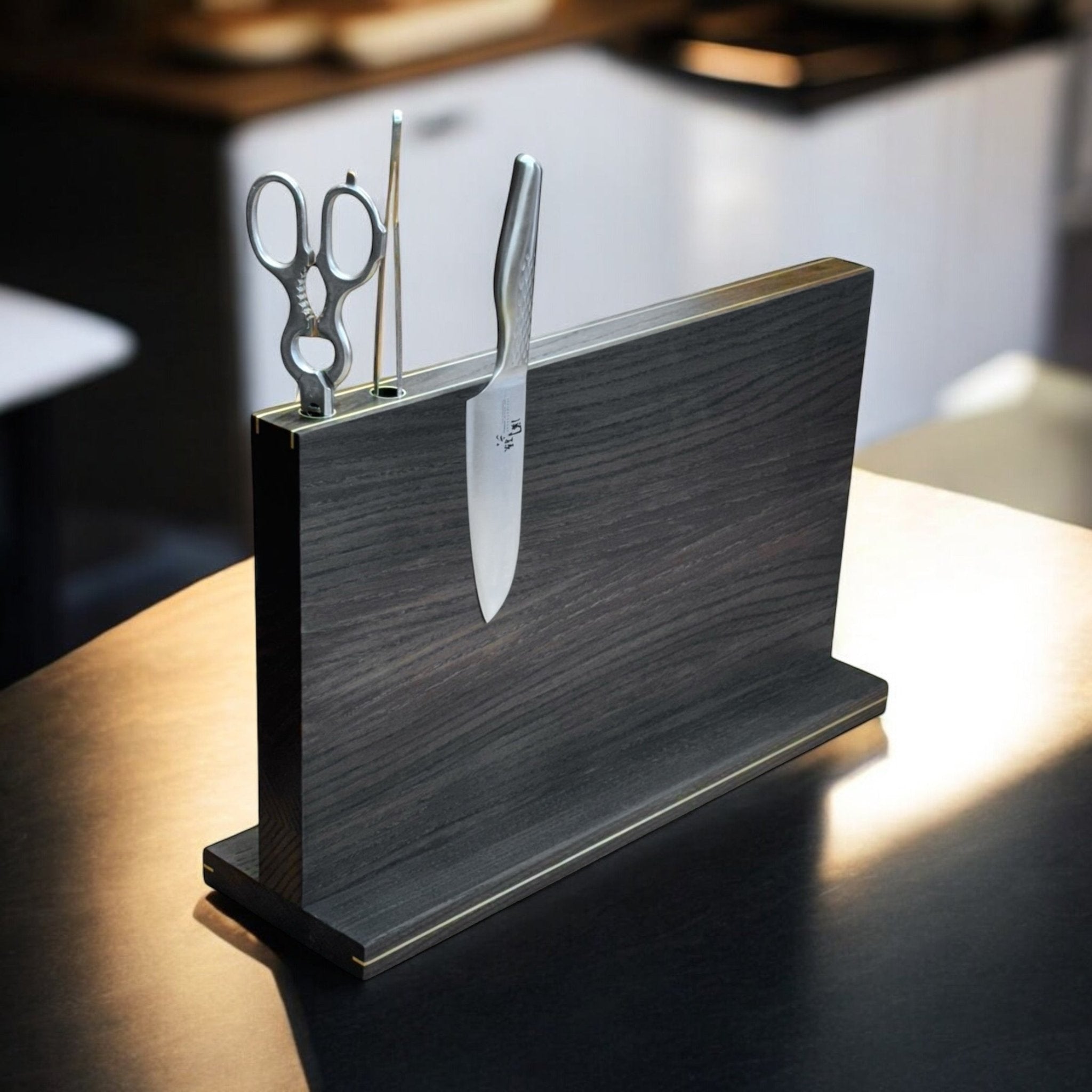
A good knife deserves a cutting board made of a suitable material and storage where the edge doesn't lie and hit other utensils. A magnetic knife holder, a suitable knife block or a sheath are all better solutions than a loose kitchen drawer.
And sooner or later, the knife needs sharpening. Waterstones provide great control over Japanese knives, but professional sharpening is an excellent alternative if you don't want to learn the technique from scratch.
Our simple starting point
If in doubt: choose a stainless Santoku of about 165–180 mm if you want maximum control, or a stainless Gyuto of about 210 mm if you want more reach. Use the knife for a few months. Only then will you know which special knife is actually missing.
See all our Japanese kitchen knives , or compare Gyuto and Santoku .