Copper vs stainless steel – differences in thermal conductivity and application
Copper and stainless steel are often seen as two opposites in the kitchen: one is associated with extreme heat conduction, the other with durability and easy maintenance. In practice, they are often combined because their strengths complement each other.
Therefore, the question is not necessarily “copper or stainless steel?” It could just as well be: Where in the pot should the copper be located, and what material do you want against the food?
Heat conduction: the great strength of copper
Copper conducts heat many times better than typical stainless steels. This means that temperature differences are equalized more quickly through the copper layer and that the cookware can respond quickly when you turn the heat up or down.
This property is particularly interesting for sauces, sugaring and other preparations where small temperature changes can be felt quickly. The Copper Development Association describes the high thermal conductivity as one of copper's key technical properties.
Stainless steel: less conductive, but practical
Stainless steel is significantly less effective at transporting heat, but in return provides a durable, corrosion-resistant and practical interior surface. This is why stainless steel is widely used as a food contact layer in professional multi-layer cookware.
A clean, thin stainless steel construction can develop hot zones, but when the steel is bonded to a core of aluminum or copper, you can combine robustness with much better heat distribution.
Copper requires a well-thought-out interior
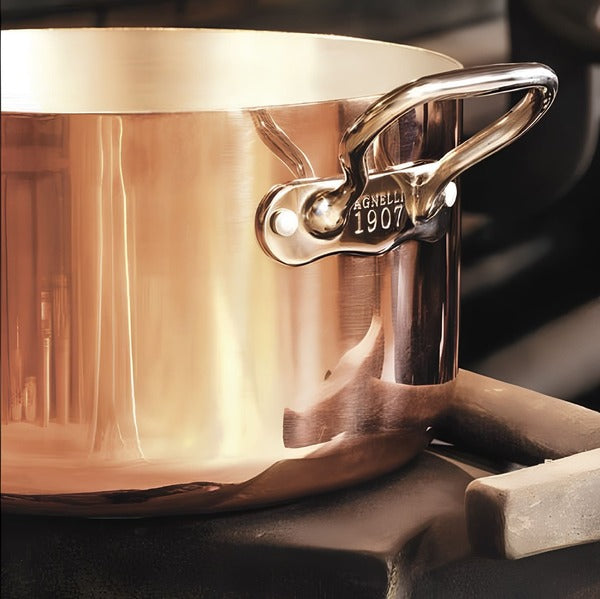
Unlined copper is reactive to certain foods. Modern copper cookware is therefore often lined with stainless steel or built as a multilayer construction. This is not a cosmetic detail, but a functional part of the design.
All-Clads Copper Core is an example of how copper can be used as a heat-conducting layer, while stainless steel forms the functional exteriors.
When do you notice the difference?
Copper's quick response is most valuable when you're actually actively regulating the heat. For a large pot of boiling pasta water, precision is less crucial than capacity and robustness. For a reduced sauce, the quick response can be far more interesting.
Induction also requires a magnetically compatible layer in the base or construction. Pure copper will not work directly on a regular induction zone.
The short answer
Copper is the superior heat conductor; stainless steel is the more practical work surface. When combined properly, you get high thermal response without having reactive copper directly on the food.
See 4-ply copper cookware . Read about stainless steel cookware .
Convenient to remember
Maintenance is also different. A stainless steel interior can normally withstand acidic ingredients such as tomatoes, wine and citrus without the same reactivity associated with bare copper. The copper exterior, on the other hand, can change color and develop a patina, which is cosmetic and can be polished if you want the shiny look. If the copper is only a hidden core, the practical maintenance is more like other stainless multi-layer cookware. Therefore, consider whether you are buying copper for the visible aesthetics, the thermal function or both. This makes it easier to choose between classic copper with a visible exterior and modern bonded constructions, where the copper layer is primarily a technical element.
On gas, the flames should also be kept below the bottom so that handles and sides are not exposed unnecessarily. On electric zones, the pot should fit the diameter of the zone to achieve even and efficient heating.
Sources and further reading
- Copper Development Association: Copper heat transfer benefits
- All-Clad: Copper Core Cookware
- Cookware Manufacturers Association: Guide to Cookware