Magnetic knife block vs. magnetic knife holder – what should you choose?
A knife rack and a magnetic knife block basically solve the same problem: storing knives safely, neatly and without them lying loose in a drawer. But they use kitchen space in two completely different ways.
Therefore, the choice is rarely a question of which solution is “best.” It’s about wall space, countertop space, knife storage, and how permanent the solution should be.
The magnetic knife holder – free tabletop
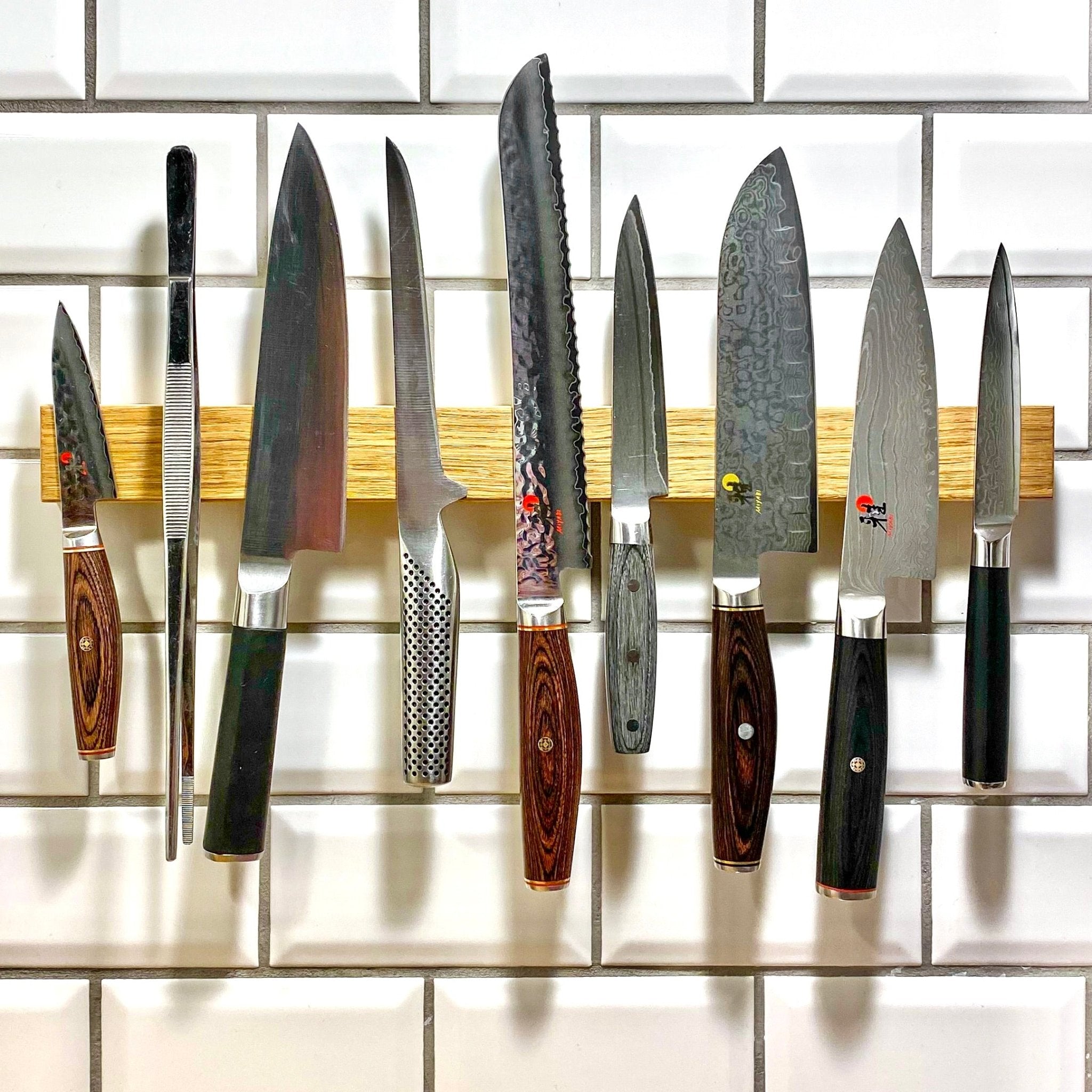
The biggest advantage of a wall-mounted knife rack is simple: it uses the wall instead of the countertop. The knives hang visibly and can be placed in the order you actually use them.
On a fully magnetic rail, you are not bound by fixed slots. Wide chef's knives, small herb knives and scissors can be placed at any distance that makes sense.
However, the rail requires a suitable location on the wall. Standard mounting with concealed brackets and screws provides the most controllable fastening. In some kitchens this may be a disadvantage if the wall is tiled, installations are concealed, or the accommodation is temporary.
The magnetic knife block – no wall mounting
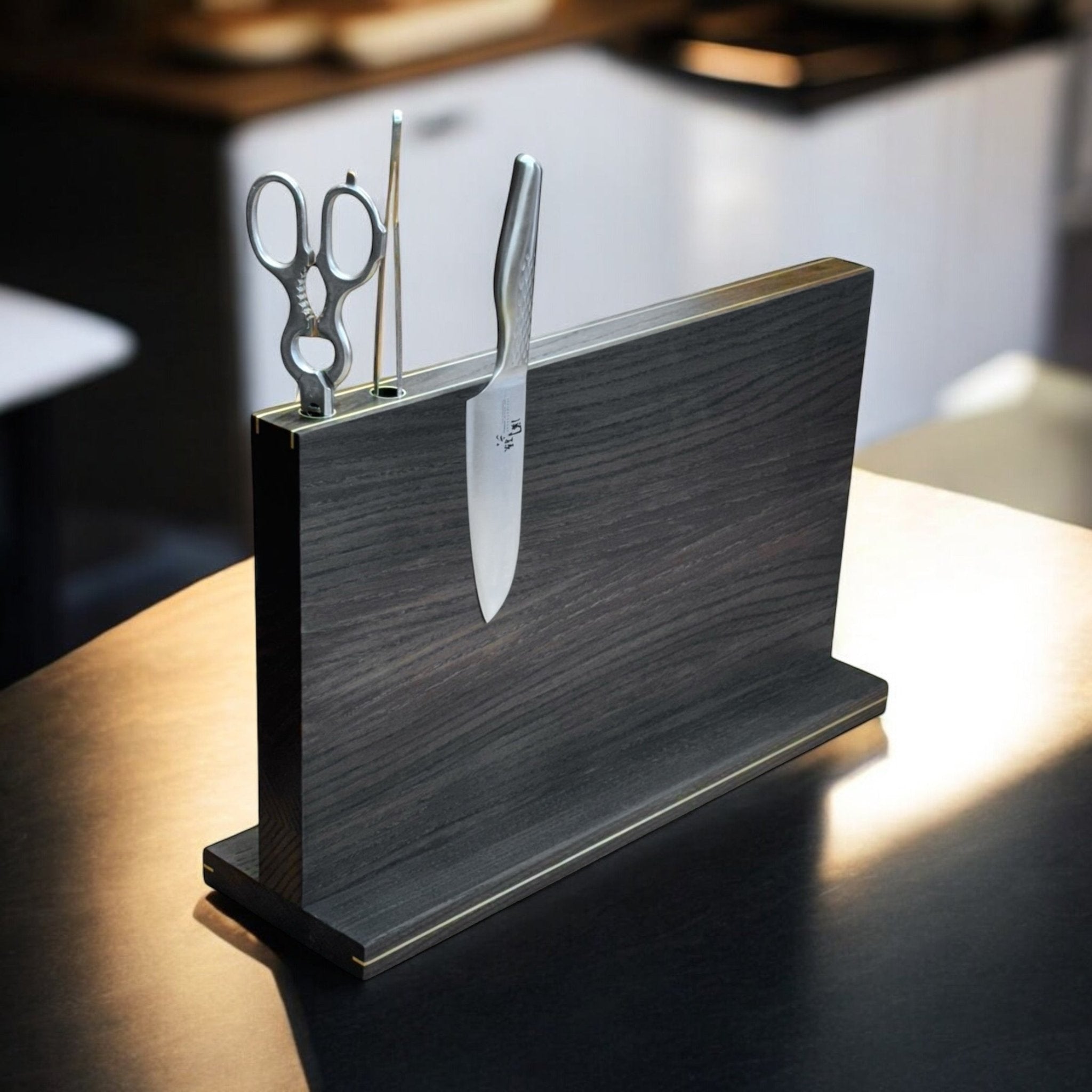
A magnetic knife block sits on the table. It can be moved, doesn't require holes in the wall, and can be placed where the workflow changes.
Our knife blocks are magnetic on both sides, making efficient use of the available surface area. This is especially handy if you have a larger knife collection but limited wall space.
The price of flexibility is desk space. A block is a physical object that takes up space in the work zone and needs a stable surface around it.
Which solution provides the best access?
Both solutions provide a better visual overview than closed storage if the knives hang freely on the surface. A rail can be placed directly above or next to the work area, while the block can be moved closer as you work.
If you have a very fixed workflow, the rail often wins out for simplicity. If your kitchen is used in multiple ways – or you move around a lot – the block may be more flexible.
What is best for long knives?
It depends on the dimensions. A wall rail has practically no table top under the blade to limit the length if it is mounted with sufficient clearance. On a knife block, the height and placement should suit the longest blades.
Our standard blocks are sized for most kitchen knives, and the length of the block itself can be adjusted as needed.
What about security?
A magnetic holder should hold the knife steady. Whether you choose a rail or block, the knife should be attached with the back first and removed by tilting the back away first. This provides a controlled movement and keeps the edge away from unnecessary shocks.
In homes with children, the placement must of course be assessed based on reach and access. A high wall placement can be a practical advantage here.
Choose a magnetic knife holder if…
- you want to keep the tabletop clear,
- you have a suitable wall close to the work area,
- you want a permanent and visually easy solution.
Choose a knife block if…
- you don't want or can't drill into the wall,
- you will be able to move the knife storage,
- You have desk space and want magnetic storage on both sides.
If in doubt, measure your wall space, your free countertop, and the width of the knives you actually own. This usually gives you the answer faster than a product photo.
See our magnetic knife holders and read the guide to choosing a magnetic knife holder .
Sources and further reading
- ZWILLING: Magnetic knife holder and safe storage
- Rune-Jakobsen Design: About magnetic knife holders
- Rune-Jakobsen Design: Mounting magnetic knife holders