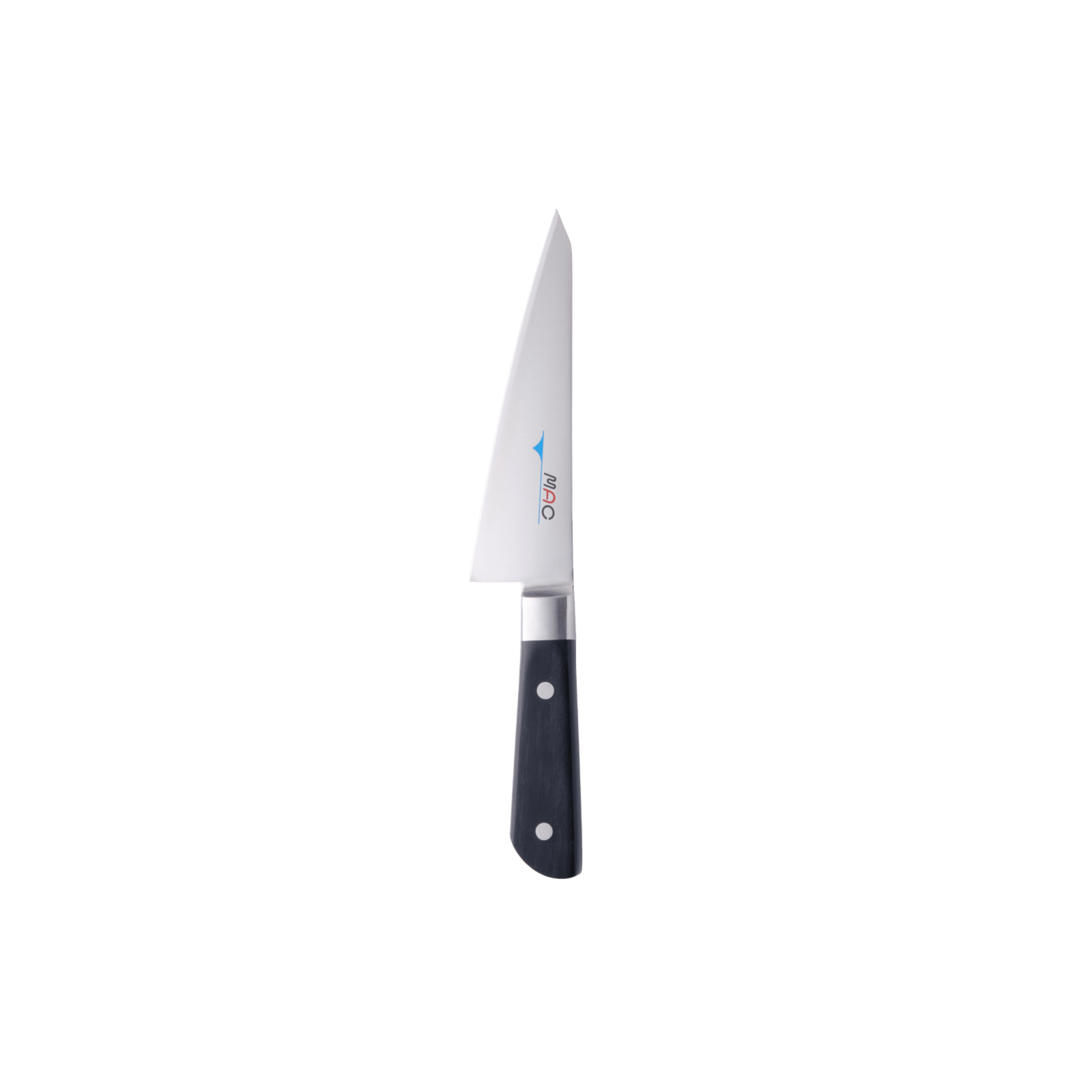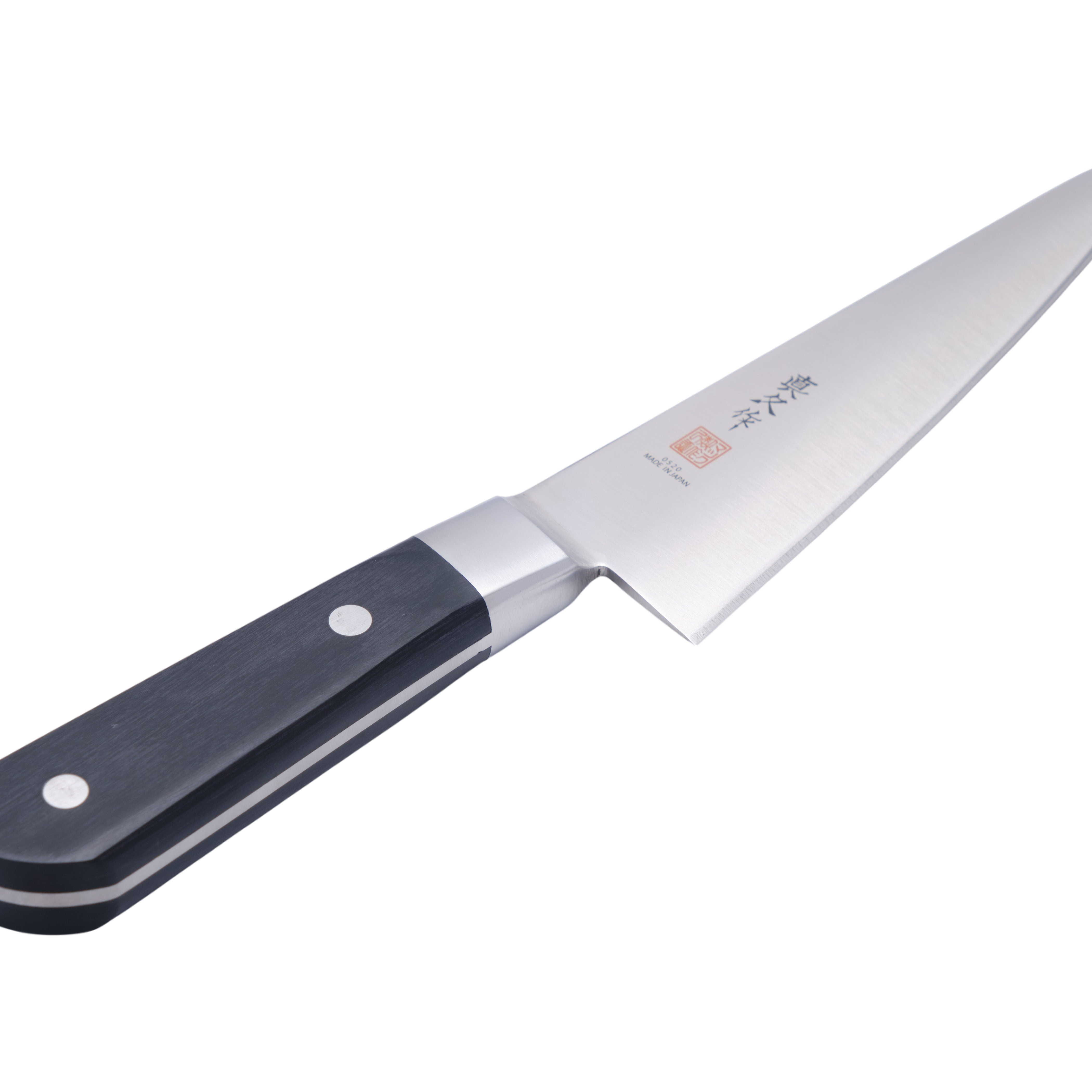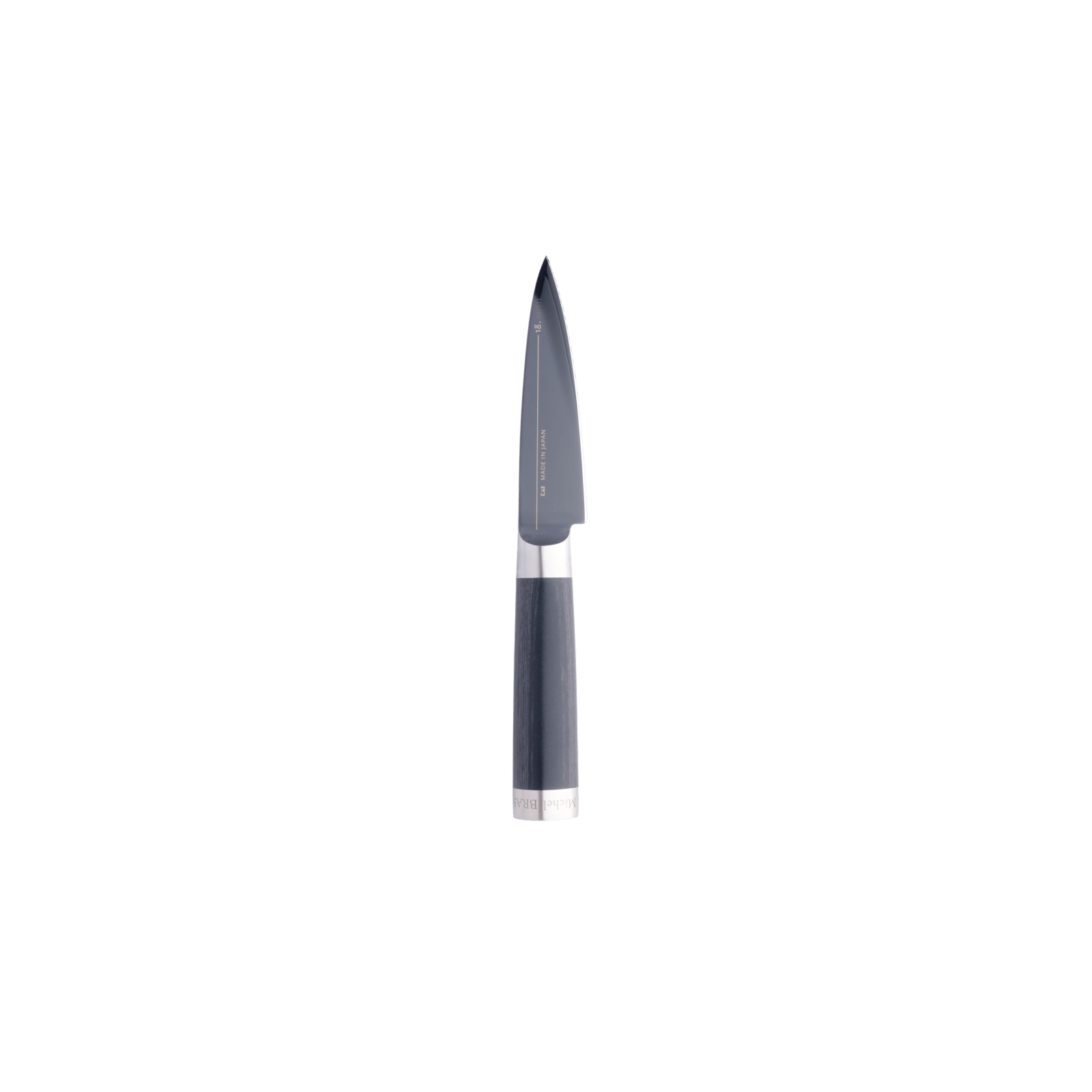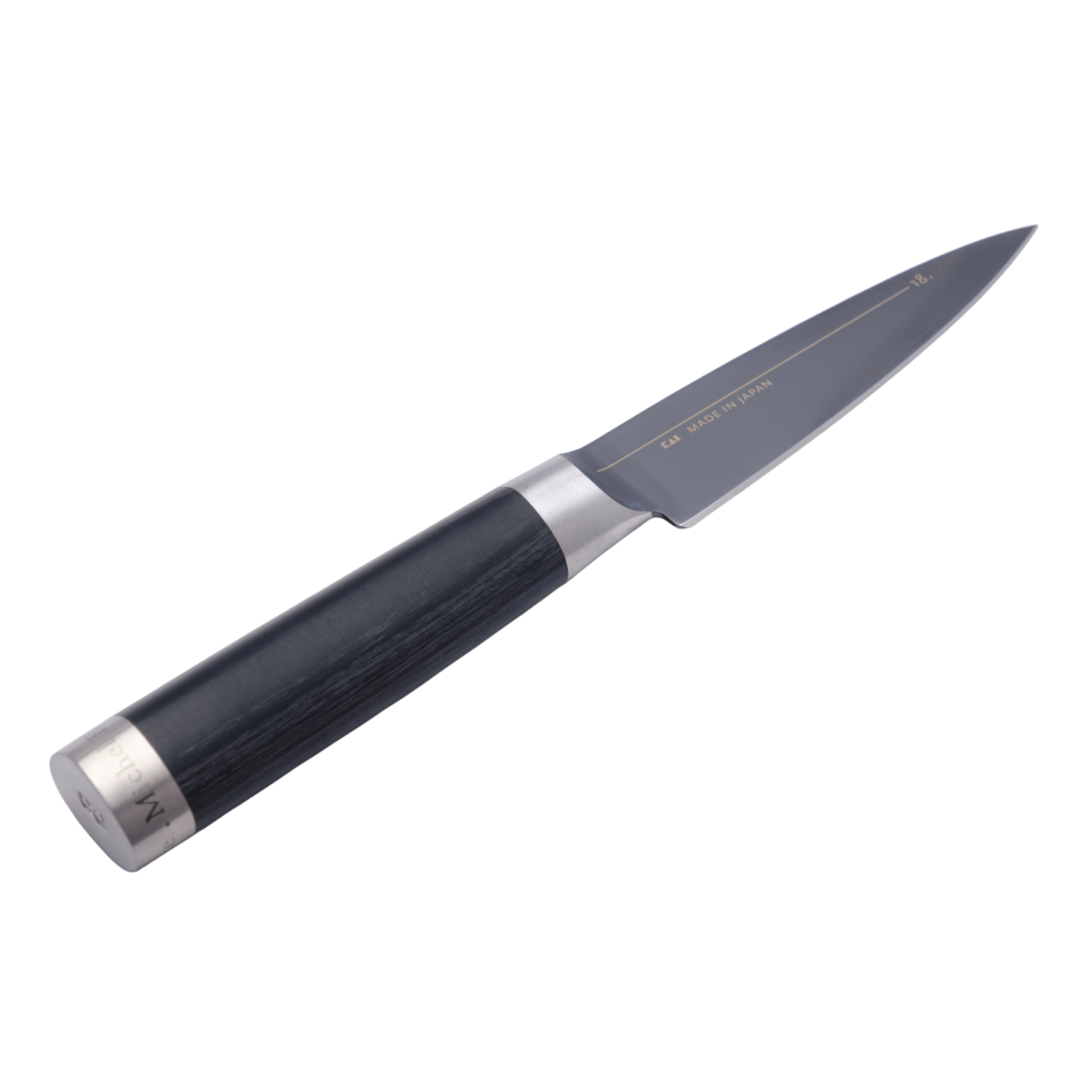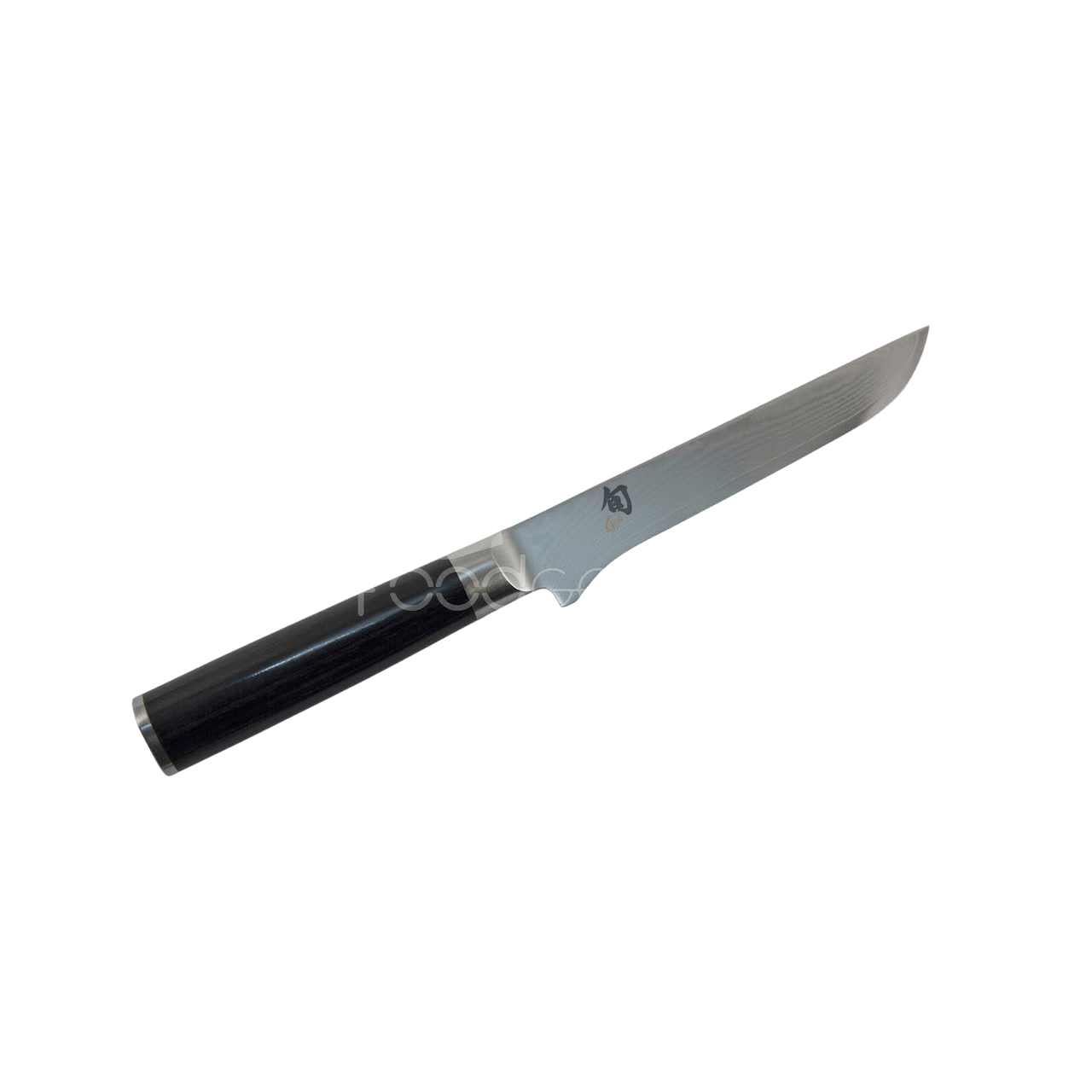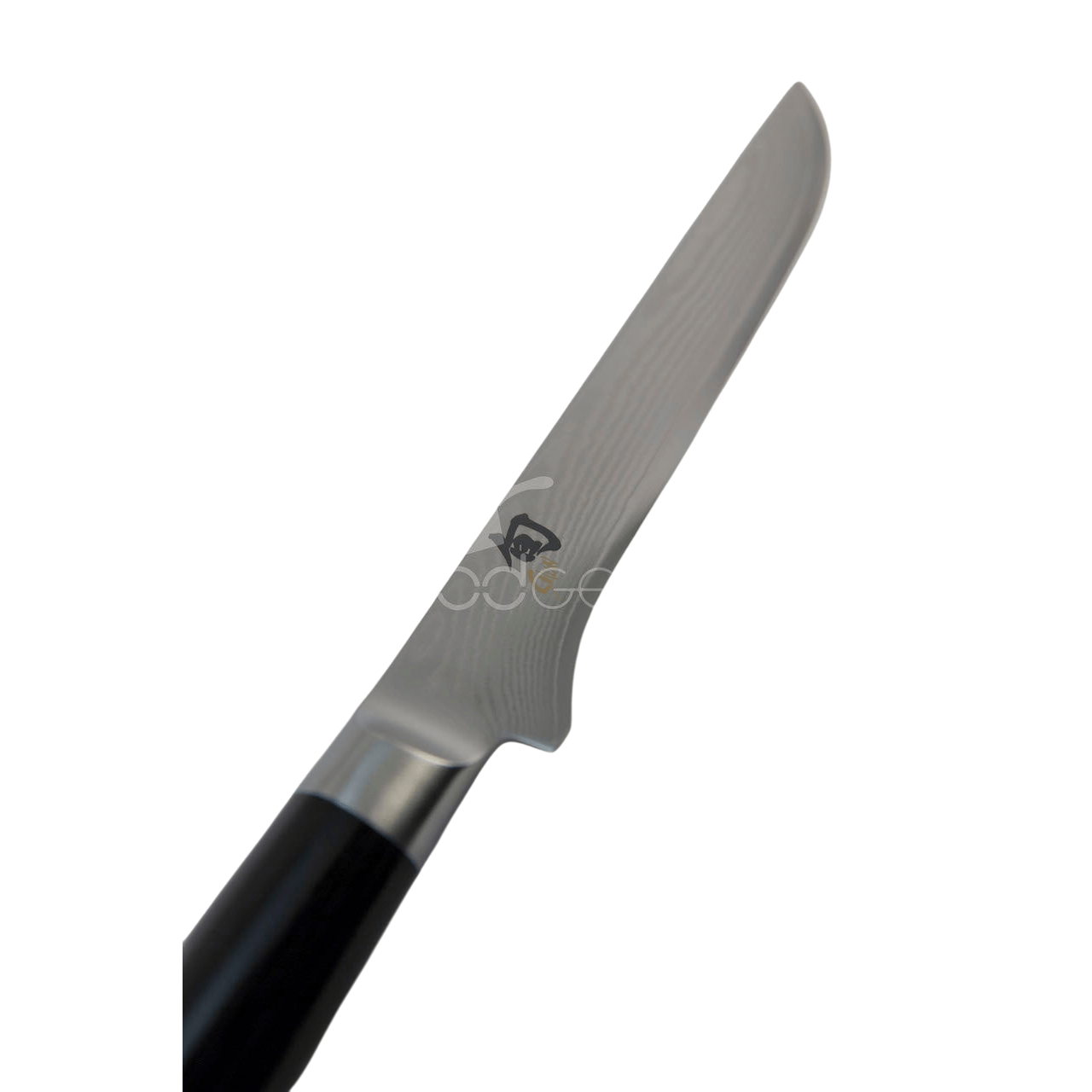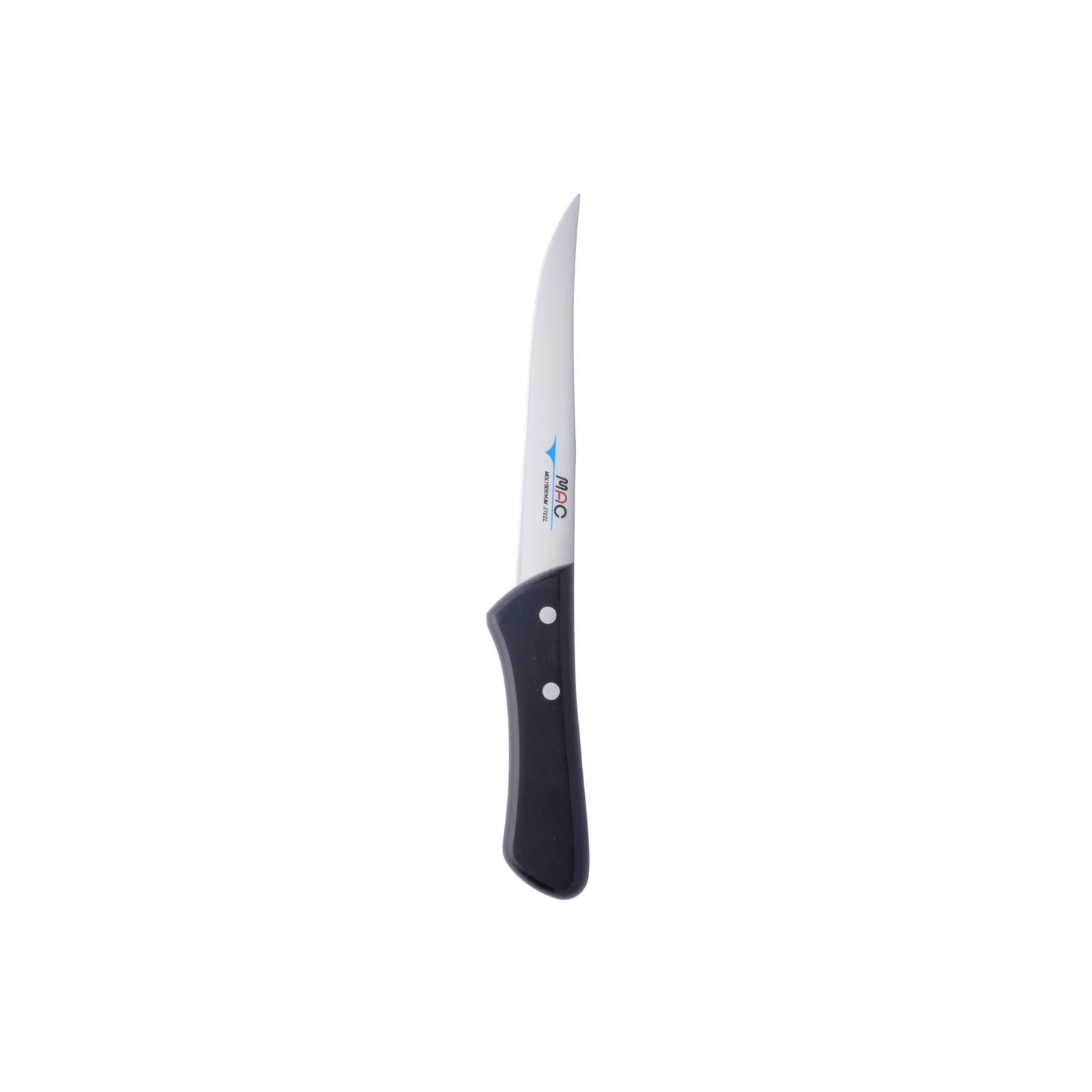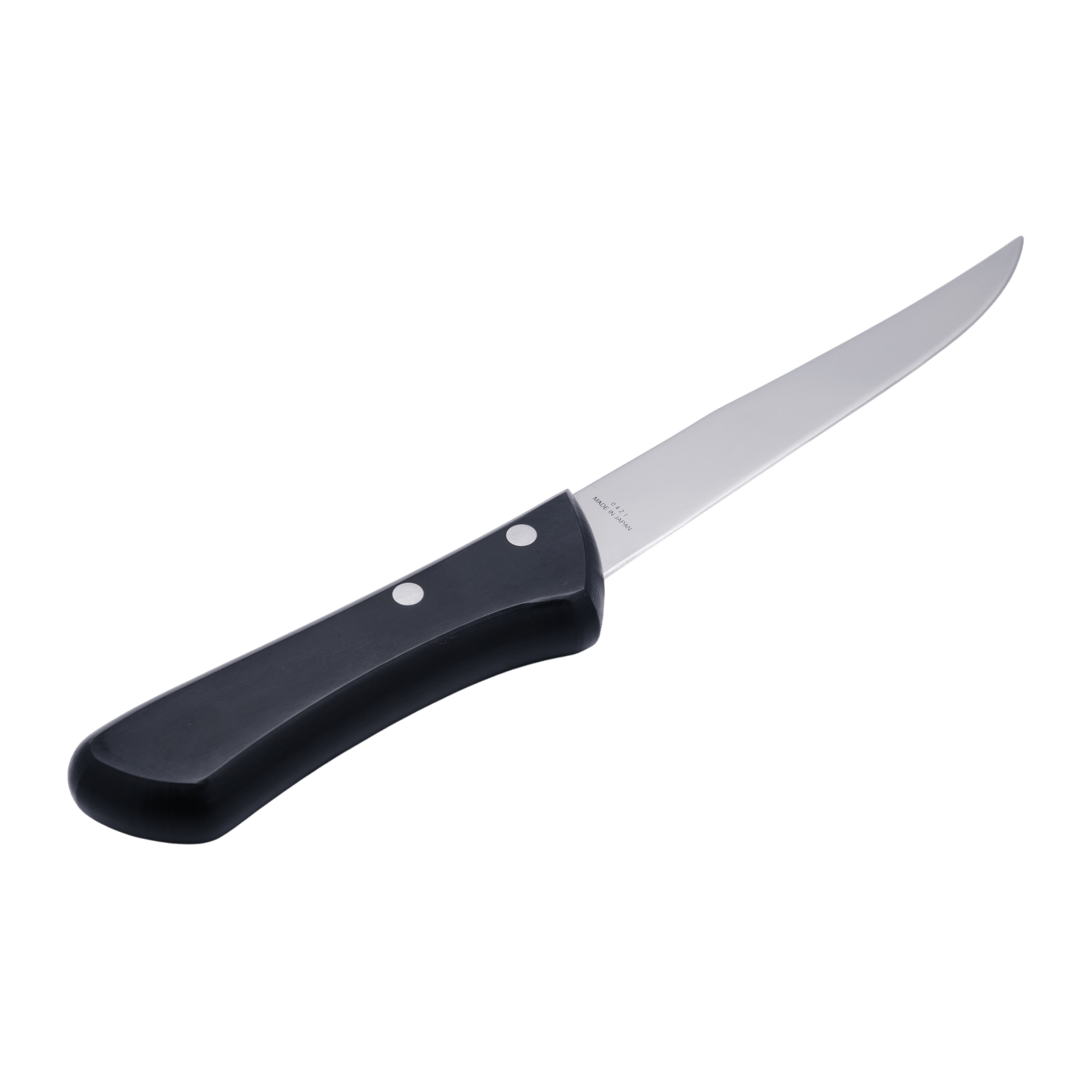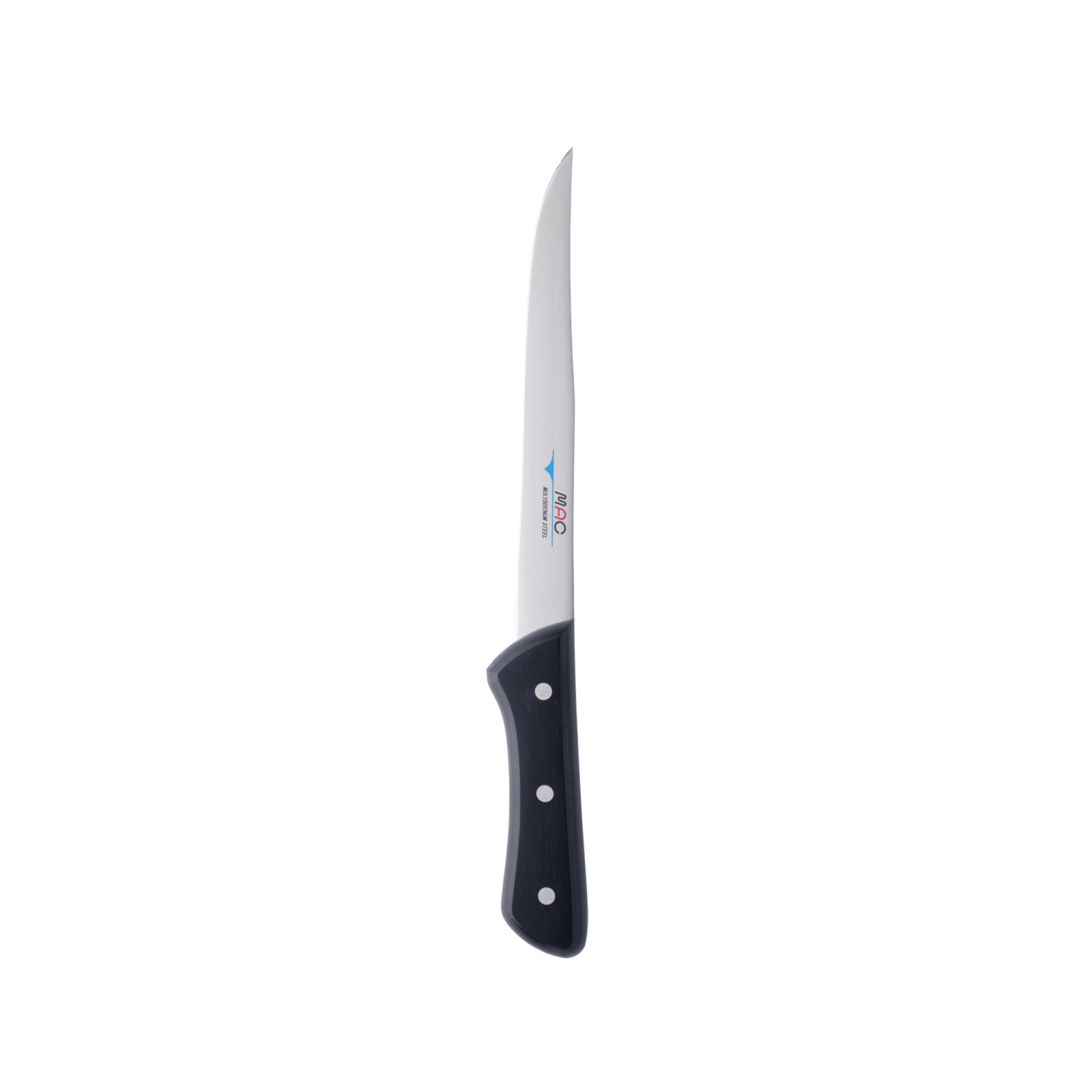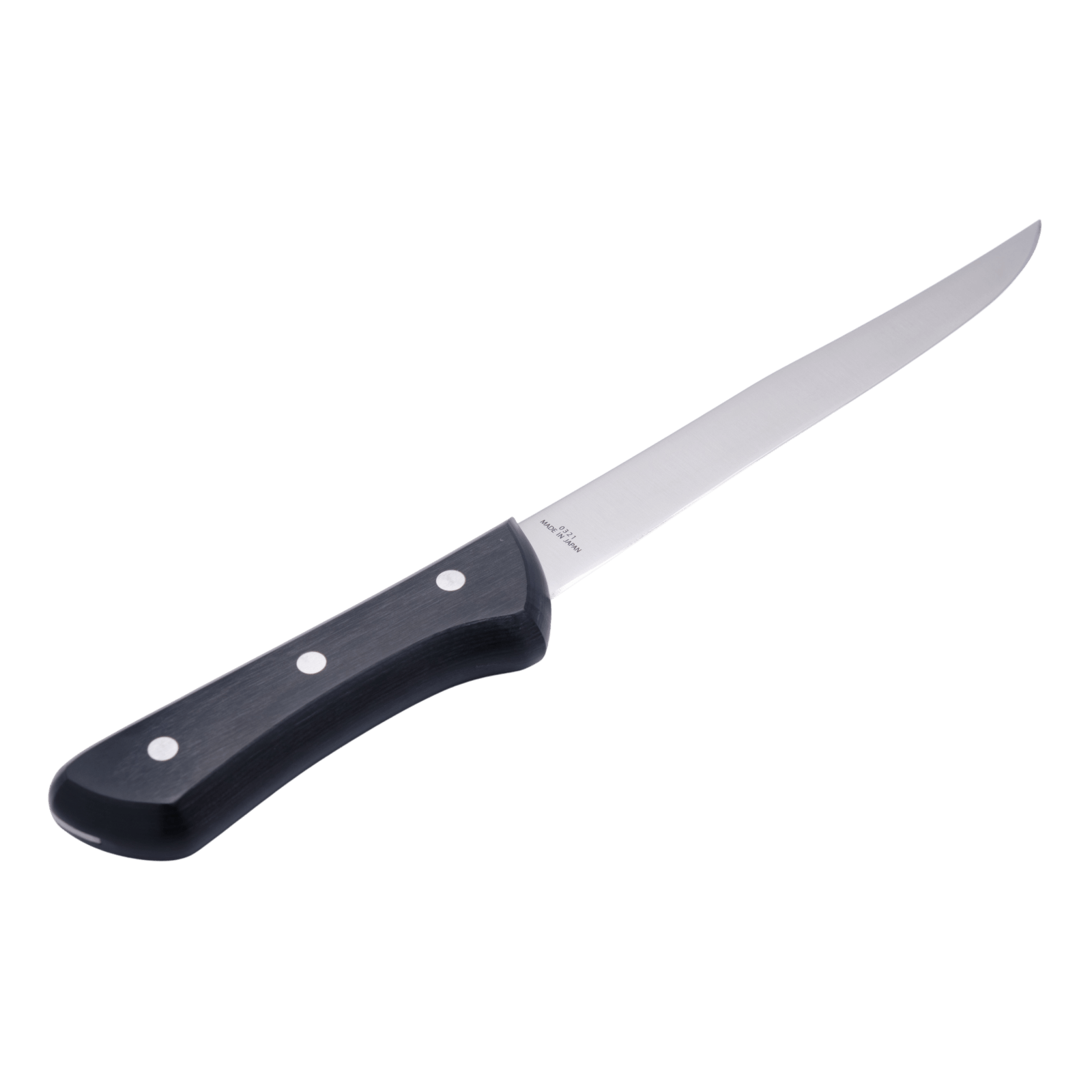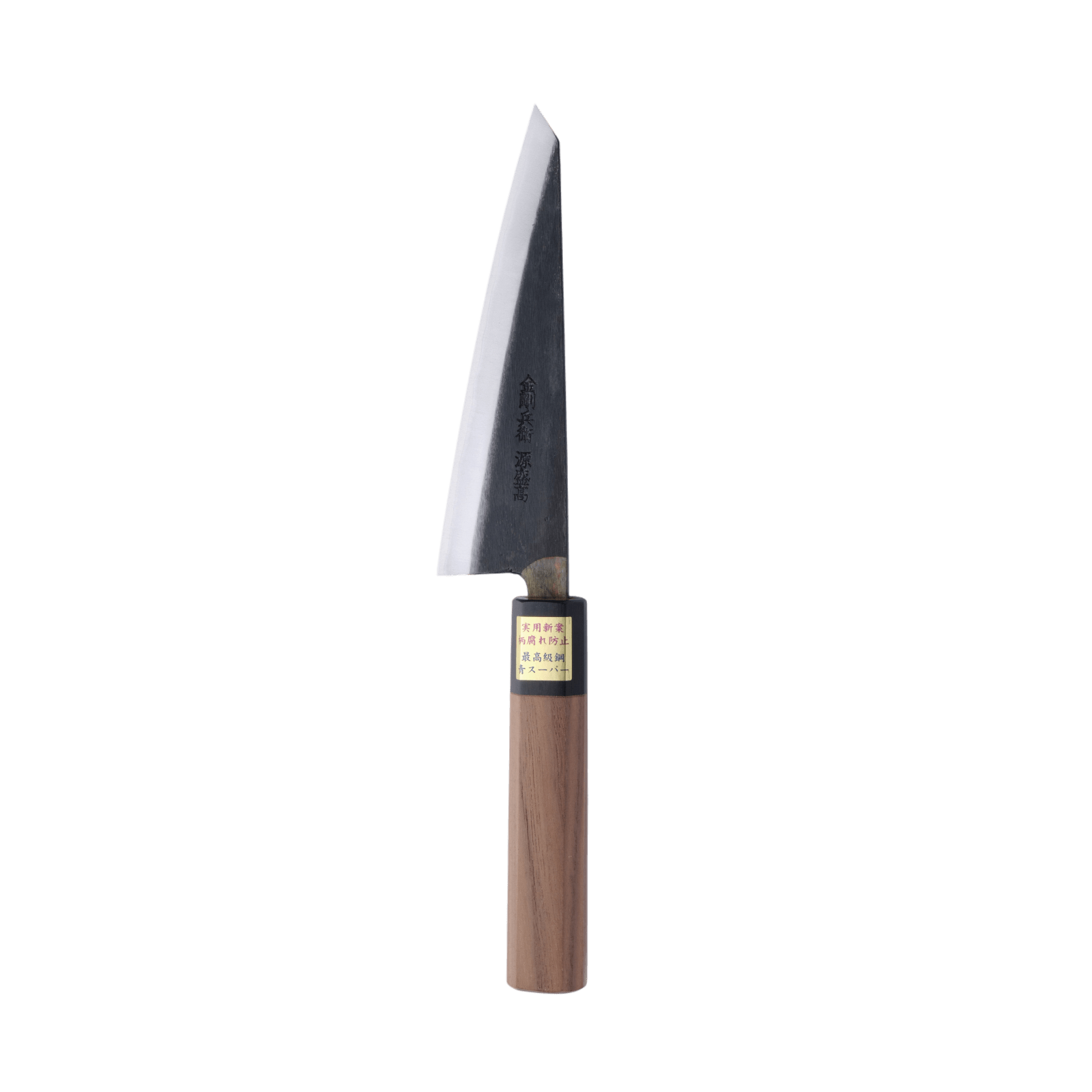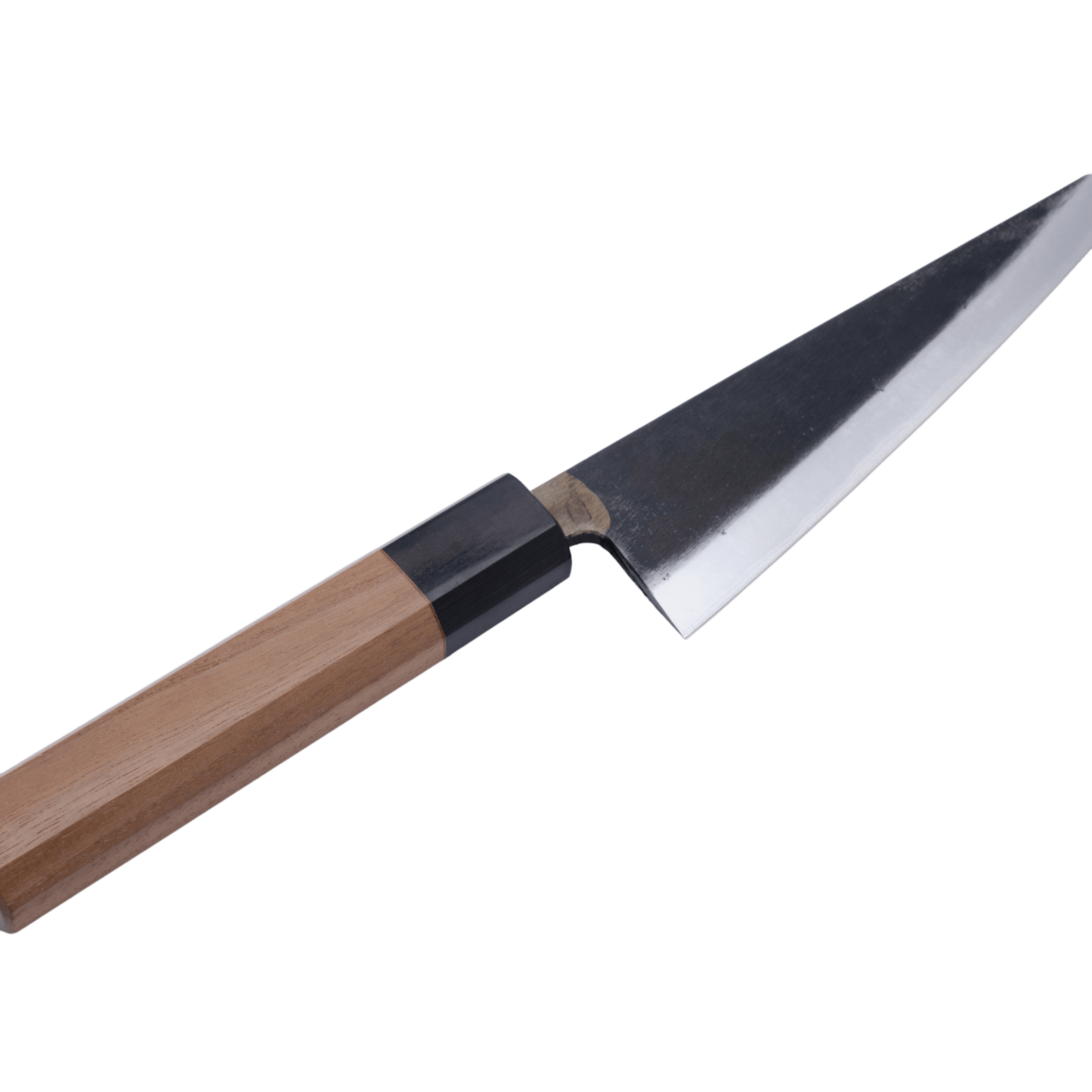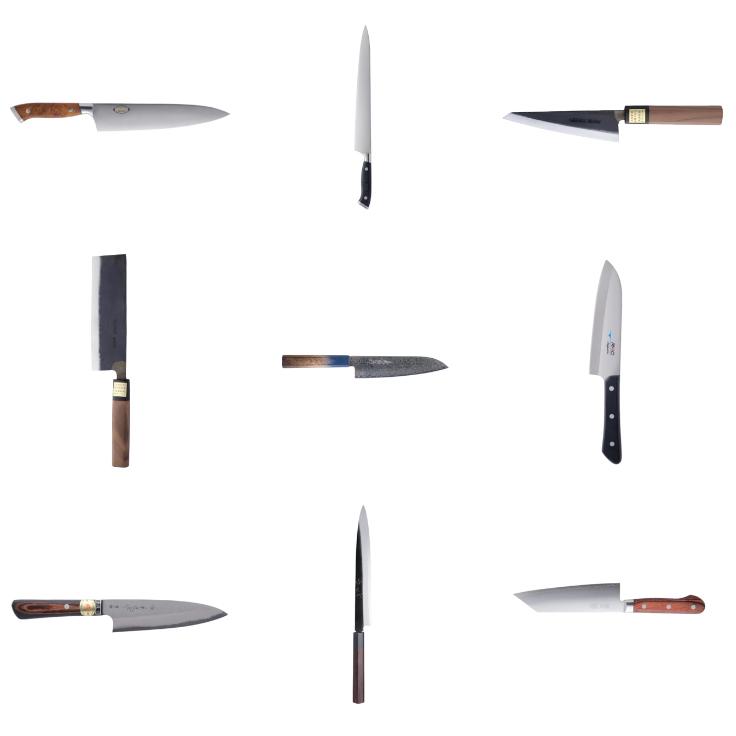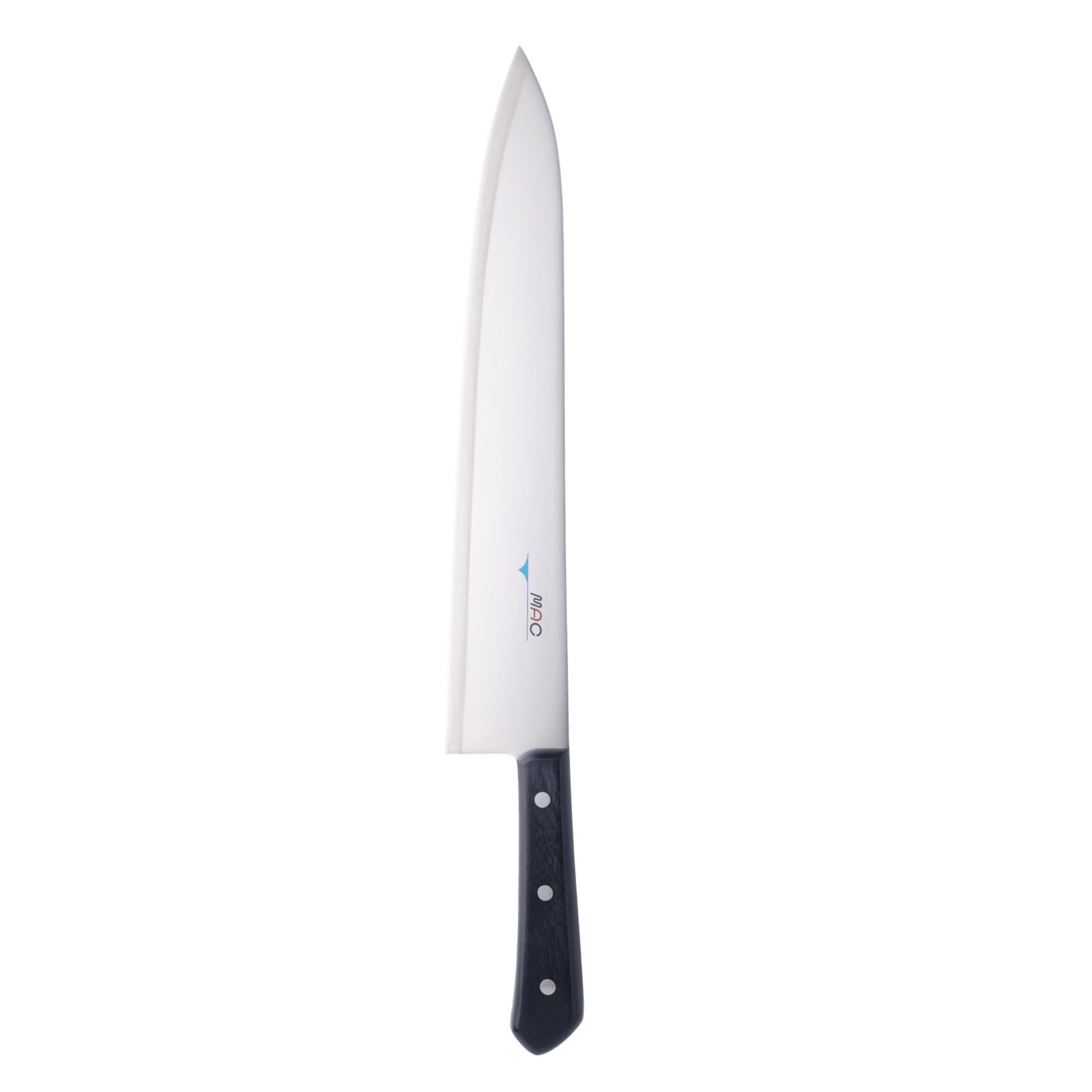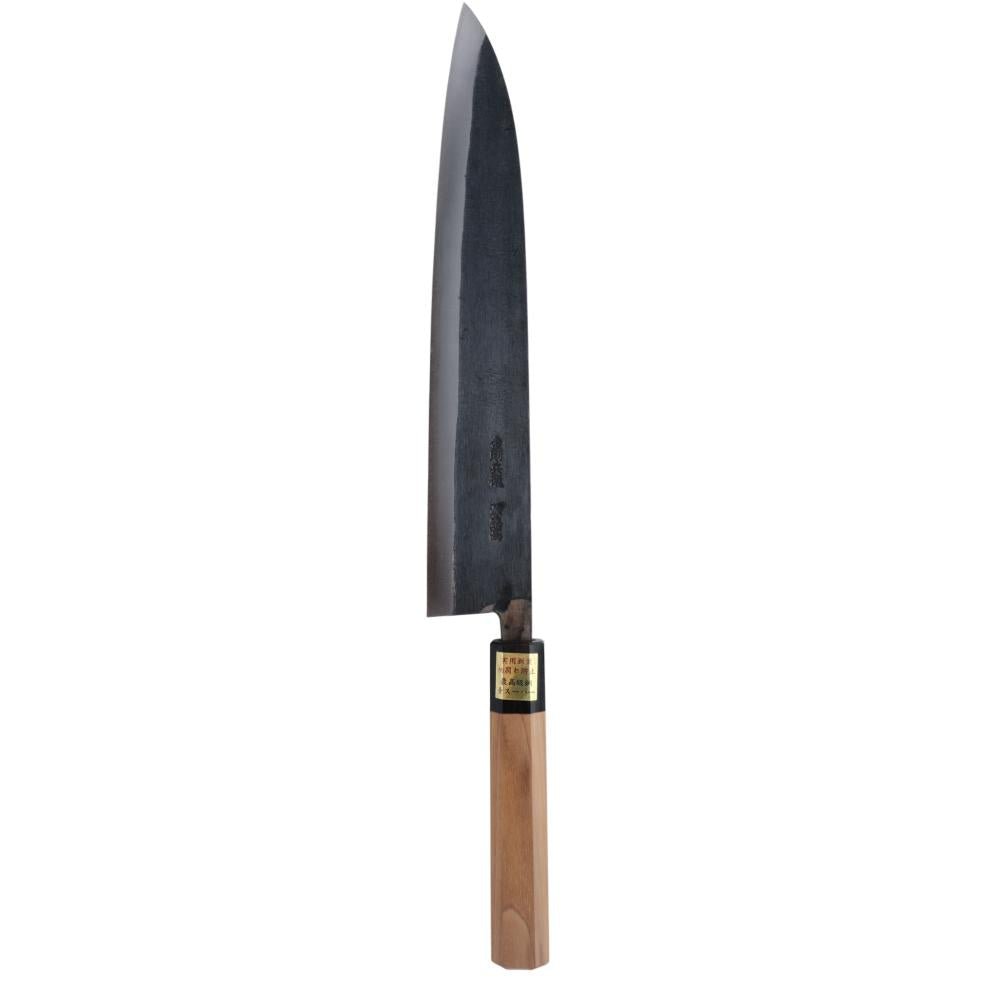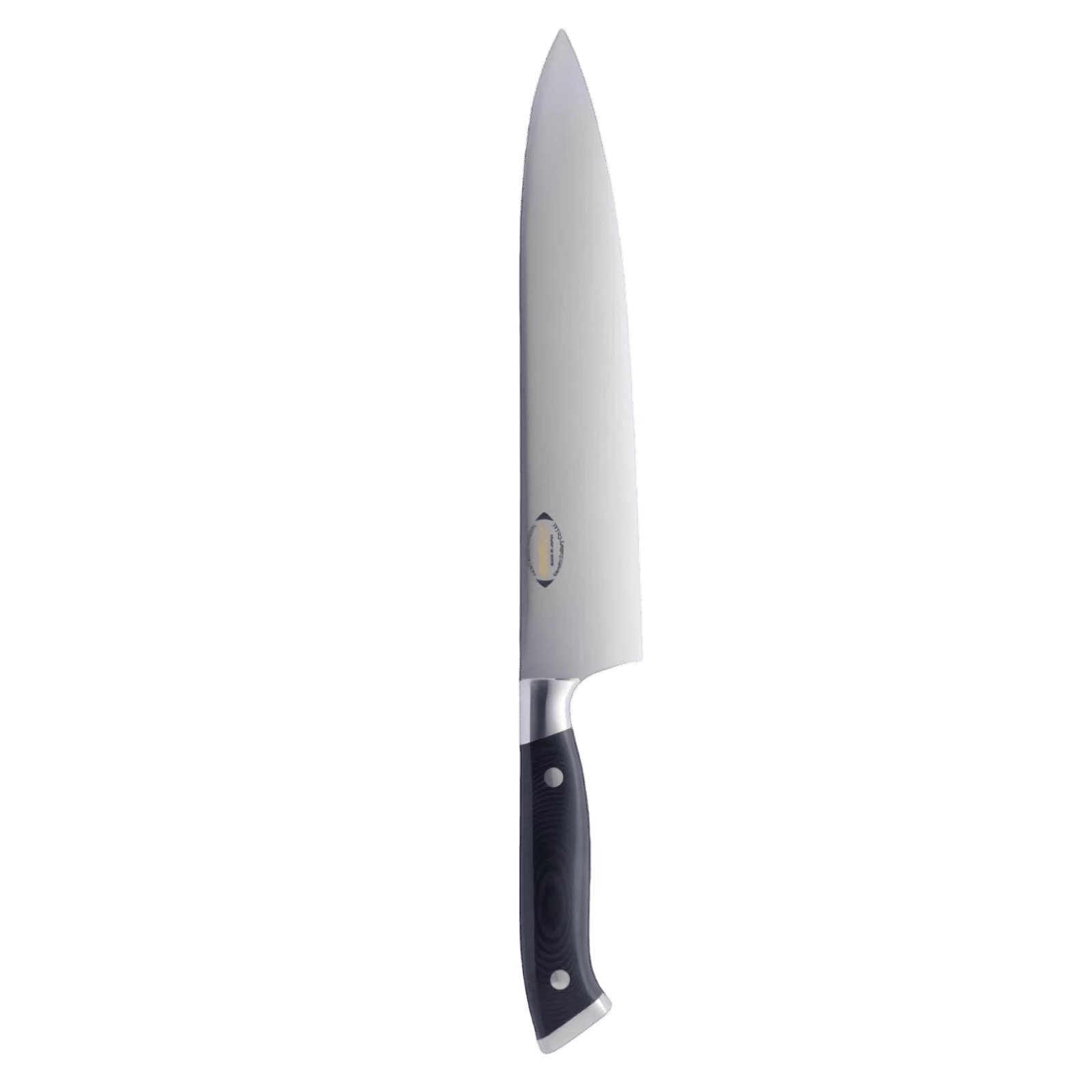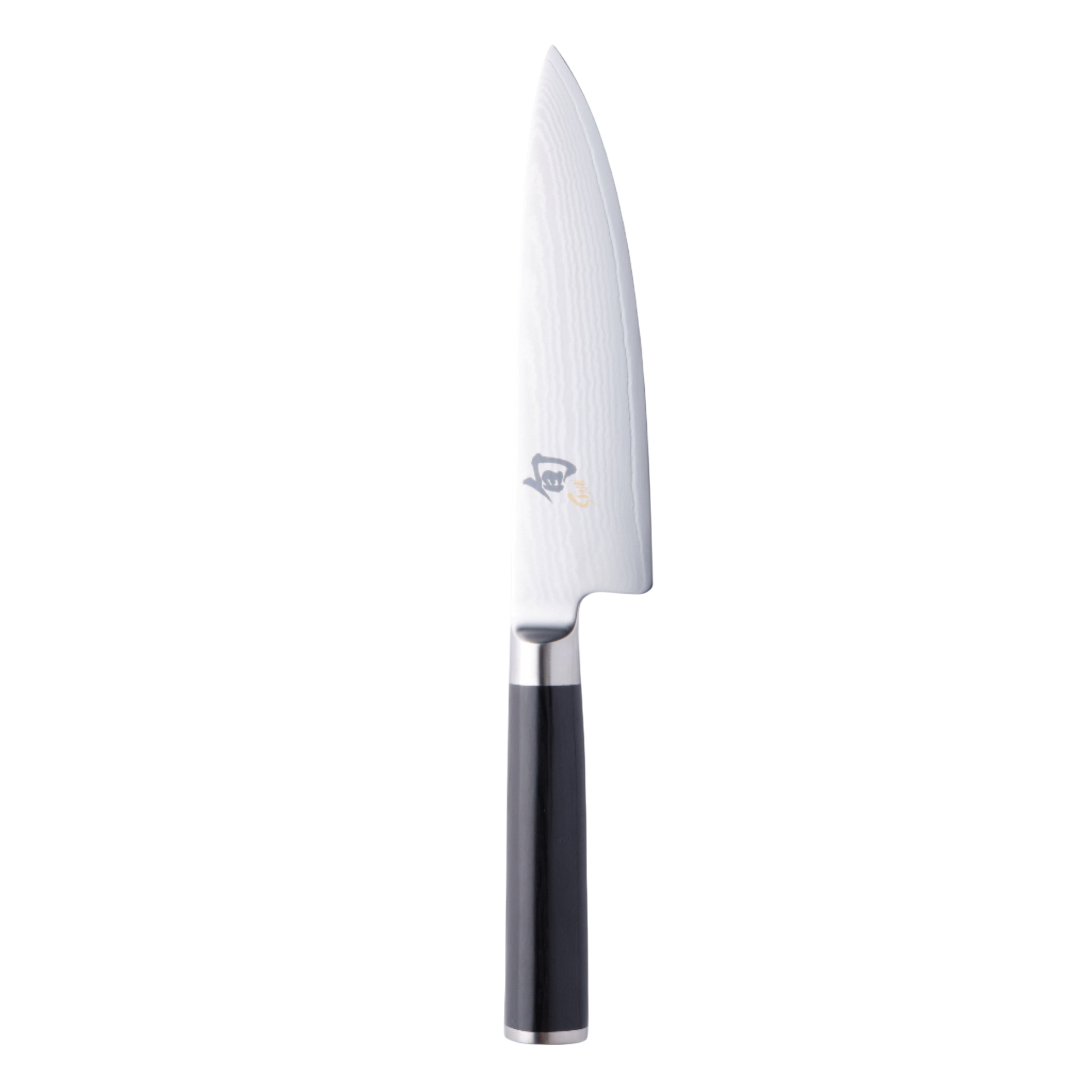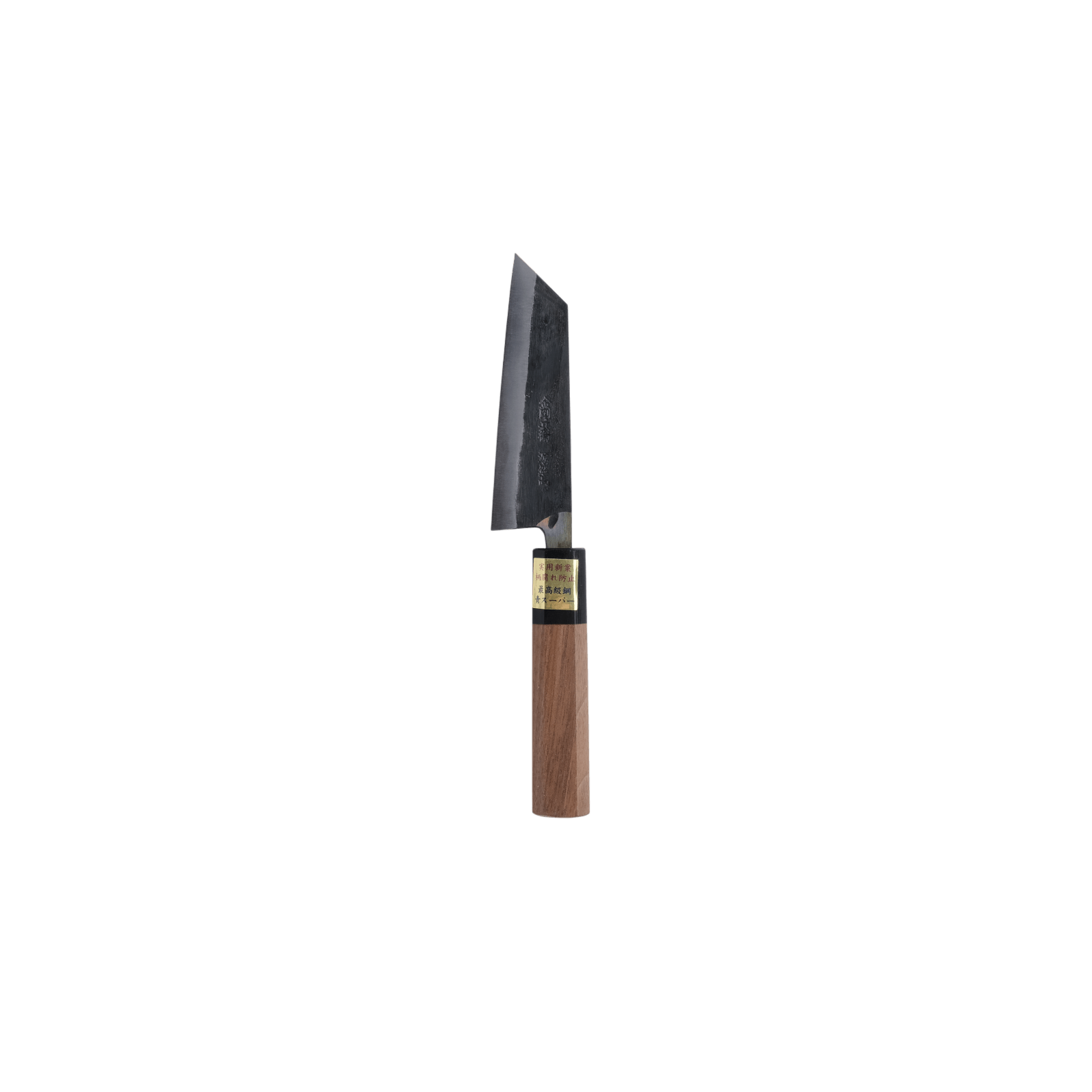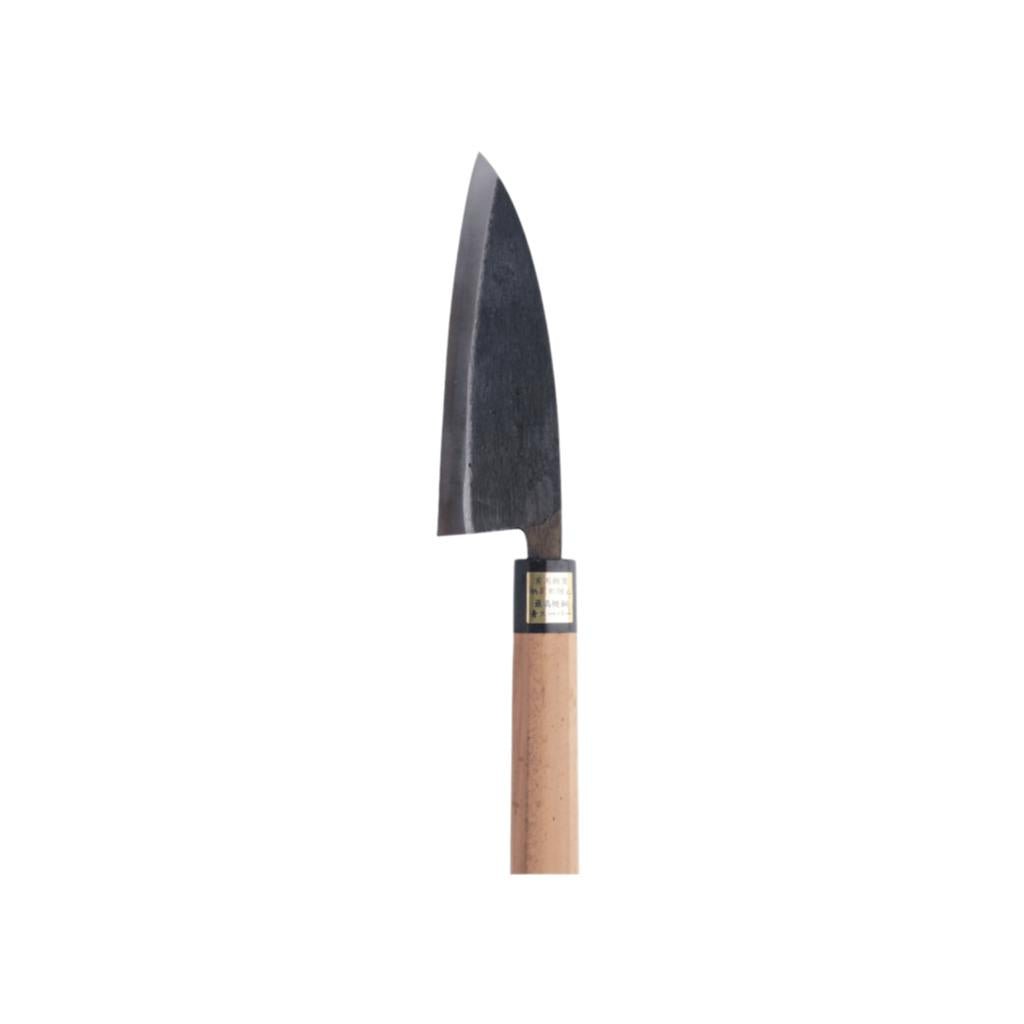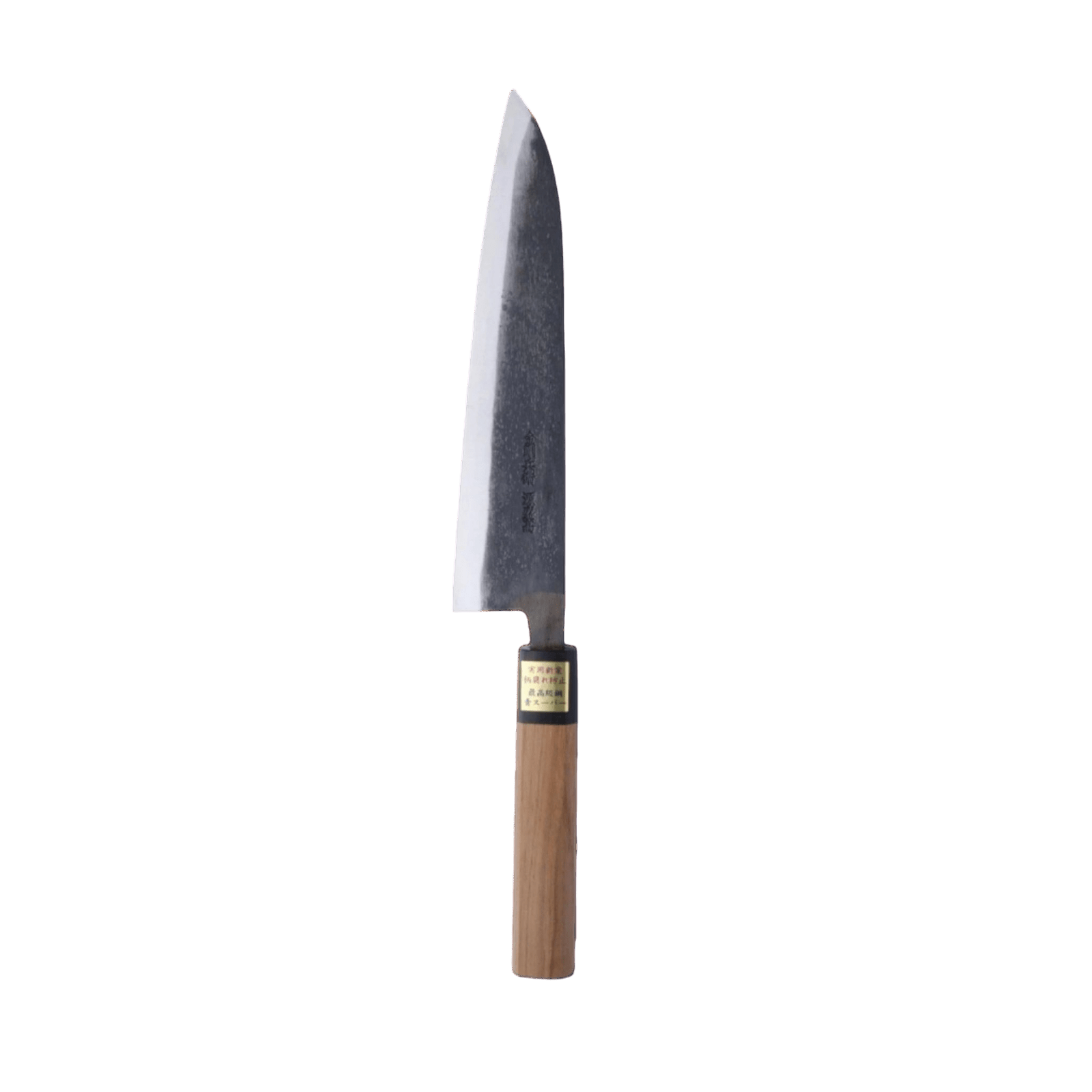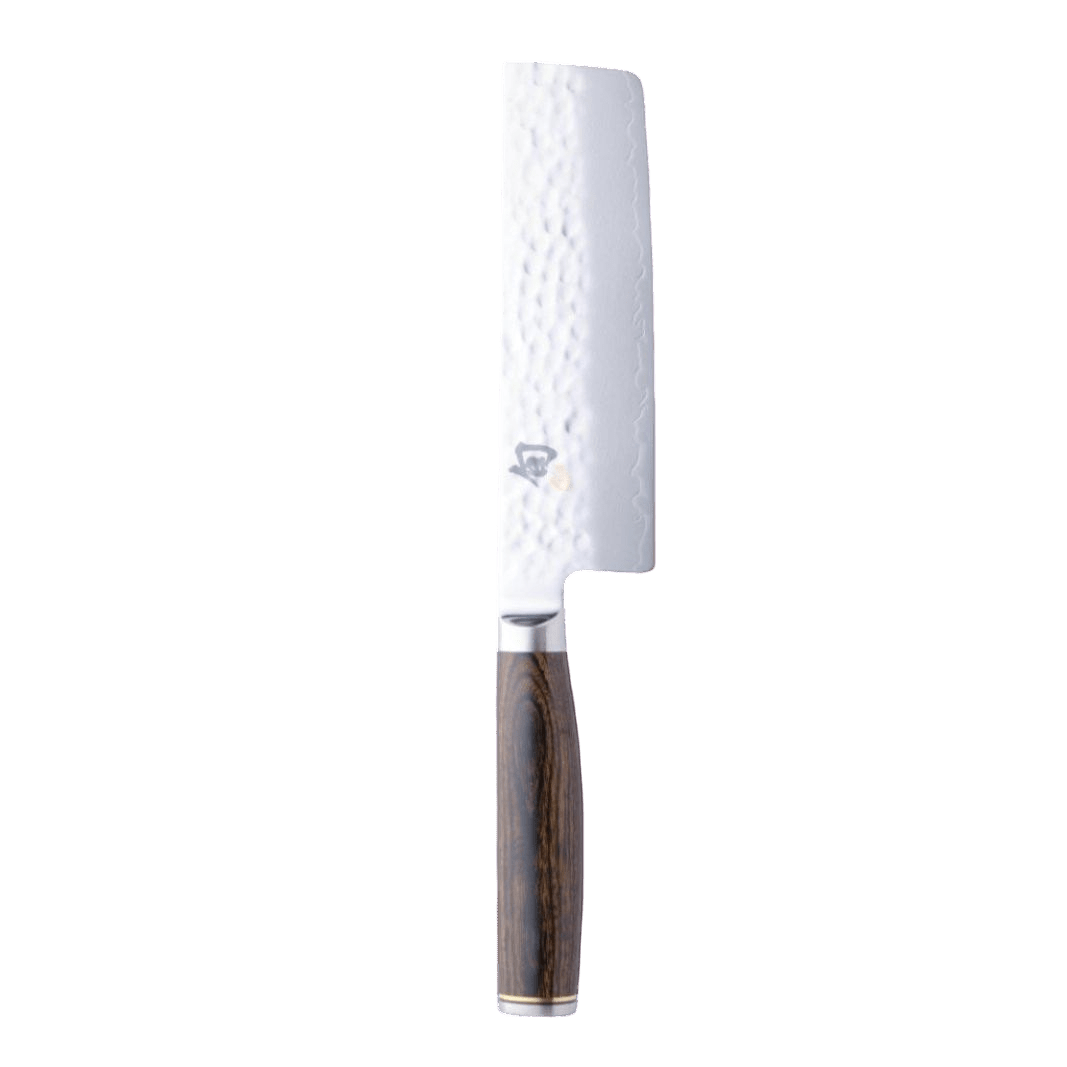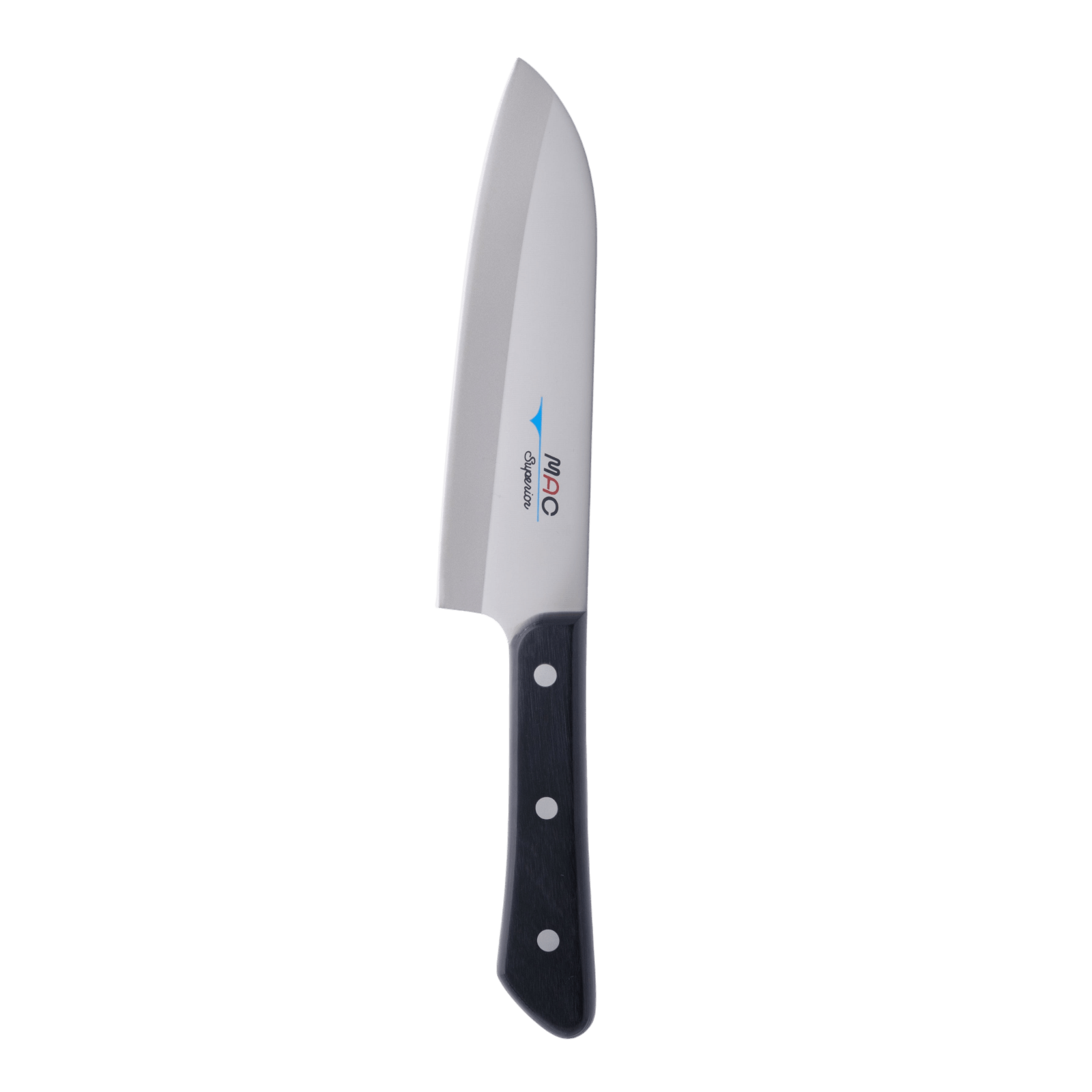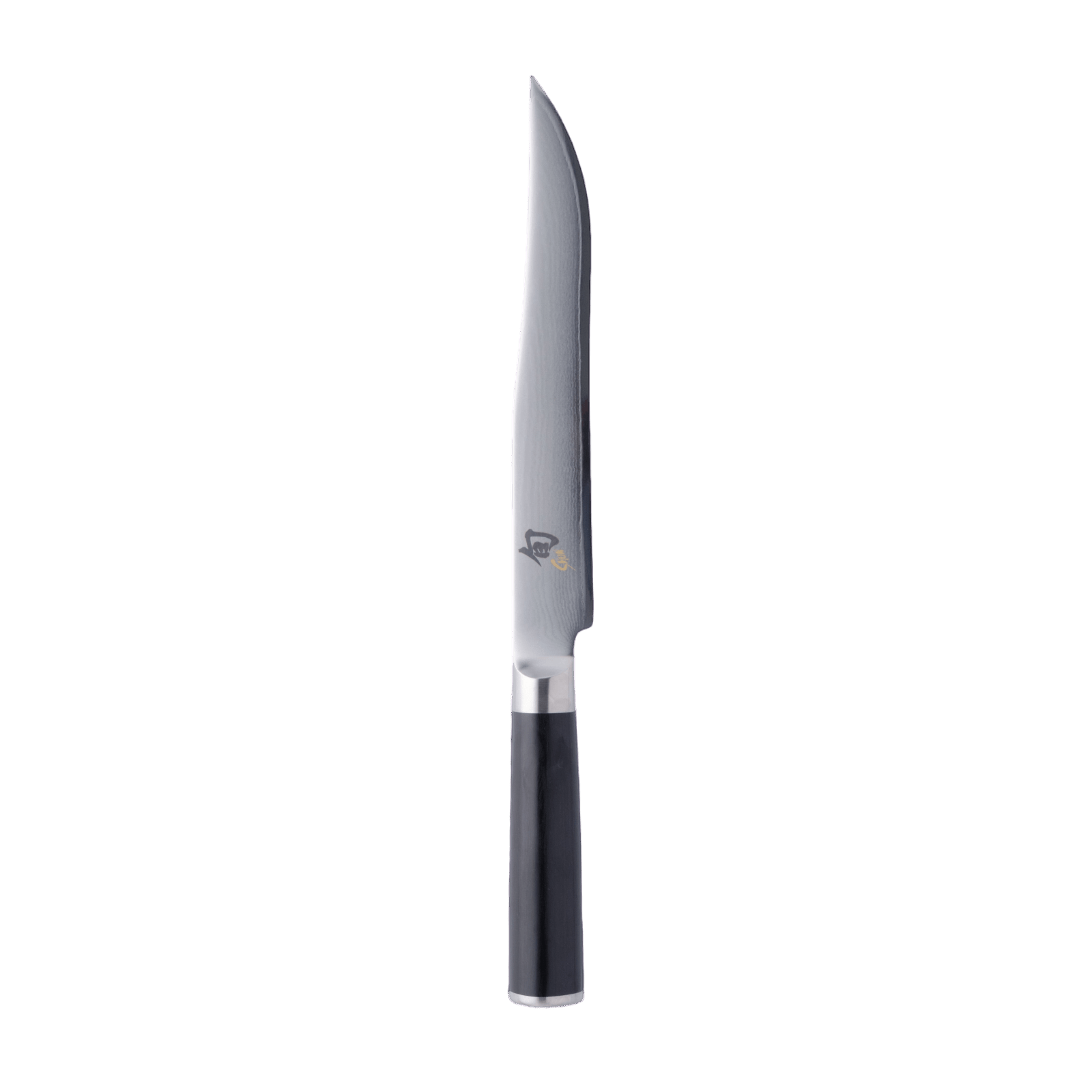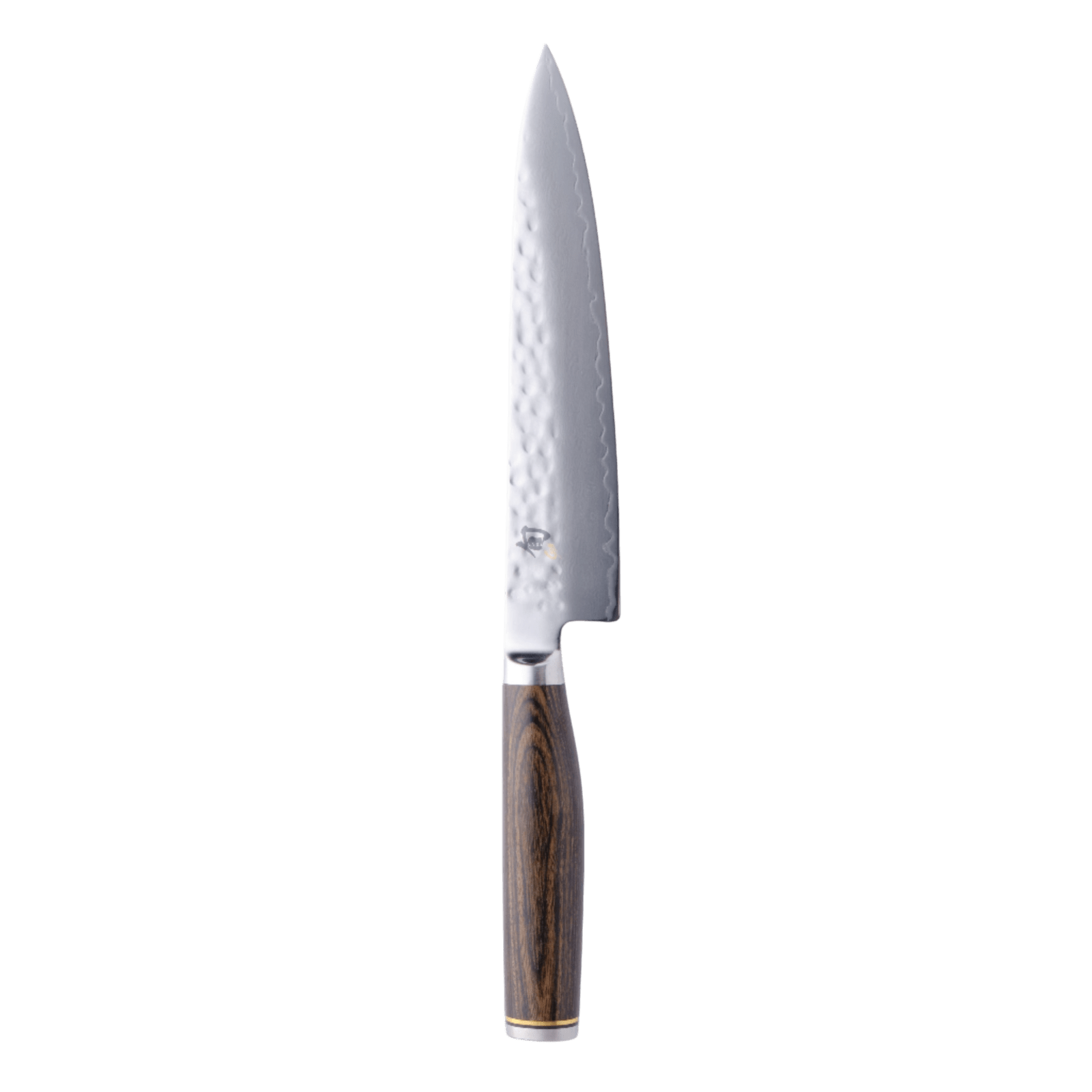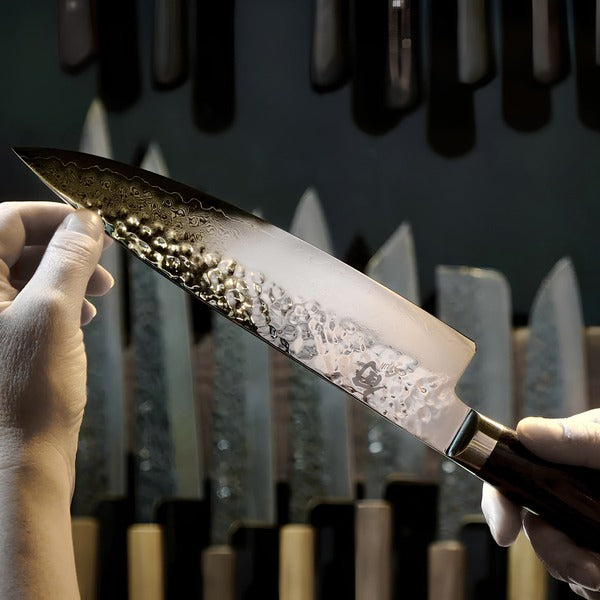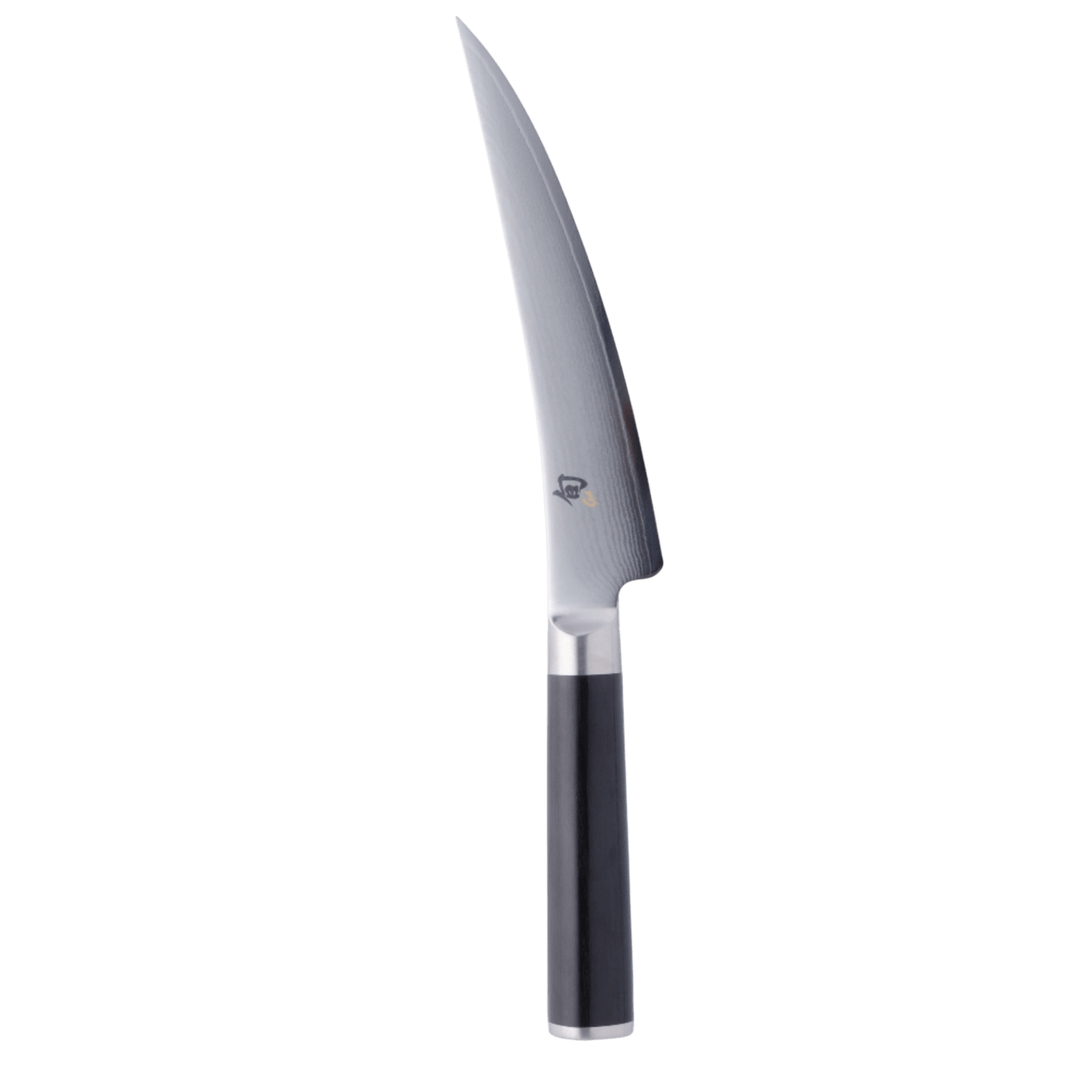
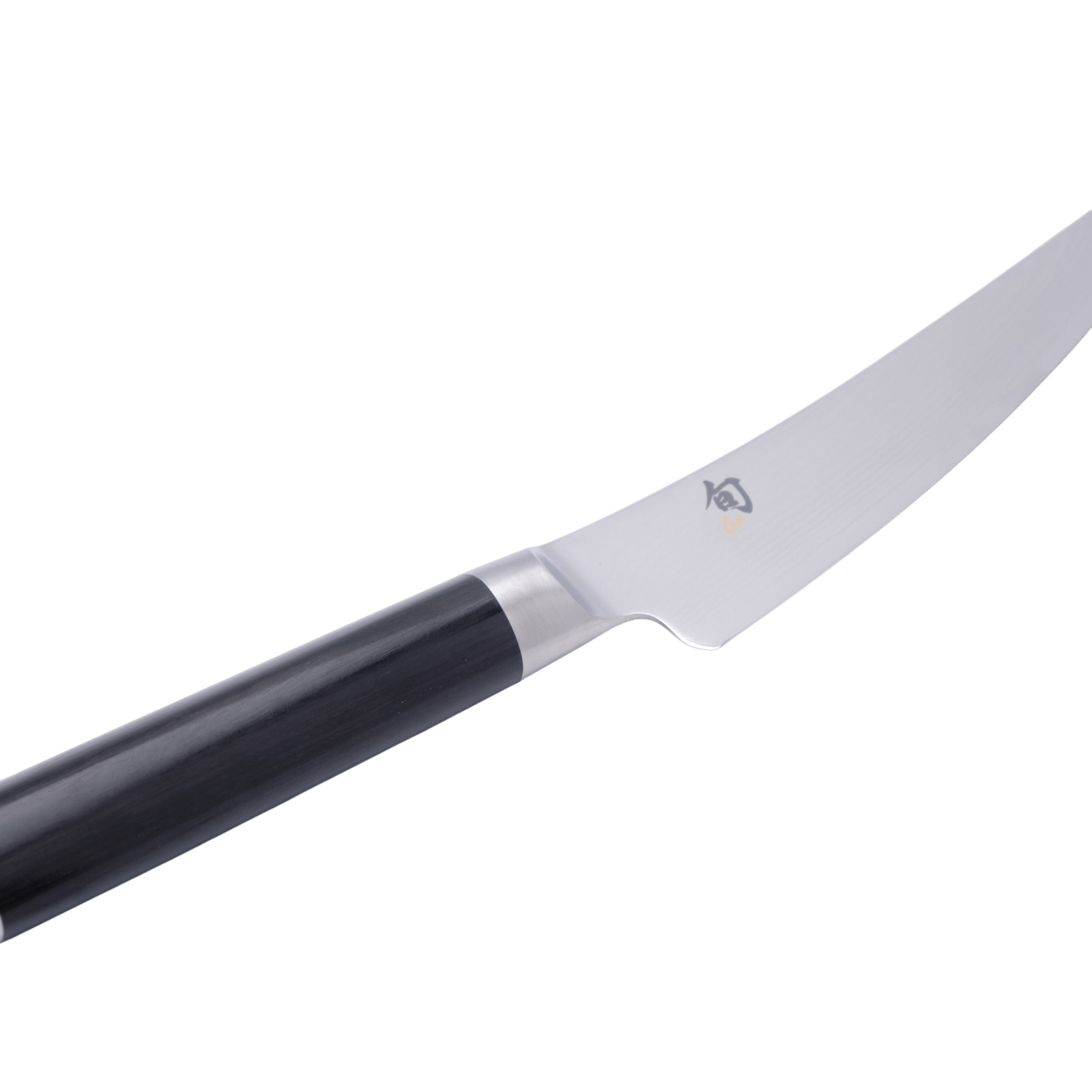
The Japanese Honesuki is a specialized knife designed for boning. It is a traditional knife in Japanese cuisine, particularly valued for its precision and ability to work closely around joints and bones.
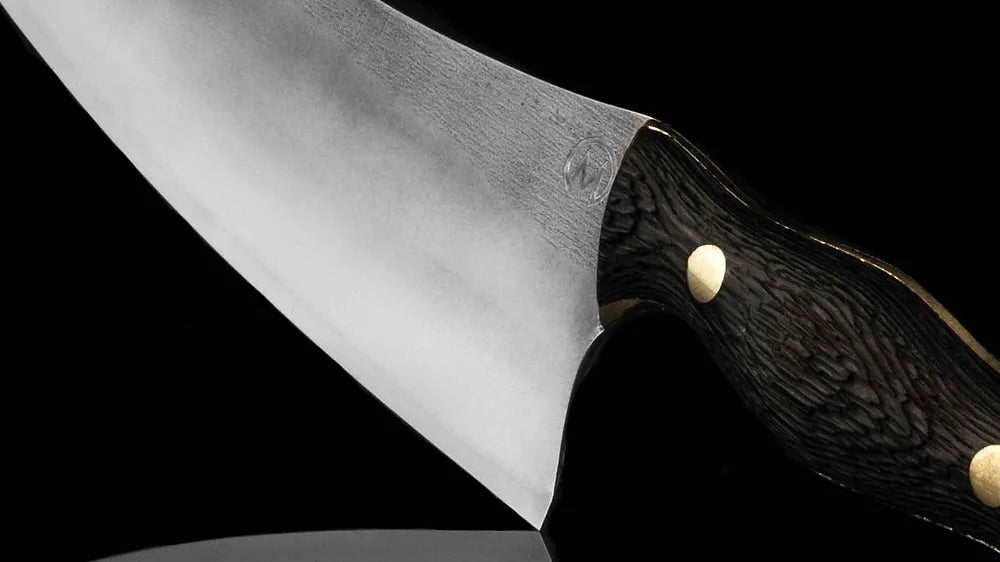
Shape: It has a triangular blade with a sharp tip, which makes it easy to get into joints and cut precisely around bones.
Size: Typical blade length is around 12–15 cm, which provides good control and maneuverability.
Blade and Edge: The blade is often relatively thick and robust along the spine, while the edge is very sharp for precise cutting. Many honesuki knives are single-sided sharpened (typical of Japanese knives), but double-sharpened versions are also available.
Function: Used primarily for cutting through tendons and joints and cutting meat free from bones – it is not made for chopping through bones.
Often made of high-quality carbon steel or stainless steel.
The handle can be traditional Japanese style (wa handle) or Western style (yo handle), depending on manufacturer and user preference.
A honesuki is a popular choice among professional chefs and serious home cooks who work extensively with poultry because it offers superior precision and control compared to Western boning knives.