How long should a magnetic knife holder be? A guide to knives and wall space
The right length for a magnetic knife holder cannot be found by counting knives alone. Two collections of six knives may require very different amounts of space because handles, blade widths and preferred spacing vary.
The reliable method is to measure the knives you actually intend to hang and confirm that the wall offers enough room both across and below the rail.
Arrange the knives before measuring
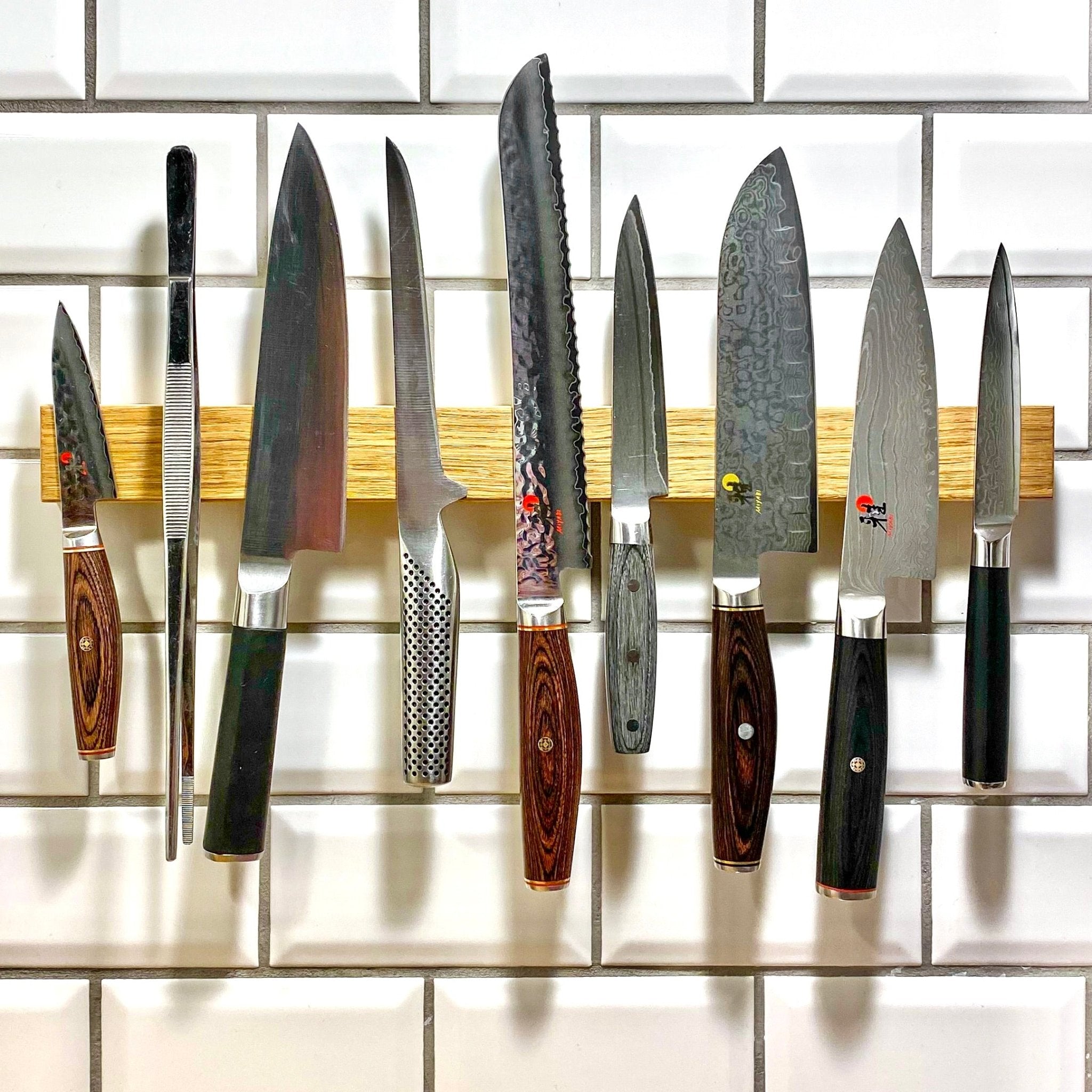
Lay the knives on a table in the order you expect to place them. Leave enough space between the handles to grasp one without knocking the next. Then measure from the outer edge of the first knife to the outer edge of the last.
Include scissors, a honing steel or other magnetic tools. It is also wise to reserve space for one additional knife. A rail that is completely full on day one soon becomes inflexible.
Wide blades need more length
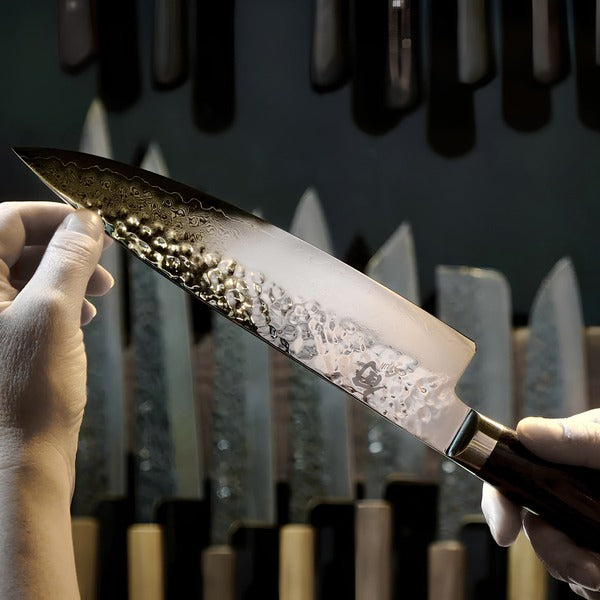
A paring knife uses little horizontal space. A broad nakiri, cleaver or chef’s knife needs more, particularly when the handle is substantial. There is therefore no reliable standard number of knives for a particular rail length.
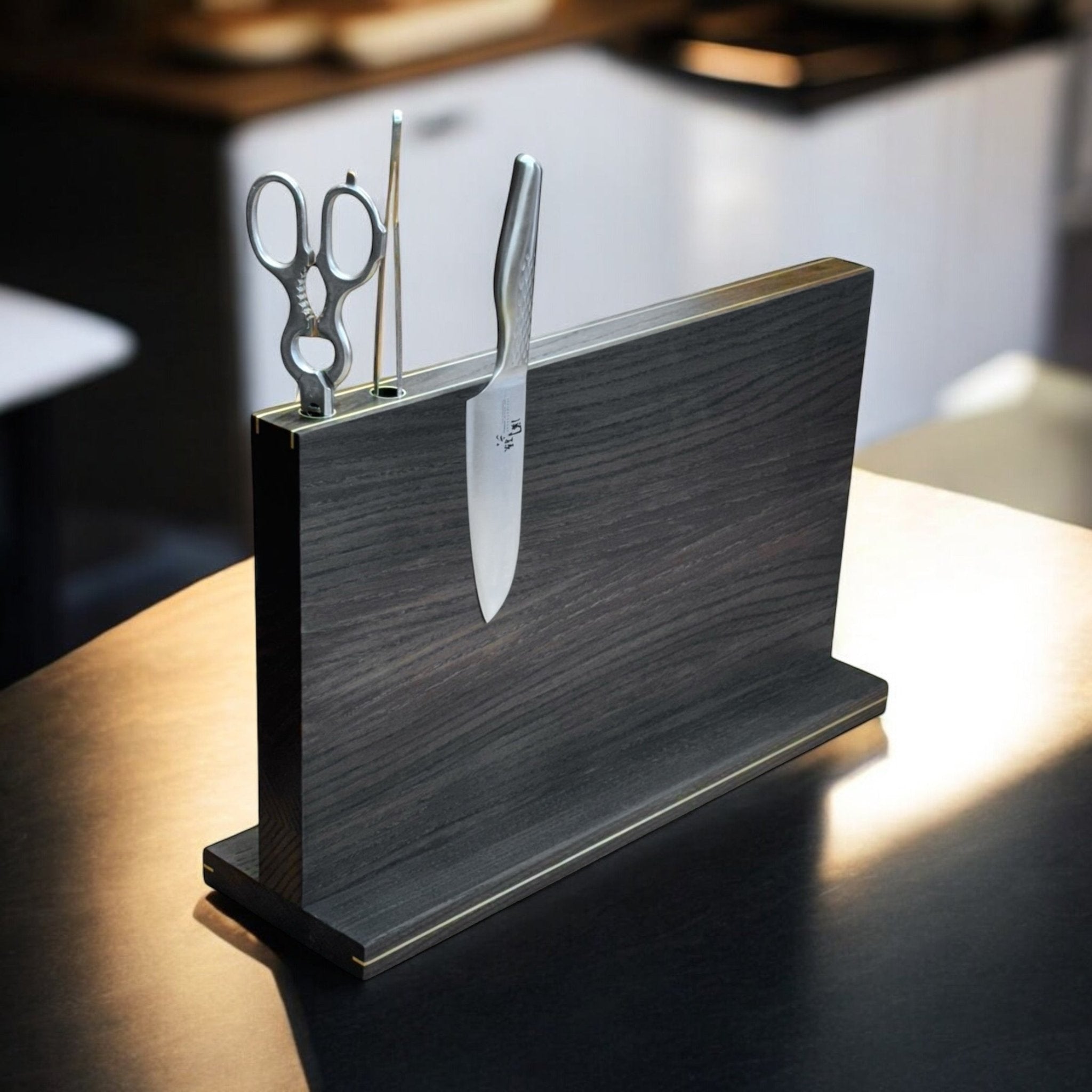
Capacity runs along the rail. Whether the model is narrow or wide on the wall does not by itself change the horizontal spacing required.
Measure the vertical clearance
The longest blade must hang without touching the worktop, splashback or another object. Measure downwards from the planned rail position to the nearest obstruction.
Check the area above the rail as well. Handles must be easy to grasp without hitting a shelf or cabinet, and each knife needs room to be tilted away back-first.
Consider the working area
The rail should be close enough to the preparation area to be practical, but not where knives may be struck by pan lids, appliances or passing traffic. A very long rail is no advantage if it forces part of the collection into a poor position.
One long rail or two shorter ones?
One long rail creates a calm line on an uninterrupted wall. Two shorter rails may work better around an extractor hood, socket or shelf, or when everyday knives should be separated from specialist tools.
The short method
- Arrange every knife and tool with realistic spacing.
- Measure the total width.
- Add room for at least one future tool.
- Check clearance for the longest blade.
- Make sure every handle can be grasped and tilted freely.
Only choose the length once these measurements are known. The result will fit the collection, the wall and the way you work.
Read next
- Which magnetic knife holder is right for your kitchen?
- Magnetic knife holder or knife block – which should you choose?
- Magnetic knife holder: narrow or wide – which should you choose?