Caring for Carbon-Steel Kitchen Knives
Carbon steel reacts quickly
Carbon steel can take a very keen edge and is often straightforward to sharpen, but it reacts with moisture, salt and acids more readily than stainless steel. Wipe the blade during work, especially after lemon, tomato or onion. Never leave food residue or water on it while eating or clearing the rest of the kitchen.
Hand-wash and dry immediately
Wash with mild detergent and a soft sponge. Never run fingers along the edge or hide the knife in a full sink. Rinse, dry the entire blade and the handle junction thoroughly, then put it away at once. Dishwashers, soaking and drying over a flame damage both the steel and natural-wood handles.
Patina is not the same as rust
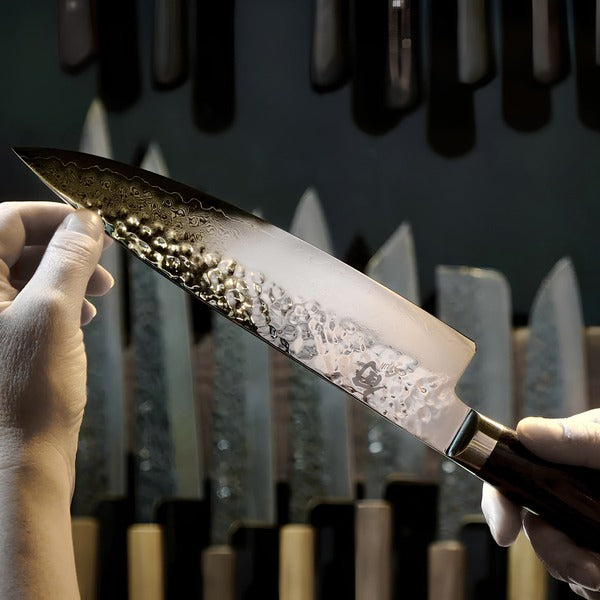
Blue, grey or brown patina can form as steel reacts with food. An even, stable colour is normal and may make the surface less reactive. Active rust is often orange, rough or transferable and should be treated early by the maker’s recommended method. Preserve a kurouchi finish; harsh polishing can remove its protective black oxide layer.
Oil for longer storage
A knife used daily and stored completely dry may not always need oil. For longer pauses or humid conditions, a very thin film of food-safe mineral or camellia oil can protect the blade. Cooking oils that may turn rancid are less suitable. Wipe away excess oil before using the knife.
Cut, store and sharpen gently
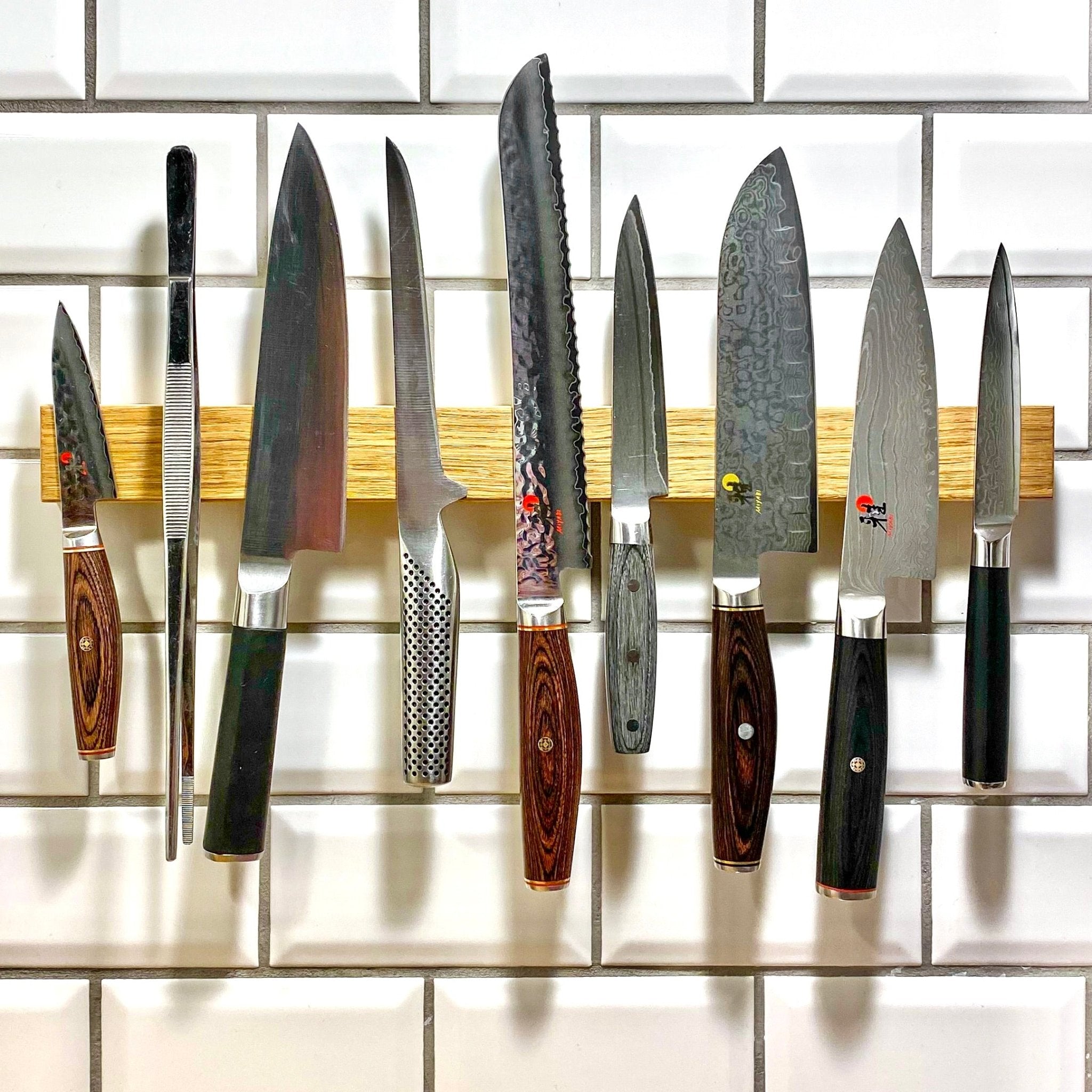
Use wood or suitable plastic, never glass, stone or ceramic. Avoid frozen food, bones and twisting in hard ingredients unless the knife is designed for it. Store the edge protected on a clean magnetic rack, in a saya or knife block. Sharpen on waterstones to the maker’s geometry, or ask a qualified sharpener.
Read next
- Magnetic knife holder: narrow or wide – which should you choose?
- How to Choose the Wood Species for a Magnetic Knife Holder
- Carbon steel vs. stainless steel for Japanese kitchen knives