Copper Cookware: Tin, Stainless Steel and Care
Why does copper need a lining?
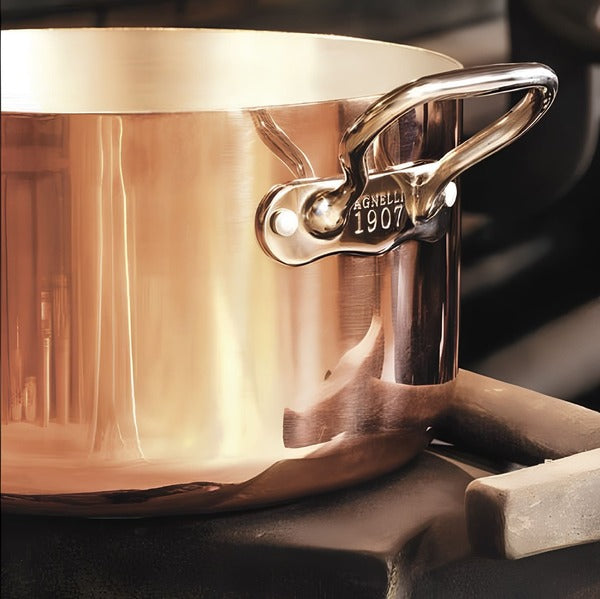
Copper responds quickly when heat changes and gives precise temperature control. Bare copper should not normally be the food-contact surface, so traditional cookware is lined with tin or stainless steel. That choice affects cooking behaviour, durability and maintenance.
Tin-lined copper
Tin provides a smooth, relatively low-stick surface, but it is soft and unsuitable for very high heat. Use wooden or silicone utensils, never heat an empty pan aggressively and avoid abrasives. When copper shows through across larger worn areas, a specialist should retin the vessel.
A stainless-steel interior
Stainless steel resists scratches, acids and everyday use more effectively. It normally needs no relining, although food may stick if heat and fat are poorly managed. In multilayer cookware, copper’s responsiveness is paired with the durability and neutral cooking surface of steel.
Cleaning and patina
Let the cookware cool slightly, wash with warm water, mild detergent and a soft sponge, then dry it. A copper exterior naturally darkens and develops patina without harming performance. To restore shine, use a suitable copper polish outside and keep it away from a tin lining.
Choose for the way you cook
Tin suits cooks who value tradition and work gently with controlled heat. Stainless steel suits frequent use and lower maintenance. Always follow the maker’s guidance for hob, oven and dishwasher: modern copper cookware may contain several layers and behave differently from traditional solid copper.
Read next
- Copper vs stainless steel – differences in thermal conductivity and application
- Aluminum vs. Stainless Steel vs. Copper for Cookware
- 3-ply vs. 5-ply vs. copper – which cookware should you choose?