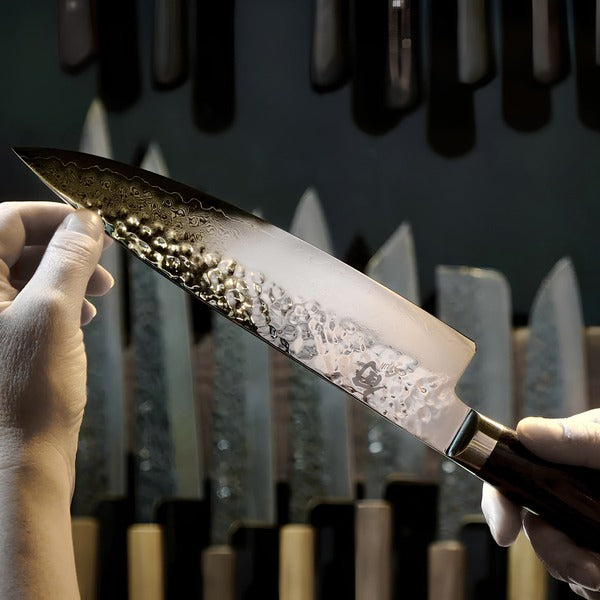
Japanese vs European kitchen knife – geometry, steel and use
The difference between Japanese and European kitchen knives cannot be reduced to “sharp versus robust.” Both traditions span a wide range, and modern manufacturers often borrow solutions from each other. Still, there are some typical design choices that are useful to know.
For the individual user, the choice is mainly about cutting technique, raw materials and how much robustness one expects from one and the same knife. A thin Japanese Gyuto and a classic European chef's knife can both be excellent - but they do not necessarily invite exactly the same use.
The geometry of the blade makes a big difference
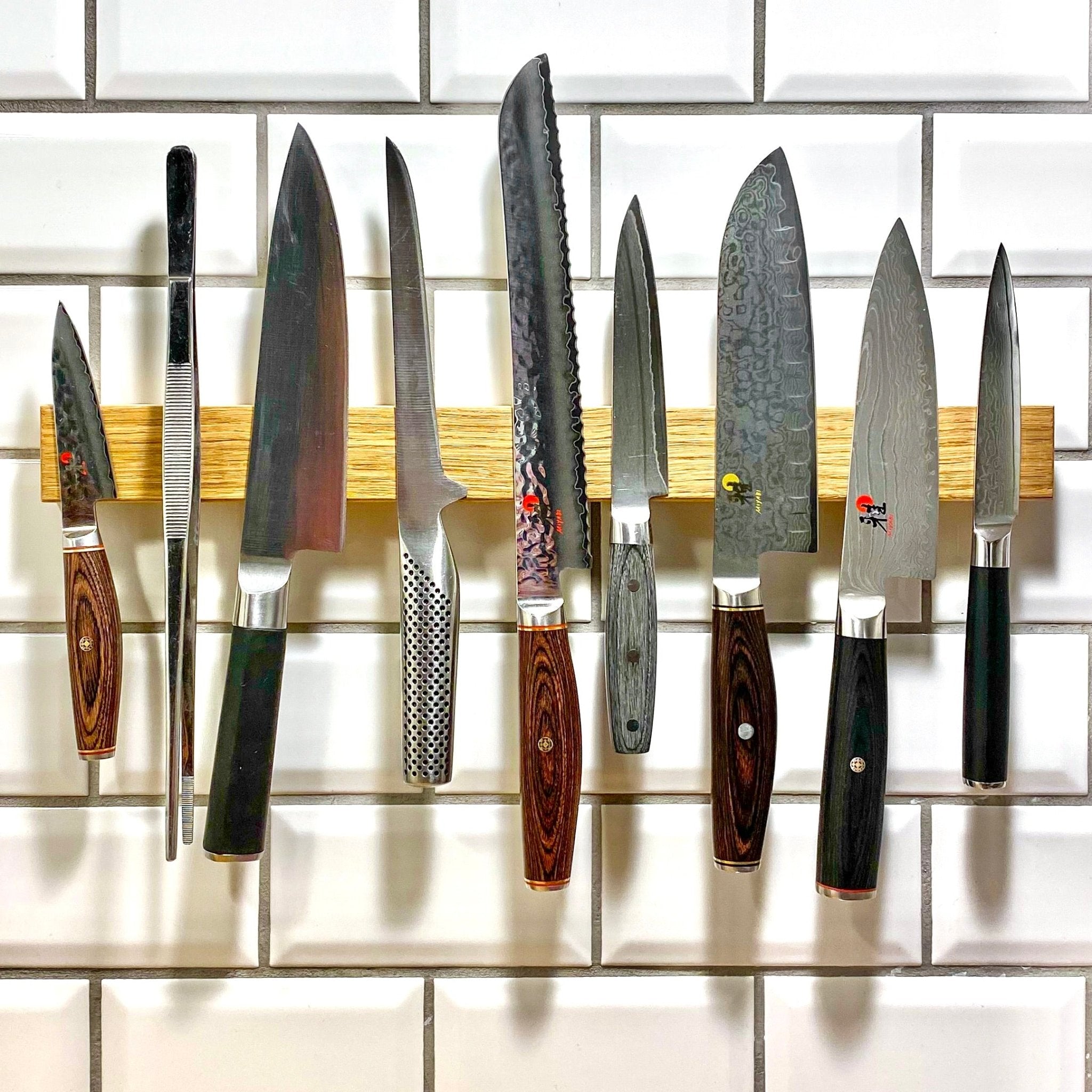
Japanese kitchen knives are often thinner behind the blade and may be sharpened at a more acute angle. This reduces resistance through the product and provides a precise feel when cutting. Korin describes Japanese knives as generally lighter and thinner than Western models.
European chef's knives are often more heavily dimensioned and have a geometry that prioritizes versatility and robustness, making them well suited if the same knife needs to handle many different tasks in a busy kitchen.
Hardness and eggs
Many Japanese knives are heat treated to a higher HRC than classic German knives. This can support a thin edge that holds its shape well. On the other hand, hard and thin edges require more respect for side loads, twisting and very hard raw materials.
For example, ZWILLING lists typical German quality knives in the range of 55–58 HRC, while Japanese-inspired series are often higher. This is a trend, not a universal rule.
The cutting movement
A European chef's knife with a distinctly curved blade lends itself naturally to a rocking motion. Many Japanese profiles are flatter and work well for controlled lifts, push cuts, and precise, straight cuts. However, it is the specific shape of the profile – not the nationality – that determines the technique.
The user should therefore look at the knife's actual profile, balance and length instead of simply choosing by country of origin.
Maintenance and materials
Japanese knives are available in both stainless alloys and reactive carbon steels. Carbon steel requires quick wiping and often develops a patina. European knives are very often stainless and designed for relatively uncomplicated daily maintenance.
Regardless of type, a quality knife should be stored so that the blade does not hit other metal objects, and it should be washed and dried by hand.
The short answer
Choose according to the way you work. If you want minimal cutting resistance and precision, a thin Japanese knife may be an obvious choice. If you want greater tolerance for varied use, a more robust European profile may be a better match.
See our Japanese kitchen knives . Read the guide to your first Japanese kitchen knife .
Convenient to remember
There are also big differences within the two traditions. For example, a Japanese deba is powerful and specialized, while a laser-thin Gyuto is something else entirely. Similarly, European knives range from heavy classic chef's knives to very slim modern profiles. Therefore, “Japanese” and “European” should be seen as useful guidelines, not technical specifications. If possible, try to feel the balance point, handle shape and weight. A knife that looks optimal on paper may feel wrong in the hand. And if you switch from a robust European knife to a harder Japanese model, your cutting habits should follow suit: avoid twisting, use a suitable cutting board and choose a tool that is suitable for hard bones and frozen ingredients.
Sources and further reading
- Korin: Japanese Knife FAQ
- ZWILLING: Japanese vs. German Knives
- Shun: FAQ – blade angles and use
- Korin: About Knife Sharpening