Whisky Glasses: Shape, Size and Aroma
The glass changes how you meet the whisky
Aroma comes from volatile compounds above the liquid. Bowl volume, rim width and distance to the nose affect how this headspace is perceived. Research suggests vessel shape can influence flavour experience, although personal expectations and the serving context also play important roles.
A tulip shape for focused nosing
A glass with a broader bowl and narrower rim gathers aromas near the nose and makes small nuances easier to explore. It suits whisky served neat or with a few drops of water. Fill only the lower part, leaving air above the liquid and room to tilt the glass gently.
A tumbler for ice and relaxed serving
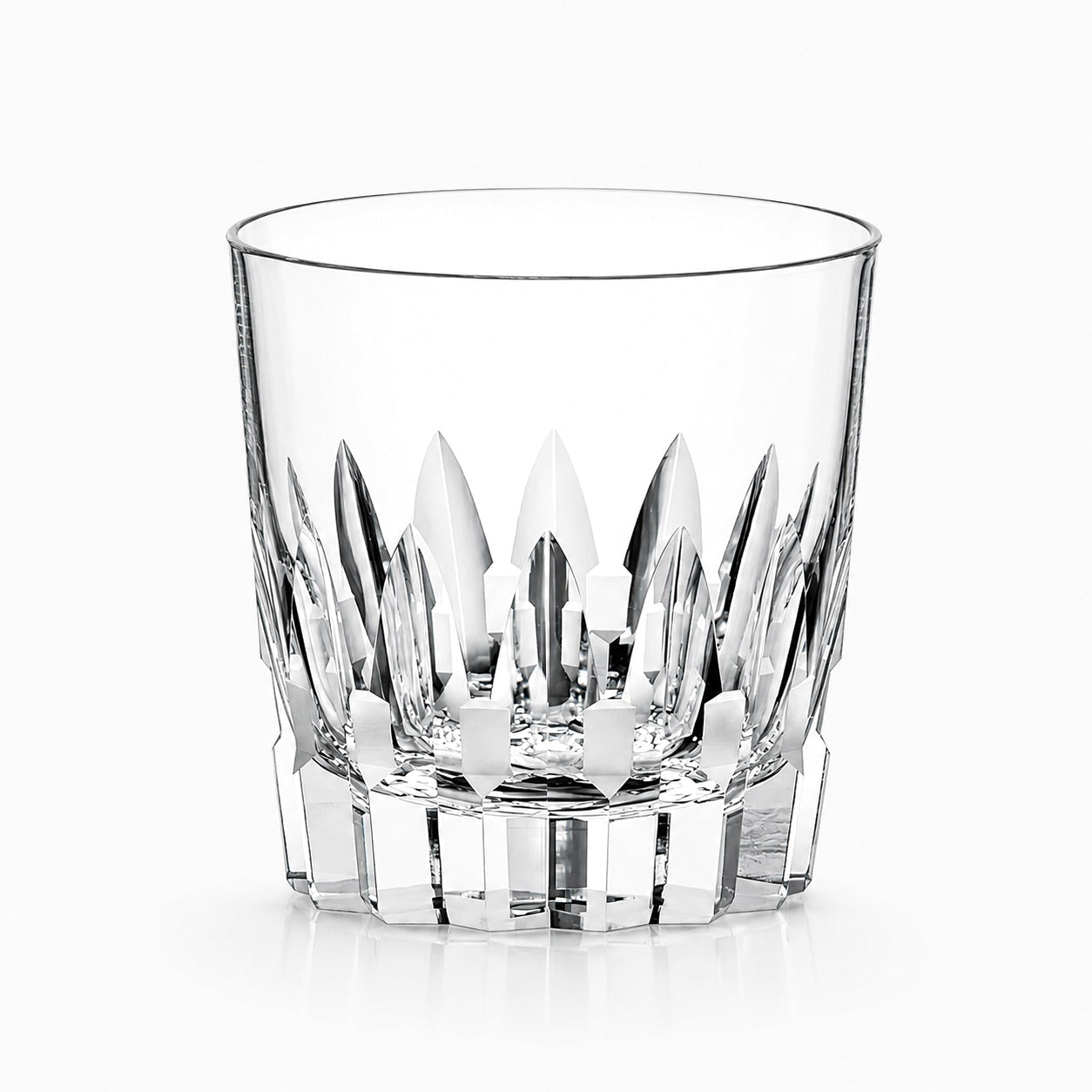
A low tumbler has a wide rim, stable base and room for a large ice cube. Aroma is less focused than in a narrow tasting glass, but the shape is comfortable for whisky on the rocks, cocktails or informal serving. A heavy base changes hand-feel, not whisky quality.
Size, rim and balance
A very large glass does not require a large pour. A modest measure is enough for tasting, while the space above the liquid matters. A thin even rim feels precise; a wide glass provides access for ice. Also choose a glass that stands securely and balances naturally in the hand.
Choose for your ritual
For concentrated nosing, choose a narrowed rim. For ice, highballs or cocktails, choose more volume and a wider form. For slow table service, hand-cut crystal adds light, texture and tactility. The best glass is the one that supports the way you genuinely enjoy whisky.