What Makes Kagami Crystal Different?
About real Kagami Crystal.
When comparing crystal glass, two glasses may look similar on the surface – but the difference lies in material quality, optics, precision in the grinding and the way the glass is finished.
Kagami works from a tradition where crystal is not just a “container”, but an object to be experienced in the hand, in the light and in the drink itself.
1) Clarity, brilliance and “tone”
Kagami describes their crystal glass as characterized by high transparency, brilliance and a clear sound, produced by carefully selected, pure raw materials and an uncompromising approach to finish.
These are precisely the properties that are often experienced as “luxury” in practice: The glass looks cleaner, the light is refracted more clearly, and the overall impression feels more precise.
Mass-produced glass can be beautiful, but in cheaper productions you more often see:
- less optical clarity (slight “fog” in the material)
- less depth in the gloss
- a more “flat” light expression because surfaces and edges are not finished to the same level
2) Sanding with depth – not just pattern
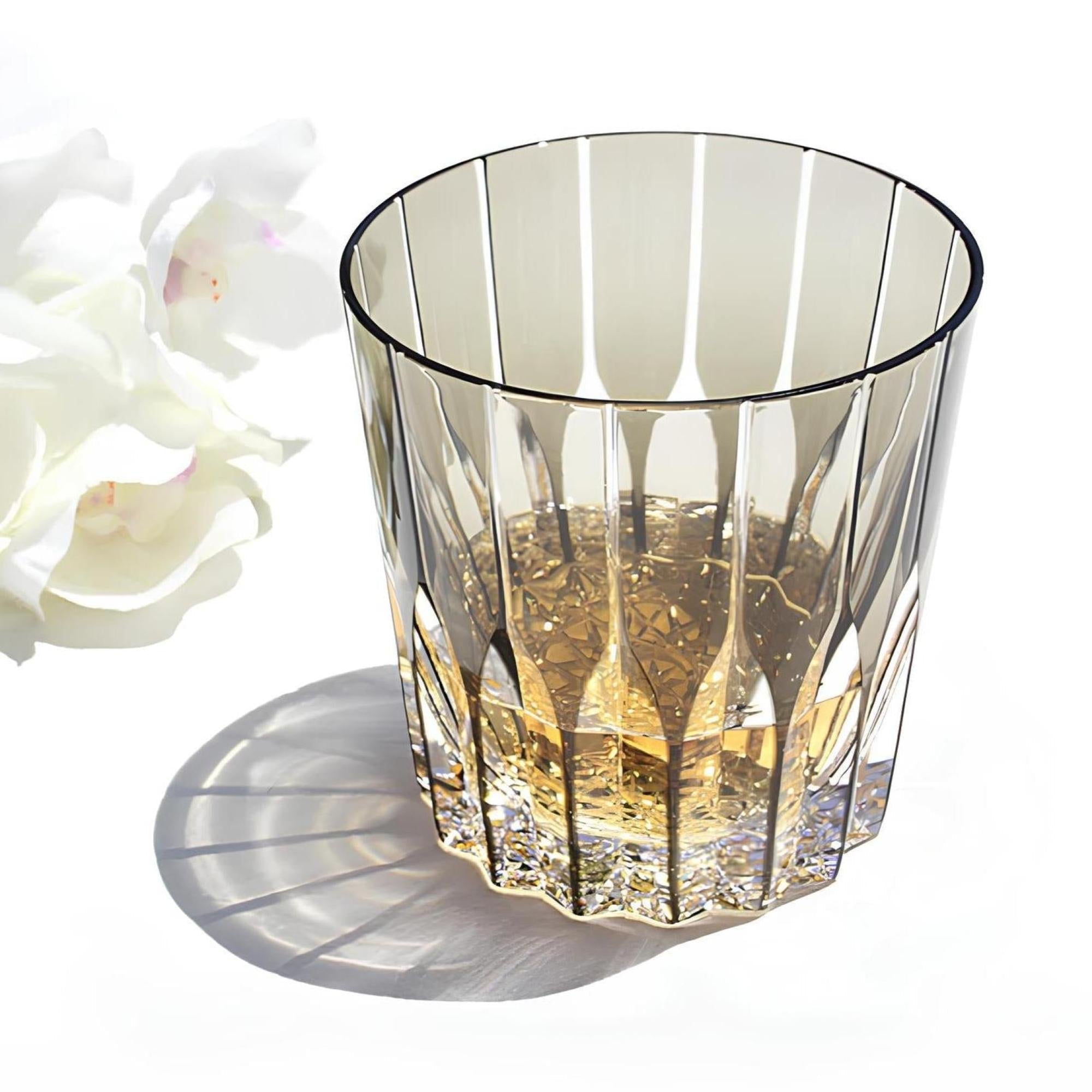
On many Kagami glasses, the cut is not just decoration. The cut surfaces are designed to act as small lenses that capture and refract light, so that the glass changes character depending on the angle, liquid and lighting.
In the Edo Kiriko tradition (Japanese cut glass), it is precisely the interplay between cutting and polishing that creates the special “glow” in the cuts. Polishing (buffing) is a separate process where the cut surfaces are worked up to give them their clear lustre and soft reflection – it is a large part of the reason why hand-cut glass feels alive instead of “printed” or mechanical.
3) Crafts and specialized techniques
Kagami works with classic ornamentation methods such as Edo Kiriko (cut glass) and gravure techniques, where the expression is created through controlled, manual processes and many hours of work. This is also one of the explanations why certain models are released in small series and can be sold out for periods.
Where mass production typically optimizes for:
- fast cycle time
- uniform standard finish
- lower cost per unit
…optimizes Kagami's craftsmanship to:
- precision and sharpness in cutting
- high finish in polishing
- strong visual depth and longevity of expression
4) It feels different in the hand
Crystal from premium manufacturers often feels more “real” in use – especially on tumblers and rocks glasses – because the weight, balance, rim and surface finish together give a more calm and luxurious feel.
That experience is difficult to replicate in glass that is primarily designed to hit a low price point.
5) Created for use – but with respect for the material
Kagami crystal glass is not tempered or heat-resistant glass, and that sudden temperature changes should be avoided and the glass should be handled with care.
This is completely normal for quality crystal – and part of the “reality” of choosing a finer material over a harder, more industrial type of glass.