Filtros

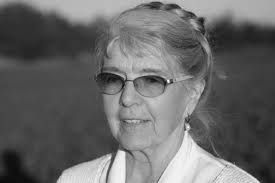
Heidi Caillard, nacida en 1932 en Basilea, Suiza, estudió Bellas Artes (Escuela de Artes y Oficios de Basilea) de 1949 a 1954, luego la Escuela de Cerámica de Lausana en 1962.
En 1968, se instaló en Blauzac, un pueblo cercano a Uzès, donde abrió un pequeño taller de cerámica y una sala de exposición en el corazón del pueblo. Un cliente, Daniel Caillard, soldado destinado en la base aérea de Garons (Nimes), se convirtió en su marido.
En 1971 nació su primer hijo, Adrien. Ese mismo año, compraron una casa de campo completamente ruinosa en Lussan. Esta casa había pertenecido a los antepasados del escritor André Gide.
El matrimonio dedicó diez años a reformar la masía y en 1974, en plena reforma, trasladaron allí el taller y la tienda.
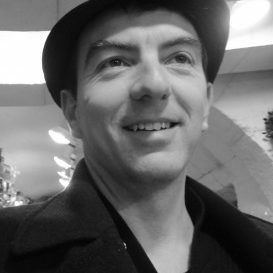
En 1994, Adrien Caillard se hizo cargo del negocio, primero para ayudar a Heidi y luego, impulsado por su pasión por el oficio, para dedicarse por completo. Sabía todo lo necesario y rápidamente adquirió la experiencia necesaria.
Expandió la empresa optimizando el embalaje. También estructuró todo el proceso de producción, conservando todas las técnicas manuales directamente relacionadas con la creación de cada pieza. Estas mejoras permitieron a la empresa empezar a abastecer a profesionales. Posteriormente, la participación en la feria internacional de decoración del hogar de París (Maison et Objet) y numerosos artículos de prensa dieron fama mundial al pequeño taller de cerámica.
En 2000 se construyó un taller adicional con el mismo estilo arquitectónico que el Mas original. Un magnífico taller con entramado de madera, obra de Daniel Sechet (atbc.fr), proporcionó 200 metros cuadrados de espacio, completamente libre de columnas.
Hoy, un equipo dedicado está listo para atenderle y garantizar el éxito continuo de la empresa. A pesar de su edad, Heidi aún diseña nuevas piezas ocasionalmente.
En 2011, Adrien emprendió una nueva aventura: la culminación de su experiencia, adquirida a través de su oficio y su pasión por la artesanía: la Caravana de Adrien.
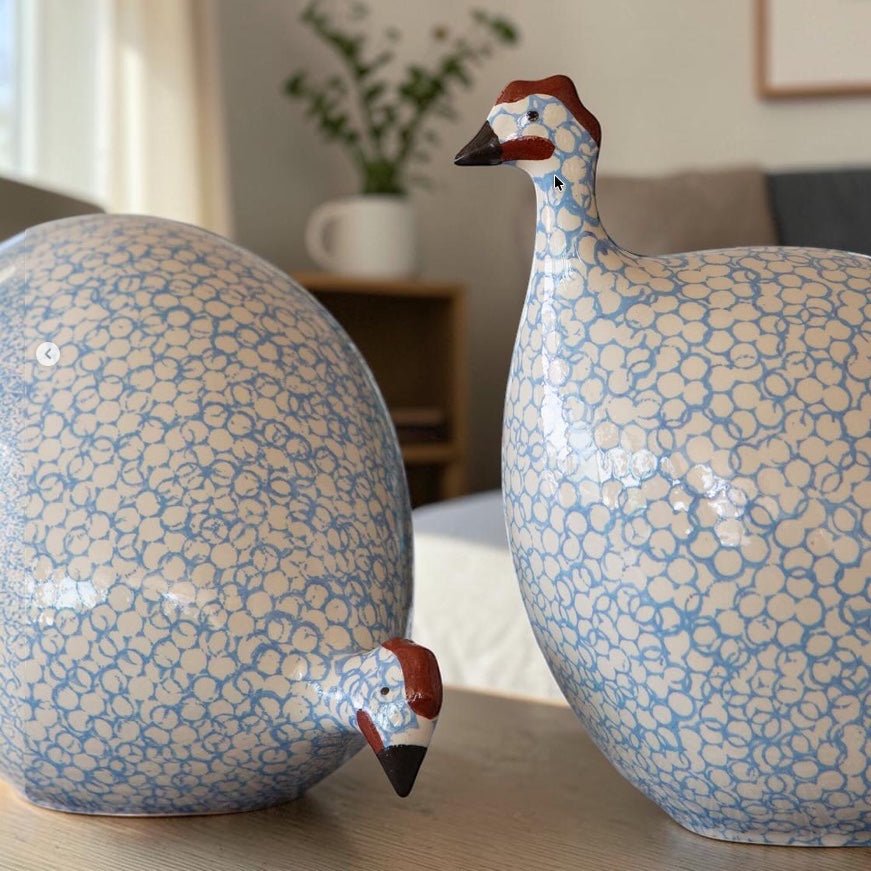
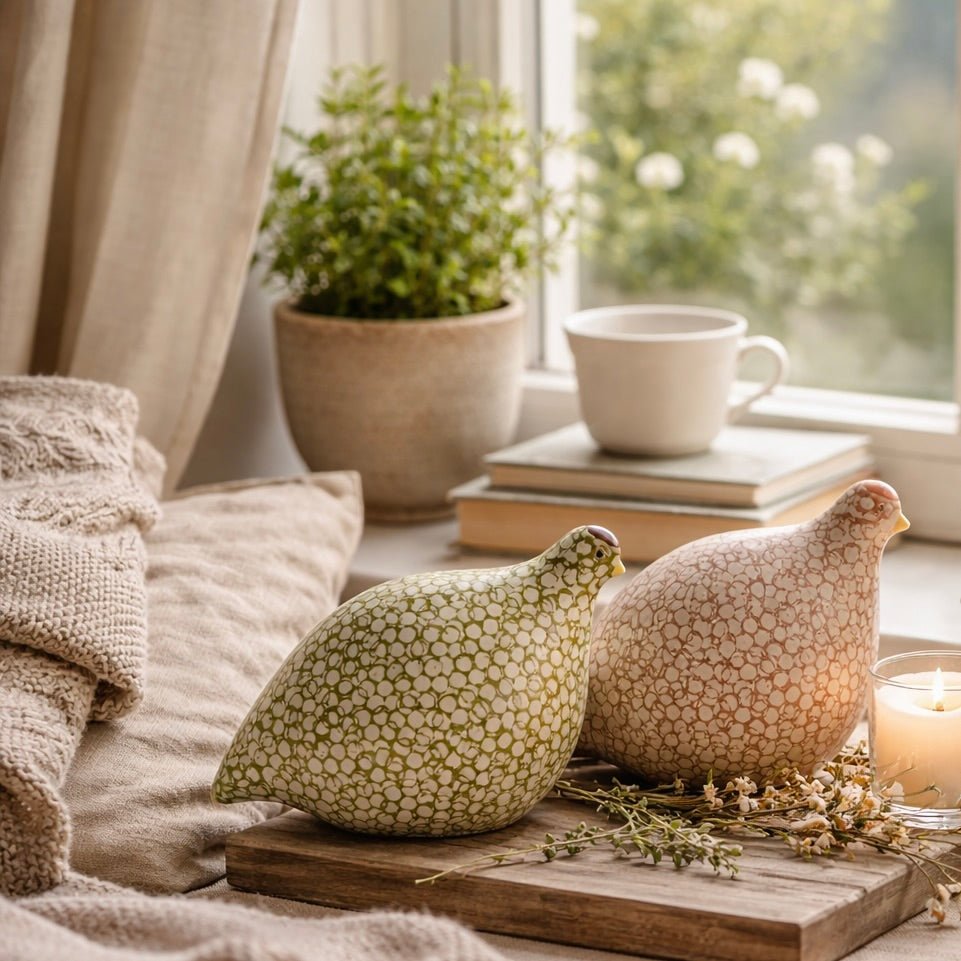
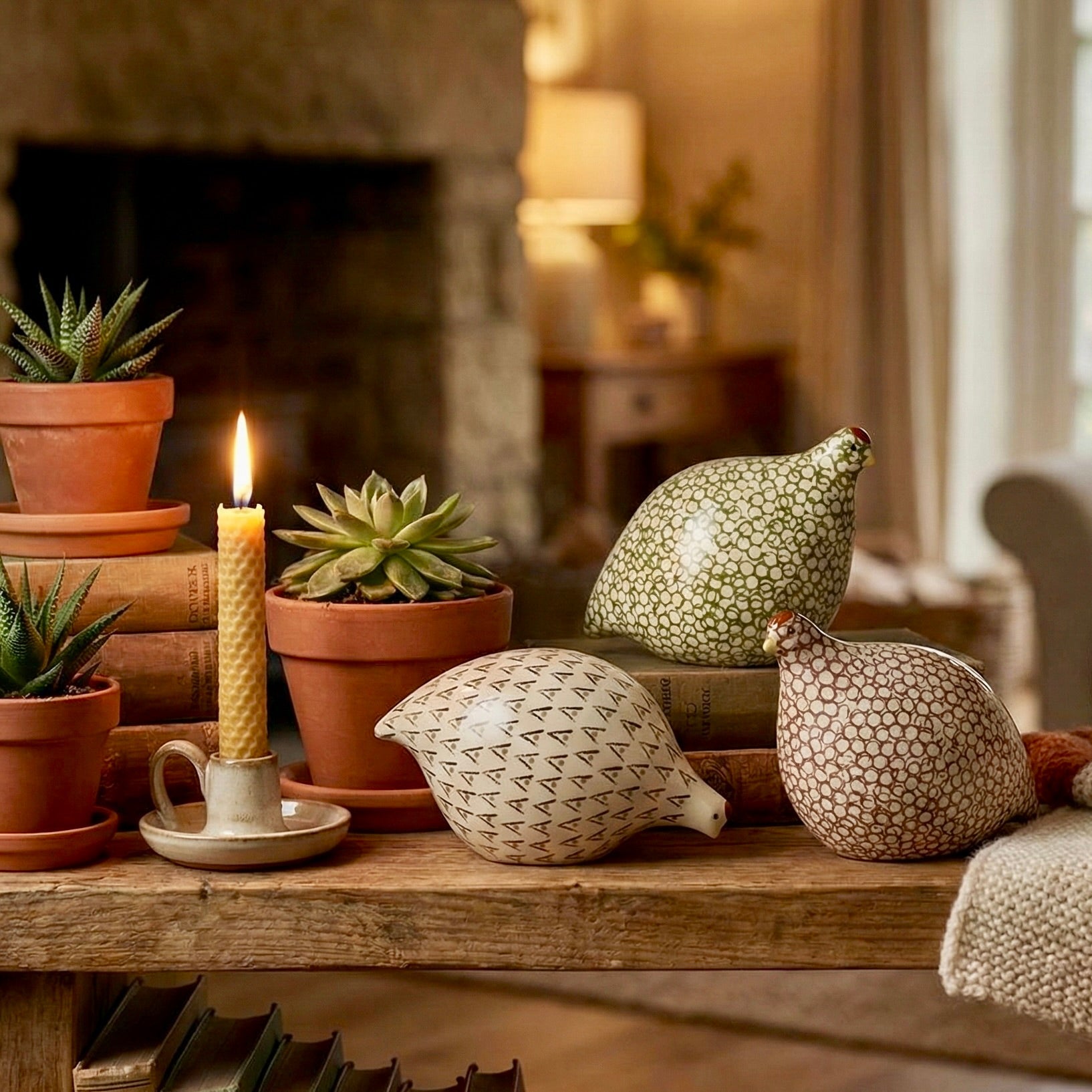
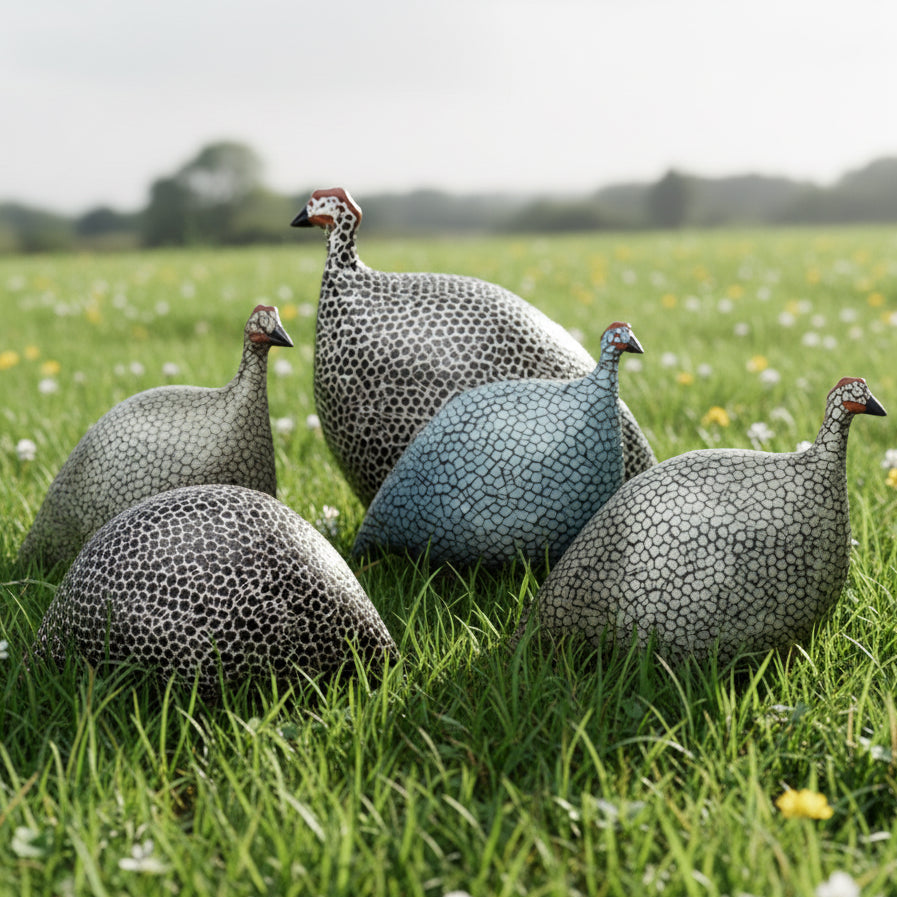
Su creación más famosa es, sin duda, la gallina de Guinea. Muchos la conocen ahora como la "gallina de Guinea de Lussan".
La gallina de Guinea surgió en la imaginación de Heidi durante sus años escolares. El ave real ya estaba presente en su jardín. La idea de crear una escultura cautivadora y estilizada le resultó natural al principio; pero su realización requirió largas jornadas de bocetos, construcción y deconstrucción... para lograr la forma perfecta.
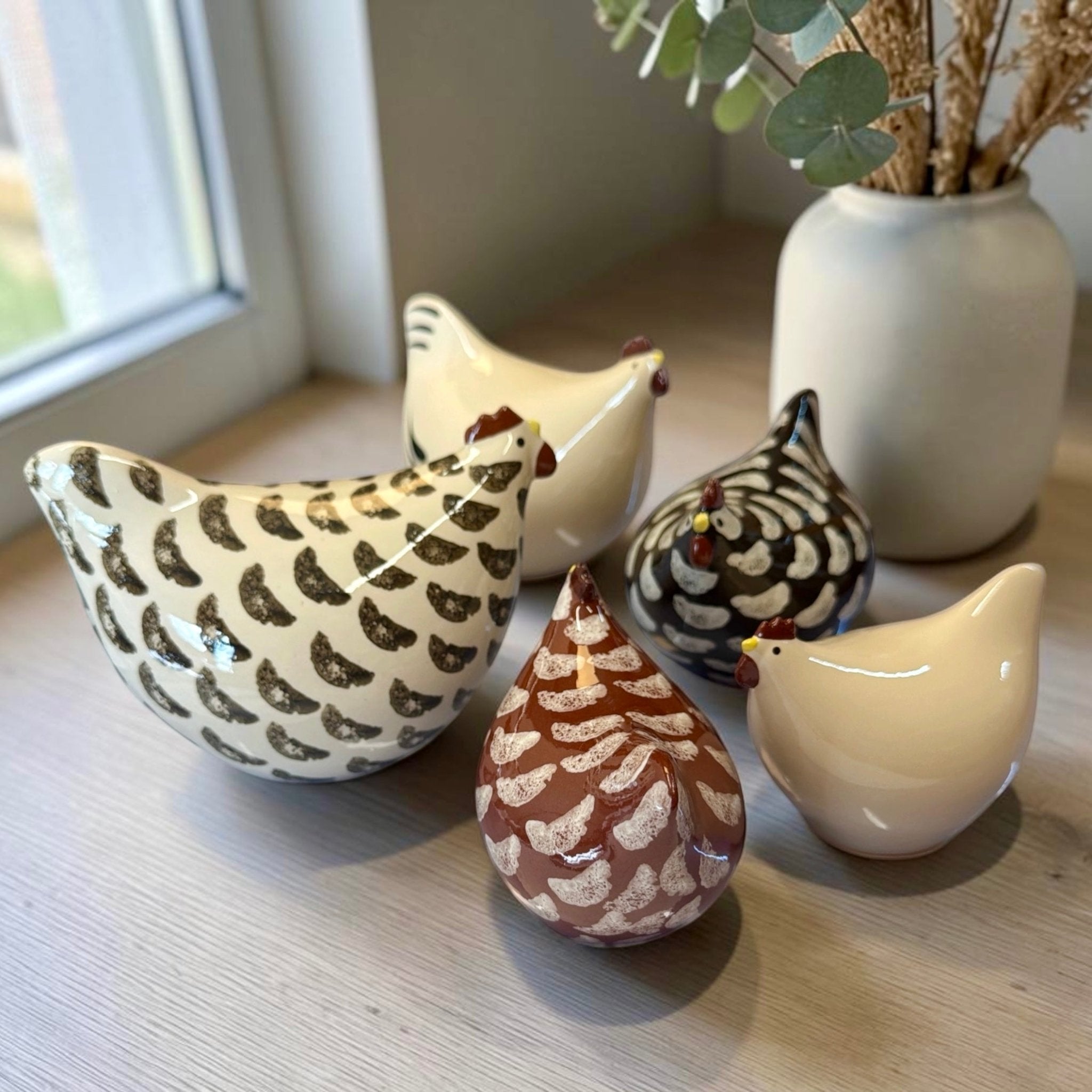
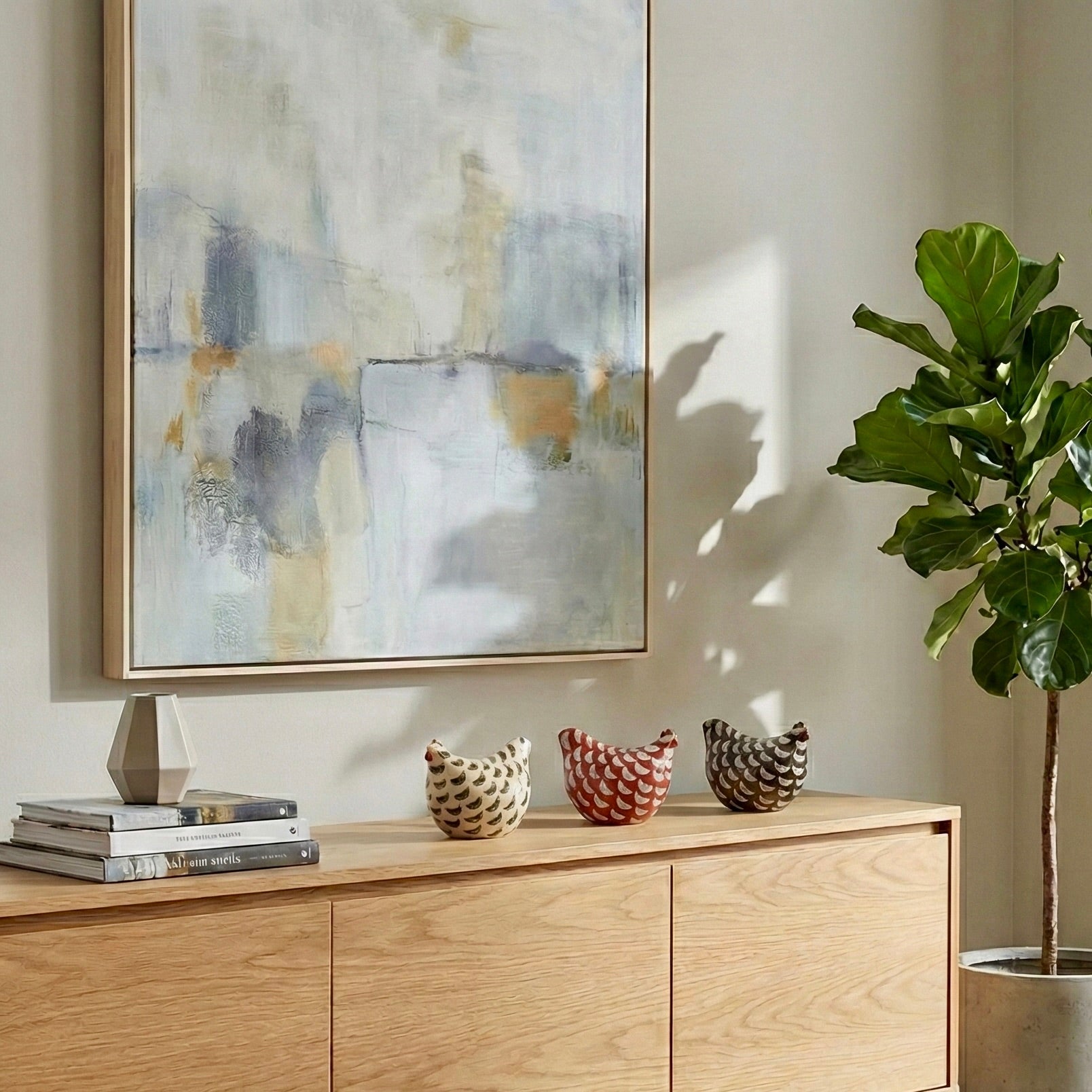
Este proceso se repitió para todos los modelos que se muestran aquí. Este sitio web también te permite descubrirlos. Son muy populares en nuestras tiendas de Lussan y Uzès, pero simplemente están menos extendidos y, sobre todo, son menos buscados.