Kagami Crystal — 90 years of Japanese glass art
Kagami Crystal — Japanese crystal art since 1934
There are glasses you drink from and glasses you experience. Kagami Crystal belongs to the latter category. Founded in 1934 in Tokyo, Kagami is Japan's first manufacturer specializing in crystal glass — and today one of the country's most recognized names in refined glass art. At Rune-Jakobsen Design, we carry a selection of their crystal glasses, and with this post we will try to explain what sets them apart from everything else.
The founder and the craft
In 1927, Kozo Kagami traveled to Germany to study the traditions of crystal glass and the art of engraving. He brought the techniques and transparent beauty back to Japan, and over many years of tireless work, he helped elevate crystal from a craft to an art form. His work was recognized internationally and awarded prizes at major international exhibitions. It is not wrong to say that Kagami's story is also an important part of the history of Japan's crystal glass industry.
Supplier to the Imperial Family
In 1943, Kagami was entrusted with the supplies for the wedding of Princess Senko — Emperor Showa's first daughter. Since then, the company has been a regular supplier to the Japanese imperial family, producing service for state residences and guesthouses. Today, Kagami's crystal glasses are used at official receptions and banquets — including visits by the imperial family and international state guests. Similarly, they are used by a large number of Japanese embassies and consulates around the world.
What makes Kagami crystal different?
Two glasses may look similar on the surface. The difference lies in the quality of the material, optics, precision in the grinding and the way the glass is finished.
Kagami works from a tradition where crystal is not just a container, but an object to be experienced — in the hand, in the light, and in the drink itself. This is reflected in four specific properties:
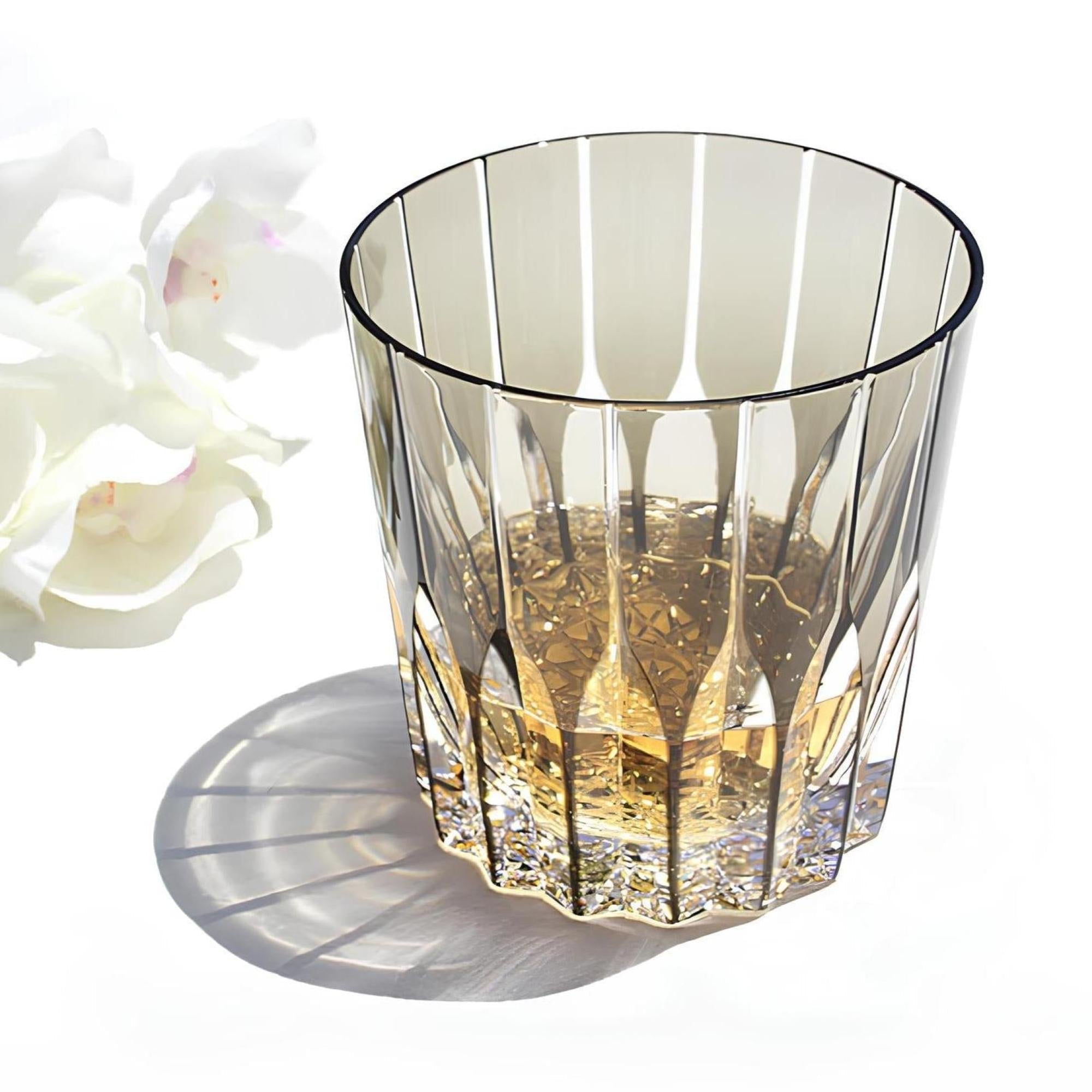
Clarity, brilliance and sound. Kagami crystal is characterized by high transparency, a brilliance not found in mass-produced glass, and the characteristic clear tone associated with genuine, high-quality crystal. Light is refracted more clearly, the glass looks cleaner, and the overall impression is more precise.
Cutting with depth — not just pattern. The cut surfaces of a Kagami glass are designed to act as tiny lenses that capture and refract light, so that the glass changes character depending on angle, liquid and lighting. Polishing the cut surfaces is a separate and time-consuming process — this is where hand-cut glass differs from the mechanical and "printed" look.
Edo Kiriko — a nationally recognized craft. Many of Kagami's glassware is made in the Edo Kiriko tradition: Japanese glass cutting, officially certified as a traditional Japanese craft and recognized as a traditional craft industry in Tokyo. The craft developed in Edo — present-day Tokyo — and is characterized by uncompromising handwork, where each surface is cut, polished, and honed with the utmost precision. Classic patterns draw inspiration from nature and Japanese design tradition.
Overlay and gold ruby. A special category is Kagami's overlay crystal glass, where a colorless crystal glass is coated with a thin layer of colored glass, which is then cut away in precise patterns — thereby opening up the layers and creating a vivid depth and contrast. Kagami's red overlay is particularly sought after: the color is created with pure gold and is therefore referred to as "gold ruby." The deep red tone against clear crystal provides a spectacular contrast, highlighting facets and the play of light like nothing else.
It feels different in the hand
s="font-claude-response-body break-words whitespace-normal leading-[1.7]">Heaviness, balance, rim and surface finish combine to create an experience that is hard to put into words — and even harder to replicate in glass primarily designed to hit a low price point. It is the experience one associates with true luxury in practice.A few words about use
Kagami's crystal is not tempered or heat-resistant glass. It should be treated with care and should not be exposed to sudden changes in temperature. The glass contains very small amounts of lead — as is the case with classic crystal — but is approved by both Japanese and American health authorities. For general serving, there is no health risk. Just avoid storing wine, spirits or juice in the glass for extended periods.
Kagami crystal is created to be used and enjoyed — not to be kept behind glass.